What's inside
As an Amazon Associate I earn from qualifying purchases. This post may contain affiliate links at no extra cost to you.
Thin brass sheet is easy to drill with the right setup—and easy to bend, scratch or catch with the wrong one. For most holes in sheet up to about 1 mm thick, a basic cordless drill with a controllable low speed and a sharp bit is enough. You do not need a hammer drill or a high-torque impact driver. Spend your attention on securing the sheet, choosing the bit and keeping the drill from grabbing as it breaks through.
As an Amazon Associate we earn from qualifying purchases at no extra cost to you.


What we cover
What kind of cordless drill to buy
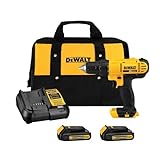
Look for a standard cordless drill with a variable-speed trigger, a clutch and a keyless chuck that accepts the bit shank you plan to use. A 12V drill is generally capable of drilling small holes in thin brass; an 18V or 20V drill offers more reserve for larger bits and other jobs, but adds weight that can make delicate work harder. For holes roughly 2–6 mm across, either voltage class is sufficient in a sharp bit.
Prioritize low-speed control over maximum torque. A drill that starts smoothly at around 300–500 rpm is easier to manage than one that jumps to speed at a light trigger pull. Two mechanical speed settings are useful: use the lower range for larger bits and the higher range for small bits, adjusting speed to suit the bit maker’s guidance. A compact drill is easier to hold square to the sheet, but a very light model may feel less steady unless you support your hands.
A basic drill is the sensible purchase if brass sheet is your main task. A 12V cordless drill with variable speed is often enough for small holes and occasional repairs. If you also drill larger holes in wood or steel, consider a compact 18V cordless drill for its broader range of work. You do not need to pay extra for hammer mode for brass; leave that feature off if the drill has it.
Drill choices at a glance
| Tool | Suitability for thin brass | Best reason to choose it | Main drawback |
|---|---|---|---|
| 12V cordless drill | Good for small holes and occasional use | Light, easy to control, usually affordable | Less comfortable for repeated large holes |
| Compact 18V/20V cordless drill | Good; more capacity than most sheet work needs | Useful if you already own the battery platform | Can be heavier and harder to steady |
| Hammer drill | Works only with hammer mode off | Useful if you also drill masonry | Extra feature does not help with brass |
| Impact driver | Poor choice for precise sheet drilling | Fast screw driving and fastening | Impacts and hex-bit play reduce control |
If you already own a cordless drill, use it rather than buying another one just for this job. An impact driver is not a substitute: its pulsing action is designed for driving fasteners, not for starting a clean, accurately placed hole in thin metal.
Choose the bit for the hole
A sharp high-speed-steel twist bit is a practical choice for ordinary holes in brass. For frequent metalworking or cleaner, more durable edges, a cobalt-alloy bit is an upgrade, not a requirement. Choose the final hole size directly when possible. If you need a 6 mm hole, drilling a small pilot hole first usually adds work without improving the result in thin sheet.
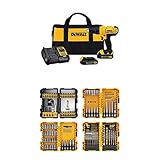
For a larger opening, a step drill is often easier to control than a large twist bit and can produce a neater hole in thin material. Check its specified size range before buying. Avoid using an oversized bit at high speed: it can catch at breakthrough and pull the sheet or wrench the drill in your hand. A sharp HSS metal drill-bit set covers common small holes; add a step drill if you regularly make larger openings in sheet.
How to drill without bending or grabbing
Mark the center with a fine marker or a light prick from a center punch. Do not hit thin brass hard with a punch; a deep dent can distort the sheet. Clamp the work flat between scrap wood, with the drilling spot supported underneath. Keep fingers clear of the bit and never hold a loose sheet in your hand while drilling. A sheet can spin suddenly when the bit catches, even if the hole is small.
Use eye protection, especially when the bit exits the metal: small chips can be sharp. Set the drill to the lower gear for larger bits, hold it square to the surface and begin with a gentle trigger pull. Use steady pressure rather than forcing the bit. If the bit squeals, smears metal or needs heavy pressure, stop and inspect it; a dull bit is more likely to heat the brass and wander.
As the bit nears breakthrough, ease off the pressure. This is the moment a twist bit is most likely to grab, enlarge the hole or pull the sheet upward. Keep the backing board snug against the underside, then deburr both sides with a countersink bit or a small hand tool. Do not use the drill to grind aggressively around the edge.
Common mistakes and when the cheap option is fine
Running at full speed, drilling unsupported sheet and using a dull bit are common causes of ragged holes. Excessive heat can discolor brass, while a sudden catch can buckle the sheet or twist a lightweight drill out of line. For a single hole or occasional small hardware fitting, an inexpensive sharp HSS bit and a borrowed or basic cordless drill are fine. Buying a more powerful drill will not compensate for poor support or a blunt edge.
If you are making many holes, working with thicker brass, or need consistent placement, the upgrade that matters most may be a drill press or a proper workholding setup rather than a higher-voltage cordless drill. For thin sheet, repeatable control and secure support are worth more than extra torque.