What's inside
As an Amazon Associate I earn from qualifying purchases. This post may contain affiliate links at no extra cost to you.
Pressure-treated posts make simple screw work harder than it looks. The lumber is often wet, dense, or prone to splitting near its ends, and long structural screws can demand sustained torque. A cordless impact driver is a good choice for driving them quickly, but the right tool is not simply the one with the highest advertised torque. Control, battery capacity, screw choice, and pilot holes matter just as much.
As an Amazon Associate we earn from qualifying purchases at no extra cost to you.



What we cover
What to look for in an impact driver
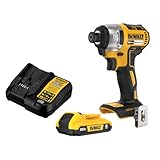
For occasional deck repairs or a few fence brackets, a standard 18V or 20V-class cordless impact driver is usually enough. Compare tools within the same voltage platform by looking at speed settings, trigger control, battery size, and how comfortably the driver handles overhead or awkward work. A low-speed setting is useful when starting screws or fastening near a post end; maximum speed is less helpful if it makes the screw hard to control.
Battery capacity affects how long you can work before swapping packs, not just how much torque the tool can produce. A compact 2.0Ah battery keeps the driver lighter and is fine for a small project. For a long run of structural screws, a 4.0Ah or larger pack reduces interruptions, though it adds weight. If you already own compatible batteries, staying on that platform is often the best value.
For a general-purpose option, compare 18V cordless impact driver kits. A brushless model can run more efficiently and may offer longer runtime, but it is not essential for occasional fastening. A less expensive brushed driver is adequate if it has a controllable trigger and you are not driving screws all day.
Choosing a driver for the job
| Driver type | Best fit | Main trade-off |
|---|---|---|
| Compact 12V impact driver | Small repairs, short screws, tight spaces | Less reserve for repeated long structural screws |
| 18V or 20V-class impact driver | Fence and deck projects, mixed screw sizes | Heavier than a compact tool; kit price varies |
| Impact driver with multiple speed modes | Fastening near ends or working with varied materials | Extra settings help only if you use them deliberately |
A 12V tool can handle many ordinary screws, and it is a sensible buy if portability matters more than speed. For repeated 3- to 6-inch structural screws into posts, an 18V or 20V-class driver is the safer choice. It has more reserve when the screw meets a knot or dense section, but extra power does not prevent stripped heads or split wood.
Choose the screw and prepare the post
Use exterior-rated structural screws intended for the connection, not general-purpose drywall or indoor wood screws. Check the fastener maker’s guidance for treated lumber and the hardware being attached. Coatings and compatible metals matter: an unsuitable fastener can corrode in treated wood, especially in damp outdoor conditions. Match the screw length to the joint so it passes through the attached material and achieves the required embedment without emerging from the far side.
Pilot holes are valuable near post ends, close to edges, and when driving large-diameter screws. Follow the fastener manufacturer’s pilot-hole instructions; there is no single drill-bit size that suits every screw. As a practical starting point, a pilot hole is commonly sized around the screw’s root diameter, not its full outside thread diameter. A hole that is too small may raise splitting risk and overwork the driver; one that is too large reduces thread grip.
Keep the screw at least a couple of inches from the end of a post when the connection allows it, and observe the fastener maker’s required edge and end distances. If the design forces a close placement, predrill and consider a smaller fastener or a different connector rather than forcing a large screw into the end grain. Stop if the post starts to split. Driving harder will not repair the split and can leave the connection weaker.
Drive screws without damaging the joint
Use the exact driver bit specified for the screw head. A mismatched bit can cam out, round the recess, or damage the screw before the joint is tight. Set the driver to a low speed mode if available, start the screw straight, and keep the tool aligned with its axis. Once the threads are engaged, increase speed only as needed. Ease off as the head approaches the surface.
Impacts are useful for long screws because the hammering action helps turn them under load, but it also makes overtightening easy. A screw head buried too far can crush the wood fibers or damage the washer-bearing surface. If the screw suddenly stops advancing, do not hold the trigger and let the driver keep hammering. Back it out, check for a knot, misalignment, or inadequate pilot hole, and correct the cause.
For screws that need careful depth control, a drill/driver with a clutch may be easier than an impact driver. A clutch can stop rotation at a repeatable resistance, though it may struggle with long structural screws. If you need one tool for both pilot holes and fastening, a drill/driver plus a separate impact driver is convenient; for a small job, one cordless drill/driver may be cheaper and entirely adequate.
Buy for the work you actually have
For a handful of screws in a small repair, choose a compact kit or use a driver you already own; buying a high-output model is hard to justify. For several posts or a deck project, prioritize a comfortable 18V or 20V-class driver, a variable-speed trigger, and a battery of at least 2.0Ah, with a spare pack if the work is continuous. Compare brushless impact drivers sold as tool-only if you already have compatible batteries, and exterior structural screws rated for treated lumber for the actual connection.
Before starting, test one screw in a scrap offcut or an inconspicuous spot. Check that the bit fits, the screw drives without splitting, and the head seats cleanly. That small test can reveal a poor screw choice or a need for a pilot hole before the mistake is repeated across every post.