What's inside
As an Amazon Associate I earn from qualifying purchases. This post may contain affiliate links at no extra cost to you.
Stainless steel and hardened metal punish the wrong bit quickly. A dull edge rubs instead of cutting, heat builds, and the hole work-hardens until even a new bit struggles. For most shop and home jobs, a sharp cobalt twist-bit set is the best starting point. For very hard steel or repeated drilling, a quality carbide bit may be necessary—but carbide is brittle and easy to break in a handheld drill.
As an Amazon Associate we earn from qualifying purchases at no extra cost to you.



What we cover
Choose the set by the metal you’re drilling
“Stainless” covers a range of alloys, and “hardened” can mean anything from a tough fastener to hardened tool steel. If you can, check the material specification. For ordinary stainless sheet, pipe, brackets, and mild-to-medium steel, a cobalt high-speed-steel set is a practical choice. M35 cobalt bits contain about 5% cobalt; M42 bits contain about 8%. Both tolerate heat better than standard high-speed steel, but cobalt does not make a bit immune to overheating or blunt edges.
For repeated holes in hard alloy steel, hardened components, or production work, consider solid-carbide bits when the machine and setup are suitable. Carbide cuts hard material well but can chip if the work moves, the drill wobbles, or the bit is used at an angle. A corded drill press or rigid machine is a safer match than a handheld cordless drill. If the metal is harder than the bit can cut, stop rather than forcing it; specialized carbide or masonry-style approaches are not interchangeable with ordinary twist bits.
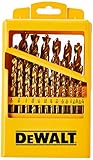
A set with a useful spread of sizes is usually more valuable than a large count of tiny bits. A 1/16- to 1/2-inch range covers common pilot and clearance holes, though larger sizes may need a step drill or a separate reduced-shank bit. Compare flute length, point geometry, size markings, and whether the case keeps each bit secure. A M35 cobalt drill bit set for metal is a sensible general-purpose upgrade over standard HSS.
Bit-set comparison
| Bit type | Best use | Advantages | Limits |
|---|---|---|---|
| Black-oxide or standard HSS | Wood, plastic, mild steel, occasional thin stainless | Low cost; easy to replace | Heats and dulls faster in stainless; poor choice for repeated hard-metal work |
| M35 cobalt HSS | Stainless, steel plate, general shop drilling | Good heat resistance; can be resharpened | Costs more than basic HSS; still needs low speed and lubrication |
| M42 cobalt HSS | Frequent drilling in tougher alloys | More heat resistance than M35 | Higher price; hardness can make the edge less forgiving if mishandled |
| Solid carbide | Very hard material and rigid, controlled setups | Can cut materials that defeat HSS bits | Brittle; expensive; vulnerable to side load and handheld-drill wobble |
| Step drill | Thin sheet metal and larger round holes | Clean, graduated holes in sheet; fewer snagging starts | Not for thick stock or deep holes |
What to look for in a set
Prioritize accurately ground points and consistent sizing over a flashy coating. A 135-degree split point helps a bit start without walking on steel, especially when you have not center-punched the work. It is useful, not magic: a center punch or a short pilot hole still improves control on smooth stainless. A bright finish makes wear easier to see; black oxide can help with corrosion resistance, but neither finish turns a basic bit into a cobalt bit.
Check the shank, too. Round shanks fit ordinary three-jaw drill chucks, while hex-shank bits are convenient for quick changes but may be less common in complete larger-size metal sets. Do not confuse impact-rated hex bits with a complete solution for hardened metal. An impact driver’s hammering action can snap a small bit or produce an oversized, rough hole. Use a drill or drill press for controlled drilling, and reserve an impact driver for fastening.
For occasional holes in thin stainless, a modest set of standard HSS metal bits may be adequate if kept sharp and used slowly. Paying for cobalt makes more sense when you expect repeated holes, thicker material, or a costly workpiece where a broken or overheated bit could ruin the job.
How to drill without burning the bit
Clamp the work securely and support thin sheet with scrap wood or another backing material. Mark the hole, center-punch it, and use a small pilot bit if the final diameter is large. Put cutting oil on the contact point; for stainless, a few drops of suitable cutting fluid are better than dry drilling. Keep the bit straight and apply steady pressure so it cuts a continuous chip. If it squeals, smokes, or polishes the surface without making chips, stop. Continuing to rub can work-harden stainless and make the next attempt much harder.
Use a low drill speed, especially as bit diameter increases. As a practical starting point, a 1/8-inch bit in stainless may run around 600–1,000 rpm, while a 1/4-inch bit may need roughly 300–500 rpm; adjust for the material, bit, and machine. These are starting ranges, not universal limits. A drill with a variable-speed trigger helps, but do not feather it so lightly that it stalls and rubs. Ease pressure as the bit breaks through, since sudden grabbing can twist the drill or tear thin sheet.
Let the bit cool between holes if it becomes hot, and clear chips from deep holes rather than forcing the bit to pack them into the flutes. For stainless, avoid long pauses while the spinning bit touches the surface. If a bit has lost its edge, replace or sharpen it; cobalt bits can be sharpened, but overheating during grinding can spoil the cutting edge.
A practical buying decision
For a homeowner or repair bench, start with a well-made M35 set covering common sizes and add individual bits as specific jobs demand. Choose M42 if tough-metal drilling is frequent and the price premium is reasonable. Buy carbide only when the material and machine justify its brittle edge. For large holes in thin stainless sheet, a step bit can be cleaner and easier to control than a large twist bit; a cobalt step drill for sheet metal is a useful complement, not a replacement for a twist-bit set.
Whatever set you buy, technique and sharpness matter more than a high piece count. A sharp cobalt bit, clamped work, cutting fluid, and appropriate speed will outperform an expensive set used dry at high speed. If the hole is in hardened tool steel and a sharp cobalt bit will not bite, verify the material hardness and change the approach rather than leaning harder on the drill.