What's inside
- Top Picks by Painting Situation
- Spec Comparison: What Actually Fits Where
- How to Match Easel Type to Your Reality
- Decision Matrix: Find Your Match in 30 Seconds
- Worked Calculation: Will It Fit Your Space and Cover Your Canvas?
- Material, Stability, and What Wears Out First
- Setup and Maintenance That Extends Easel Life
- FAQ
- Top Picks by Painting Situation
- Spec Comparison: What Actually Fits Where
- How to Match Easel Type to Your Reality
- Decision Matrix: Find Your Match in 30 Seconds
- Worked Calculation: Will It Fit Your Space and Cover Your Canvas?
- Material, Stability, and What Wears Out First
- Setup and Maintenance That Extends Easel Life
- FAQ
As an Amazon Associate I earn from qualifying purchases. This post may contain affiliate links at no extra cost to you.
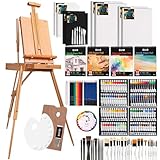
The best easels for adult artists and painters are the Mabef M/02 Studio Easel for a stable home studio, the Sienna Plein Air Pochade Box (or Guerrilla Painter 9×12) for plein-air and travel, and a solid tabletop H-frame like the US Art Supply Medium Tabletop Easel for small spaces — most adults should choose based on max canvas height, folded footprint, and weight rather than looks alone.
As an Amazon Associate we earn from qualifying purchases at no extra cost to you.


What we cover
- Top Picks by Painting Situation
- Spec Comparison: What Actually Fits Where
- How to Match Easel Type to Your Reality
- Decision Matrix: Find Your Match in 30 Seconds
- Worked Calculation: Will It Fit Your Space and Cover Your Canvas?
- Material, Stability, and What Wears Out First
- Setup and Maintenance That Extends Easel Life
- FAQ
Top Picks by Painting Situation
If you paint standing with canvases over 36 inches, you need a studio A-frame or H-frame. If you paint at a desk or kitchen table, a tabletop easel with an adjustable angle saves space and posture strain. If you paint outdoors, weight and setup speed matter more than max height.
- Best for dedicated studio / large canvas: H-Frame Studio Easel (Mabef M/02, Blick Studio H-Frame, Jack Richeson Lyptus) — holds 48 to 72+ inches
- Best for apartments / limited space: Convertible A-Frame / Tripod Hybrid (Mabef M/12, Stanley Studio A-Frame) — folds flat against wall
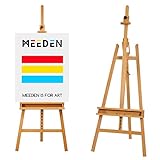
- Best for tabletop / beginners / watercolor: Medium Tabletop H-Frame or A-Frame (US Art Supply, Mont Marte, MEEDEN) — holds up to 24-30 inches
- Best for plein-air / travel: Pochade Box or French Easel (Sienna, Guerrilla Painter, Jullian, Strada Easel) — palette + canvas storage combined
- Best budget large easel: Aluminum plein-air tripod easel (Creative Mark, US Art Supply Coronado) — light, but less stable over 24 inches
Spec Comparison: What Actually Fits Where
Listings often hide the two numbers that determine whether an easel works for you: maximum canvas height and floor footprint when in use. Weight tells you if you will actually carry it outside.
| Easel Type / Example Model | Max Canvas Height | Easel Height Range | Weight | Material | Footprint In Use (W x D) | Tilt / Angle Range |
|---|---|---|---|---|---|---|
| H-Frame Studio (Mabef M/02) | 78 in / 198 cm | 68 to 92 in / 173-234 cm | 24-27 lbs / 11-12 kg | Solid beechwood, steel hardware | 26 x 32 in / 66 x 81 cm | 0 to 15 degrees vertical, flat to 90 degrees with mast lock |
| Studio A-Frame (Blick Studio Lyptus A-Frame) | 48 in / 122 cm | 58 to 74 in / 147-188 cm | 14-16 lbs / 6.3-7.2 kg | Lyptus hardwood | 24 x 28 in / 61 x 71 cm | Vertical only, adjustable canvas ledge |
| Convertible Studio / Tripod (Mabef M/12) | 42 in / 107 cm | 58 to 78 in / 147-198 cm | 13-15 lbs / 5.9-6.8 kg | Beechwood, aluminum fittings | 22 x 24 in / 56 x 61 cm | Vertical to ~45 degrees |
| French Easel / Sketch Box (Jullian Original) | 33 in / 84 cm | 54 to 68 in / 137-173 cm (legs extended) | 12-14 lbs / 5.4-6.3 kg | Beechwood, brass hardware | 20 x 26 in / 51 x 66 cm | Vertical to ~30 degrees |
| Pochade Box 9×12 (Sienna, Guerrilla Painter) | 12-16 in panel (with tripod) | Dependent on tripod, 48-66 in eye level | 4.5-6.5 lbs / 2-3 kg (box only) | Basswood / birch plywood, aluminum tripod | 14 x 12 in box + tripod legs ~30 in spread | 0 to 90 degrees via tripod head |
| Tabletop H-Frame (US Art Supply Medium, MEEDEN) | 27-34 in / 69-86 cm | 21 to 36 in / 53-91 cm tall on table | 5.5-7.5 lbs / 2.5-3.4 kg | Pine / beechwood | 13 x 14 in / 33 x 36 cm on table | Vertical to flat (0-90 degrees) |
| Aluminum Plein-Air Tripod Easel | 36-48 in / 91-122 cm | 50 to 72 in / 127-183 cm | 3-5 lbs / 1.4-2.3 kg | Aluminum, plastic clamps | 32 in tripod spread diameter | Vertical to ~20 degrees |
For adults over 5’6″ who paint standing, look for an easel that reaches at least 72 inches tall at the top clamp — otherwise you will hunch to see the center of a 36×48 inch canvas. For seated work, a tabletop that adjusts to at least 30 degrees off vertical reduces wrist strain for watercolor and gouache.
How to Match Easel Type to Your Reality
1. Measure your canvas and your ceiling
Studio H-frames need ceiling clearance. A 78-inch canvas capacity easel at full extension can be 90+ inches tall. With a standard 96-inch (8-foot) ceiling, you will have only 6 inches of clearance — not enough to lift a large canvas over the top clamp. If your ceiling is under 92 inches, cap your search at 60-inch max canvas height.
2. Check wall and storage footprint
An H-frame never truly folds flat; it needs a permanent 26 x 32 inch corner. An A-frame or French easel folds to 6-8 inches deep and slides behind a door. Pochade boxes store on a shelf like a toolbox. This is the number one reason adult beginners abandon large easels — they have nowhere to leave them set up.
3. Decide on angle needs
Oil and acrylic painters usually work vertical (0-10 degrees) to control drips and varnish glare. Watercolor, gouache, pastel and ink need 15-45 degrees to control washes without pooling. Only H-frames with a mast ratchet and most pochade boxes properly offer true horizontal to 45-degree control. Basic A-frames do not.
Decision Matrix: Find Your Match in 30 Seconds
| Your Situation | Canvas Size You Use Most | Space Available | Best Easel Category | Why |
|---|---|---|---|---|
| Dedicated studio, paint 3+ times/week, oil/acrylic | 30×40 in to 48×60 in | Corner 3×3 ft always free | H-Frame Studio | Maximum stability and height, holds heavy stretched canvas without flex |
| Apartment, paint evenings/weekends | 16×20 in to 24×30 in | Must fold and store after use | Convertible A-Frame or Aluminum Tripod | Folds to <8 in deep, light enough to move, still holds 36 in canvas |
| Kitchen table / desk, watercolor or acrylic | 9×12 in to 18×24 in | Tabletop only | Tabletop H-Frame with angle adjustment | Low footprint, tilt prevents wash pooling, easy on back |
| Plein-air, travel, workshops | 8×10 in to 12×16 in panels | Car trunk / backpack | Pochade Box + lightweight tripod | Palette, panel storage, and easel in one, under 7 lbs total |
| Teaching / demo / mixed media | Varies 11×14 in to 30×40 in | Need to move room to room | French Easel or Convertible Tripod with drawer | Built-in storage for supplies, moderate height and mobility |
Worked Calculation: Will It Fit Your Space and Cover Your Canvas?
Use this quick check before buying:
Example: You paint 36×48 inch canvases in a spare bedroom with a 96-inch ceiling and a 30 x 36 inch available floor corner.
- Required max canvas height: 48 inches (use the long side). Add 6 inches for clamp and holder clearance = 54 inches minimum rating. Any easel rated under 54 inches will not hold the canvas without the top extending beyond the mast.
- Required easel height: Eye level for a 5’8″ adult standing is about 62 inches. To center a 48-inch tall canvas at eye level, the center clamp must sit at 62 inches. The top of the canvas will be at 86 inches. You need at least 88 inches of easel height and ceiling clearance. A 74-inch A-frame fails here; a Mabef M/02 style H-frame passes.
- Required footprint: Studio H-frame needs 26 x 32 inches. Your available 30 x 36 inch corner fits with 4 inches to spare. A-frames need less depth but more front clearance for legs — measure leg spread at full extension, not folded size.
- Cost per use estimate: A solid beechwood H-frame in the general market range of $250-$400 used 3 times per week for 5 years = 780 uses. That is $0.32 to $0.51 per use before canvas and paint. A $60-$90 aluminum tripod used twice a month outdoors for 3 years = 72 uses = $0.83 to $1.25 per use. The more frequently you paint large, the cheaper the heavier studio easel becomes.
If any of those three numbers — canvas rating, height range, or footprint — fails, eliminate that model regardless of material or brand.
Material, Stability, and What Wears Out First
Product pages emphasize wood species, but hardware and stability decide long-term satisfaction.
- Beechwood and lyptus: Dense, resists warping, holds screws well. Needs occasional wax or oil, especially if you paint in a humid basement. Heavier is better for stability over 30 inches.
- Pine / paulownia (budget tabletops): Light and affordable, but dents easily and screws strip if you overtighten. Reinforce wing nuts with washers after the first year.
- Aluminum: Lightest for travel, will not swell. Weakest clamping force — canvases over 24 inches can slip in wind. Check leg locks; plastic twist locks crack first.
- What fails first: 1) Canvas ledge ratchet teeth wearing smooth, 2) wing bolts stripping, 3) tripod leg clamps loosening, 4) French easel drawer slides swelling shut. Keep a small screwdriver and beeswax for wooden threads in your kit.
- Stability test without claims: Look at base width vs. height ratio and clamp design. An easel narrower than 22 inches at the base and taller than 70 inches will wobble with a 24×30 inch stretched canvas. H-frames with a central mast and two side supports resist torque better than single-mast tripods.
Avoid the common mistake of buying a tall aluminum tripod for heavy 30×40 inch gallery-wrap canvases — it will flex and you will tighten clamps until they strip. Match weight and material to canvas weight, not just canvas height.
Setup and Maintenance That Extends Easel Life
- Assemble on a level surface and check that all four contact points touch without rocking before loading a canvas. Shim with felt pads rather than forcing legs.
- Tighten clamps just until the canvas does not move when you press the center — overtightening crushes wood fibers and makes future grip worse.
- Wipe oil and acrylic splatter off wood within 24 hours with a dry cloth; dried acrylic on ratchet tracks jams height adjustment.
- For plein-air boxes, empty turpentine cups and clean palette surfaces after each session — solvent left in a pochade box warps the lid seal.
- Store French easels and A-frames with legs slightly open, not tightly folded, to prevent hinge screws from loosening from constant tension.
FAQ
What height easel do adults need for comfortable standing work?
Most adults between 5’4″ and 6’1″ need an easel that adjusts to 68-78 inches at the top holder to center a 24×36 to 30×40 inch canvas at eye level. If you are taller than 6’0″ or paint canvases over 48 inches, choose an H-frame rated to 78+ inches max canvas height.
Is a French easel or pochade box better for plein-air?
A French easel carries canvas, palette, and supplies in one unit but weighs 12-14 lbs. A pochade box (4.5-6.5 lbs) plus a separate lightweight tripod is lighter and faster to set up, and better for panels under 12×16 inches. Choose French easels for 16×20 inch and larger outdoor canvases; pochade boxes for travel and small panels.
Can a tabletop easel handle a 24×30 inch canvas?
Only medium and large tabletops rated to 34 inches max canvas height can, and only on a sturdy table. Small 16-inch tabletops flex under that weight and usually tip forward. Check the ledge depth — you need at least 2.5 inches to support a gallery-wrap stretcher.
Do I need different easels for oil vs. watercolor?
You need different angle control, not necessarily different easels. If your easel cannot tilt to 20-45 degrees, watercolor washes will pool and run. Convertible H-frames and pochade boxes handle both; basic vertical A-frames do not.