What's inside
As an Amazon Associate I earn from qualifying purchases. This post may contain affiliate links at no extra cost to you.
What we cover
Quick answer
For most everyday joints between two pieces of dimensional lumber, use a structural wood screw sized for the job. A 3-inch screw is a common choice for fastening a 2-by member through its 1½-inch thickness into another piece, provided the joint and screw manufacturer’s instructions support that use. For framing built to a plan or code, use the specified nails or approved structural screws instead; an ordinary deck or drywall screw is not a substitute.
The right fastener depends on the load, lumber thickness, and whether the joint needs to resist pulling apart or sliding. A screw’s advertised length alone does not establish that it is suitable for a structural connection.
As an Amazon Associate we earn from qualifying purchases at no extra cost to you.



Choose by job
| Fastener | Good fit | Main trade-off |
|---|---|---|
| Structural wood screw | Repairs, blocking, built-ins, and many load-bearing wood connections when rated for the application | Costs more than general-purpose screws; size and installation details matter |
| Common framing nail | Standard stud, joist, and wall framing where the plans call for nails | Needs a hammer or nailer; less convenient for precise, removable joints |
| Deck screw | Outdoor decking and light-duty exterior projects when the product is rated for the exposure | Not automatically approved for framing or structural loads |
| Drywall screw | Attaching drywall to framing | Brittle and poorly suited to joining lumber |
When structural screws make sense
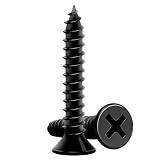
Structural wood screws are designed and tested for specific wood connections. Look for a product with published load values and installation instructions, not just a coarse thread and a large head. A structural wood screw assortment can be useful for shop projects, but confirm the diameter, length, coating, and required spacing against the job before buying.
For a typical face-to-face joint between 2-by lumber, a 3-inch screw leaves roughly 1½ inches of embedment in the receiving piece after passing through the first member. That is a starting point, not a universal rule: a countersunk head, angled entry, a gap, or a different board thickness changes the effective embedment. Follow the screw maker’s guidance, especially for loads, edge distances, and multiple fasteners.
Use a drill or impact driver with the correct bit, and keep the tool square to the work. An impact driver is fast, but it can overdrive or snap a screw if you lean on the trigger. Stop when the head seats; don’t bury it deep enough to crush the wood fibers. For large-diameter screws, dense lumber, or a connection near an end, predrill if the instructions call for it or the wood starts splitting.
When nails are the better choice
In conventional framing, nails are often the specified fastener because their dimensions, placement, and connection performance are covered by established schedules and codes. Follow the plans and local requirements. A screw that feels stronger in a quick pull test is not automatically an approved replacement: screws and nails behave differently under shifting or sideways loads.
For framing work, buy the nail type and length specified for the connection. A pneumatic framing nailer saves time over repeated joints, while a hammer is perfectly reasonable for a small repair. If you’re replacing a missed or bent nail, don’t drive a new fastener into the same damaged hole and assume the connection is restored.
Why not use any screw?
Drywall screws are inexpensive and easy to drive, but their hardened, brittle shafts can snap under the movement and shear forces a lumber joint may see. They also lack the documented structural rating needed for many framing connections. A deck screw rated for exterior use can be a reasonable, cheaper choice for decking or light outdoor assembly, but its coating and rating do not make it a general framing screw.
General-purpose wood screws are fine for many nonstructural jobs, such as a small shelf cleat or a shop jig that carries little weight. For a joint supporting people, a roof, a deck, or a heavy load, choose a fastener specifically approved for that connection—or use the plans’ specified hardware.
Prevent splits and weak joints
Keep fasteners away from board ends and edges unless the connection detail says otherwise. A screw driven too close to an end can split the board; one driven at an angle may emerge through the side. If the wood is dry, narrow, knotty, or near an end, predrilling can help. Use the pilot-hole size recommended by the screw maker, since a hole that is too large reduces thread grip.
Clamp the pieces tightly before fastening. A screw can pull one board toward the other, but it may also leave a gap if the threads engage both pieces too soon. Where that happens, drill a clearance hole through the first piece so the screw can draw the joint closed. Don’t overtighten: crushed fibers around the head weaken the surface and leave a poor finish.
A practical buying checklist
Before purchasing, check the lumber dimensions, the direction of the load, and whether the joint is structural. Match fastener length to the assembly and maintain enough embedment in the receiving member without risking a breakthrough. For exterior or treated lumber, confirm that the fastener coating is compatible; incompatible metal can corrode, and corrosion can stain or weaken the joint.
For a small, nonstructural indoor project, a modest box of suitable wood screws may be all you need. For framing or a safety-critical connection, spend the time to match the plans, code, and manufacturer’s instructions rather than choosing by price or head style alone.