What's inside
As an Amazon Associate I earn from qualifying purchases. This post may contain affiliate links at no extra cost to you.
The best hunting rangefinders balance useful real-world range, fast target acquisition, angle-compensated distance, low-light visibility, and weather protection rather than simply advertising the longest maximum number.
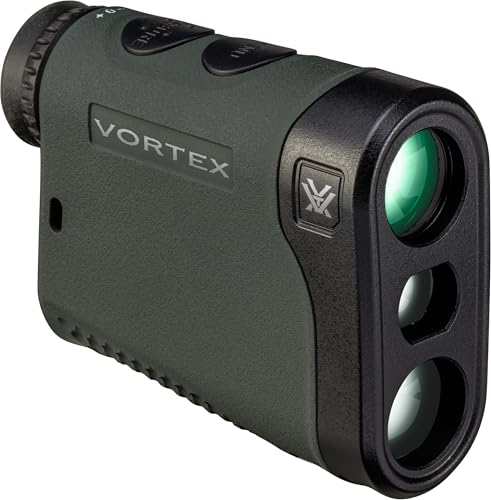
For most hunters, the strongest all-around choices are the Vortex Razor HD 4000 for long-range capability, the Leupold RX-1600i TBR/W Gen 2 for a compact rifle-hunting setup, the Bushnell Broadhead for bowhunting and close-to-midrange work, and the Vortex Crossfire HD 1400 when price matters more than advanced ballistic features.
As an Amazon Associate we earn from qualifying purchases at no extra cost to you.


What we cover
Our Top Picks
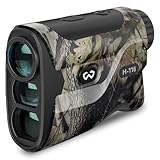
 WOSPORTS Hunting Rangefinder for Bow Hunting/Scan/Speed Modes1200yd / 4 Mode3.5 x 2.36 x 5.5 inches0.3 poundsCheck on Amazon


Best hunting rangefinders by situation
- Best for long-range rifle hunting: Vortex Razor HD 4000
- Best compact all-around option: Leupold RX-1600i TBR/W Gen 2
- Best for bowhunting: Bushnell Broadhead
- Best budget choice: Vortex Crossfire HD 1400
- Best for integrated ballistic calculations: Vortex Fury HD 5000 AB
What matters more than the advertised maximum range?
Manufacturers usually quote maximum range against a large, reflective target under favorable conditions. A deer, dark timber, grass, branches, snow, haze, or a steep hillside can reduce that figure substantially. A useful hunting rangefinder should acquire an animal-sized target quickly at the distances you actually hunt, not merely return a number from a large reflective sign.
Maximum range and target quality
Maximum range remains important for open-country rifle hunting, but it should be read alongside the device’s range on trees or non-reflective targets. A unit rated around 1,400 yards may be entirely adequate for woodland hunting, while a 4,000-yard model gives more margin for distant ridgelines and reflective objects. For ethical shot placement, ranging consistency on an animal-sized target is more useful than the headline maximum.
Angle compensation
Horizontal distance becomes shorter than line-of-sight distance when shooting uphill or downhill. Angle-compensation modes calculate the equivalent horizontal range, helping prevent a hunter from applying an incorrect holdover. Look for a unit that displays both line-of-sight distance and adjusted distance. This is particularly valuable in mountainous terrain.
Angle compensation is not a substitute for a confirmed ballistic profile. Ammunition, muzzle velocity, bullet shape, sight height, and zero distance still affect the correct aiming solution.
Low-light performance
A rangefinder cannot create light, but optical design determines how long it remains usable at dawn, dusk, and under a forest canopy. Useful features include fully multi-coated lenses, a bright red or high-contrast display, adjustable display intensity, and an unobstructed view through the eyepiece. A red display is often easier to see against a dark background, although excessive brightness can interfere with night vision.
Scan modes
Scan mode repeatedly updates distance while the button is held. It helps when a branch, moving animal, or uneven terrain makes a single reading unreliable. Some models also provide a best-target or last-target priority mode, which can help distinguish a distant animal from intervening brush. Scan mode consumes more battery and should not be confused with a faster laser measurement in every situation.
Weather resistance and ownership
Water resistance protects against rain and accidental splashes; it does not make a rangefinder indestructible. A sealed, nitrogen-purged housing can reduce internal fogging, while rubber armor improves grip and protects against minor impacts. Lens coatings and the eyepiece are usually more vulnerable to neglect than the electronic housing. Store the unit dry, replace the battery before a long trip, and use a soft lens cloth rather than a shirt sleeve.
Head-to-head comparison
| Model | Advertised maximum range | Approx. weight | Angle / ballistic features | Scan and low-light strengths | Weather protection |
|---|---|---|---|---|---|
| Vortex Razor HD 4000 | Up to 4,000 yards reflective | Approx. 10.1 oz | HCD angle compensation; LOS mode | Bright red OLED; scan mode | Rubber-armored, water-resistant housing |
| Leupold RX-1600i TBR/W Gen 2 | Up to 1,600 yards reflective | Approx. 5.8 oz | TBR/W angle-compensated ballistic ranges | OLED display; scan mode; compact optics | Waterproof, fogproof, shock-resistant construction |
| Bushnell Broadhead | Up to approximately 1,500 yards reflective | Approx. 5.9 oz | ARC angle compensation; bow and rifle settings | ActivSync display; scan mode | IPX7 waterproof rating |
| Vortex Crossfire HD 1400 | Up to 1,400 yards reflective | Approx. 4.8 oz | HCD angle-compensated distance | Red OLED; scan mode | Water-resistant, rubber-armored body |
| Vortex Fury HD 5000 AB | Up to 5,000 yards reflective | Approx. 10.5 oz | Applied Ballistics; wind and angle inputs | Red OLED; scan mode; binocular format | Waterproof and fogproof housing |
Published specifications vary by target, weather, surface reflectivity, and production revision. Treat the maximum figures as laboratory-style limits, not guaranteed deer-ranging distances.
How the leading choices differ
Vortex Razor HD 4000: the long-range specialist
The Razor HD 4000 is a strong choice for hunters who routinely range across wide valleys, open sage, or high-country terrain. Its long advertised range, angle-compensated modes, red display, and scan function give it more capability than a basic compact unit. The tradeoff is size, cost, and a greater temptation to carry features that are unnecessary in dense woods.
Leupold RX-1600i TBR/W Gen 2: compact and ballistic-minded
The RX-1600i is better suited to hunters who want a light pack and a practical rifle-hunting interface. Leupold’s True Ballistic Range with Wind, or TBR/W, is designed to provide a corrected range based on selected ballistic information. It still requires a properly verified rifle profile. Its 1,600-yard rating is ample for many hunting scenarios, while the small body is less intrusive when carried on a chest harness.
Bushnell Broadhead: optimized for bowhunting
The Broadhead emphasizes quick readings at archery distances, where a few seconds of delay can matter more than an extreme maximum range. Its angle-compensation mode and display designed for changing light make it a sensible choice for tree stands and uneven ground. It is not the ideal tool for someone regularly stretching beyond 1,000 yards with a precision rifle.
Vortex Crossfire HD 1400: sensible value
The Crossfire HD 1400 covers the essentials: a compact body, red display, scan mode, and angle-compensated distance. It lacks the advanced ballistic ecosystem and greater reach of premium models, but that can be an advantage for a new hunter who wants fewer settings to manage. General market pricing is commonly in the lower budget-to-midrange category, while premium models can cost several times more.
Vortex Fury HD 5000 AB: for integrated ballistic decisions
The Fury HD 5000 AB combines binocular viewing with a rangefinder and Applied Ballistics functions. It can reduce the number of devices hanging from a harness, which is useful in open-country rifle hunting. However, it is heavier and more expensive than a monocular rangefinder. It makes the most sense for experienced shooters who will configure and verify ballistic inputs rather than use advanced features casually.
A practical decision matrix
| Your situation | Prioritize | Best fit | Why |
|---|---|---|---|
| New hunter, mixed terrain | Simple controls and angle mode | Vortex Crossfire HD 1400 | Provides core functions without a steep learning curve |
| Bowhunter in a stand | Fast scan, compact size, close-range consistency | Bushnell Broadhead | Its feature set matches short and medium archery distances |
| Mountain rifle hunter | Long reach, angle compensation, low-light display | Vortex Razor HD 4000 | More range margin for valleys and distant slopes |
| Ultralight backcountry kit | Low weight and ballistic correction | Leupold RX-1600i TBR/W Gen 2 | Combines a small package with useful rifle-oriented calculations |
| Experienced long-range shooter | Ballistic computation and binocular integration | Vortex Fury HD 5000 AB | Reduces gear duplication and supports a more advanced workflow |
Setup and maintenance that improve real-world readings
- Enter the correct mode. Select bow, rifle, horizontal distance, or ballistic mode as appropriate. Using a rifle setting for an archery shot can produce an irrelevant output.
- Confirm the display in daylight. Adjust brightness until the reading is visible without blooming across the view. Recheck at dawn because the ideal setting changes.
- Practice on several surfaces. Range a tree trunk, rock, grassy bank, and reflective marker at known distances. This shows how much performance changes with target texture.
- Hold steady and scan deliberately. Brace your elbows or use a support when possible. If brush is between you and the animal, take several readings and compare them rather than trusting the first number.
- Clean and store correctly. Blow away grit, use lens-safe tissue or a microfiber cloth, remove a leaking or exhausted battery, and let a wet unit dry before sealing it in a case.
For most hunters, the best purchase is the smallest model that reliably ranges the terrain and distance you encounter. Choose the Razor HD 4000 or Fury HD 5000 AB for demanding open-country work, the RX-1600i for a lightweight rifle setup, the Broadhead for archery, and the Crossfire HD 1400 for straightforward value.