What's inside
As an Amazon Associate I earn from qualifying purchases. This post may contain affiliate links at no extra cost to you.
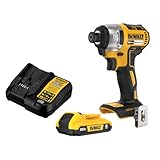
Installing screws into wooden wall studs is one of the jobs impact drivers handle especially well. They are compact, deliver high rotational force, and resist cam-out better than a standard drill when driving long screws. The best choice depends less on maximum torque than on control, battery size, and the fasteners you plan to use.
For most household framing, mounting, shelving, and cabinet work, a compact 18V or 20V cordless impact driver is the practical choice. A 12V model can work for lighter screws, while a high-torque model is usually unnecessary and easier to overdrive into the wood.
As an Amazon Associate we earn from qualifying purchases at no extra cost to you.



What we cover
What to Look For in an Impact Driver
Look for a brushless motor, a variable-speed trigger, and at least two or three electronic speed modes. Brushless models generally run cooler and provide better runtime, though a brushed driver can be a reasonable bargain if you only use it occasionally. A 1/4-inch hex chuck is standard and accepts impact-rated driver bits.
For driving screws into studs, usable control matters more than a headline torque figure. A driver rated around 1,500 to 2,000 inch-pounds has ample power for common 3-inch structural screws. More powerful tools can drive larger fasteners, but they also make it easier to strip a head, snap a screw, or bury the fastener too deeply.
A compact tool head is valuable when working inside cabinets or between framing members. Tool-only compact drivers often weigh about 2 pounds without a battery; adding a small battery keeps the setup manageable for overhead work. A larger 5.0Ah battery extends runtime but adds noticeable weight.
Best Impact Driver Types for Stud Work
| Type | Best use | Advantages | Limitations |
|---|---|---|---|
| 12V compact | Small screws, hardware, light mounting | Light, easy to control, inexpensive | Less power and shorter runtime |
| 18V or 20V compact | Most screws into wall studs | Good balance of power, size, and battery life | Heavier than 12V tools |
| 18V or 20V high-torque | Large structural screws and repeated heavy work | Maximum driving power | Bulkier, easier to damage fasteners or wood |
| Brushless variable-speed | Frequent DIY or professional use | Better efficiency, control, and durability | Higher purchase price |
For a first cordless tool, start with a compact brushless 20V impact driver kit. Kits usually include a battery and charger, which can cost nearly as much as the bare tool. If you already own batteries in a platform, buying the tool only is often the cheaper option.
How Much Power Do You Need?
Driving a 2-1/2-inch or 3-inch screw into a dry softwood or construction-grade stud does not require extreme torque. A compact 18V or 20V driver can usually do it without difficulty. For 4-inch structural screws, ledger fasteners, or dense hardwood, additional power and a larger battery become more useful.
Electronic modes are important. Use the low or medium setting for cabinet screws, trim, and small hardware. Use full power only when the fastener needs it. Some drivers have a dedicated screw-driving mode that reduces speed near the end of the drive; this can limit damaged screw heads and overdriven screws.
A 12V driver is fine for attaching brackets, electrical boxes, and light shelving when you use screws roughly 1-1/4 to 2 inches long. It is less suitable for dozens of long structural screws or repeated work in hardwood. The cheaper option is perfectly reasonable if you only hang a few items each year.
Bits and Screws Matter as Much as the Tool
Use impact-rated driver bits, not ordinary chrome-plated bits intended for a drill. Impact bits are designed to flex under repeated hammering. Standard bits can twist, chip, or break in an impact driver, particularly with a Phillips head.
Choose the exact bit size for the screw. A loose bit increases cam-out and rounds the recess. Torx and other star-drive screws generally hold better than Phillips screws, especially when driving long fasteners overhead. Keep a spare bit nearby; a worn tip is a common cause of slipping.
Do not use the impact mechanism to drill large holes unless the manufacturer permits it and you have the correct hex-shank bit. For pilot holes, use a drill with a sharp wood bit, or install a hex-shank wood drill bit set rated for impact-driver use.
The Correct Way to Drive Into a Stud
First locate the center of the stud. A stud finder is useful, but confirm the location with a small probe hole or by measuring from a known corner. Typical wall framing uses studs spaced 16 inches on center, but older homes and unusual walls may differ.
Hold the driver square to the screw head and start slowly. Once the threads engage, increase speed while applying firm pressure directly behind the tool. Stop when the screw head is flush with the bracket or just below the surface of the wood. Do not continue hammering after the fastener seats.
For screws near the end of a board, drill a pilot hole to reduce splitting. A pilot hole is also worthwhile in hardwood or when using a screw close to 3 inches long. Select a bit roughly equal to the screw’s solid core diameter, not the outside diameter of the threads. For a typical 3/8-inch structural screw, a pilot hole around 1/4 inch may be appropriate, but follow the screw manufacturer’s instructions.
Common Failure Modes
Overdriving is the most frequent problem. It can crush the wood fibers, pull a bracket out of alignment, or weaken the connection. Stripped heads usually result from the wrong bit, worn bits, insufficient pressure, or starting at full speed.
A screw that spins without tightening may have missed the stud or stripped the wood. Remove it and verify the framing rather than installing a longer screw at the same location. If the screw breaks, back the remaining shaft out with locking pliers if possible; do not simply drive a second fastener directly beside it without checking for damage.
Finally, remember that a stud is not automatically safe to drill deeply. Electrical cables and plumbing can pass through framing. Avoid unusually deep holes and respect any protective metal plates encountered in the wall. For most mounting jobs, a screw that penetrates the stud by about 1-1/2 to 2 inches provides a useful balance of holding power without excessive length.