What's inside
As an Amazon Associate I earn from qualifying purchases. This post may contain affiliate links at no extra cost to you.
An impact driver can make a long flooring screw feel easy to drive, but that does not mean it is the right tool for every hardwood-flooring job. Its rapid blows help with dense wood and long fasteners, yet they also make it easier to overdrive a screw, split a board or damage a driver bit. For most flooring work, control and the right pilot hole matter more than maximum torque.
As an Amazon Associate we earn from qualifying purchases at no extra cost to you.



What we cover
When an impact driver makes sense
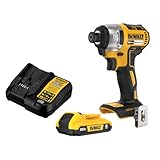
An impact driver is useful when you are fastening thick hardwood to a subfloor or joist with long screws, especially if a regular drill stalls or twists your wrist. It is compact, handles repeated fastening well and usually accepts standard 1/4-inch hex-shank bits. A cordless impact driver with variable-speed control is a sensible choice if you already own compatible batteries or expect to drive many screws.
For installing a floating floor, an impact driver is generally unnecessary: the boards are not screwed down. For face-screwing visible hardwood, or for a small repair with short screws, a drill/driver often gives better control. Flooring manufacturers may specify a fastening method, screw type or spacing; follow those instructions rather than assuming every floor should be screwed through its face.
What to look for in a driver
For hardwood flooring, prioritize a trigger that is easy to feather and, if available, selectable speed or drive modes. Low speed helps start screws without jumping the bit out of the head. A compact tool can be easier to position near walls and joists, but a shorter tool is not automatically more powerful. Brushless motors can improve runtime and reduce maintenance, though a brushed model is perfectly serviceable for occasional repairs.
Voltage alone is a poor way to compare tools. Look instead at control, battery fit, weight and whether the tool can complete your typical fasteners without bogging down. A lightweight 12-volt impact driver can handle many repair jobs; a 18- or 20-volt platform is a better bet for frequent long screws in dense oak or maple. If you need to buy batteries and a charger, compare the full kit price, not just the bare tool.
| Tool choice | Best use | Main trade-off |
|---|---|---|
| Drill/driver | Short screws, visible fasteners and careful starts | Can stall or twist your wrist on long screws |
| Compact 12-volt impact driver | Small repairs and moderate screw lengths | May slow down on repeated long screws in dense hardwood |
| 18-/20-volt impact driver | Frequent fastening and longer screws | More power can make overdriving easier; often heavier |
Choose the right bit and screw
Use a bit that matches the screw head exactly, and replace it when the tip is rounded or chipped. A worn Phillips bit can cam out under impact, chewing up the recess and leaving a mark on the floor. Use a quality impact-rated bit when the driver is doing sustained work. For decorative or visible screws, confirm the head style and finish suit the floor before starting.
Do not choose a screw solely by length. It must pass through the flooring and achieve sound holding in the material below without striking pipes, wiring or other services. Check the floor and subfloor construction, and locate joists where the fastening plan requires them. A screw that is too short may not hold; one that is too long can penetrate where it should not. A flooring screw suited to the installation is preferable to a generic drywall screw, which is brittle and not designed for this use.
Pilot holes and safe driving
Hardwood can split, particularly near board ends, edges or existing fasteners. Predrill where the flooring instructions call for it, when working close to an edge, or when a test screw shows the wood is splitting or the fastener is wandering. The pilot-hole diameter should suit the screw’s core and the wood; there is no single size that works for every screw. A countersink or clearance hole may also be needed to seat a screw head flush without crushing the surface.
Start the screw at low trigger speed with the bit seated firmly. Keep the driver aligned with the screw, then release the trigger as soon as the head reaches the intended depth. Impact drivers can bury a screw head in a fraction of a second, so do not hold the trigger after seating. If the screw binds, backs out or starts to strip, stop and inspect the bit, pilot hole and screw alignment rather than forcing it. For a straightforward repair, a variable-speed drill/driver with a clutch may be the cheaper and safer option.
Common problems and how to avoid them
Split boards: Move the fastener away from the end or edge if the installation allows it, predrill, and avoid driving a screw into a damaged or unusually narrow section. Stripped heads: Use a fresh, correctly sized bit, keep it seated, and reduce speed at the start. Overdriven screws: Feather the trigger and stop at flush; deep dimples may be difficult to hide or repair. Driver stalls: Check for a dull or unsuitable screw, a poor pilot hole, a low battery or a fastener that is too long for the application.
Wear eye protection, keep your free hand clear of the bit and fastener, and secure loose boards before driving. If the screw repeatedly binds, do not compensate by buying the highest-torque driver. Find the cause first: the wrong fastener, inadequate pilot hole or unsuitable installation method is more likely to be the real problem.