What's inside
As an Amazon Associate I earn from qualifying purchases. This post may contain affiliate links at no extra cost to you.
Impact drivers can make screw installation in engineered wood joists faster, but speed is not the main buying criterion. These joists—such as I-joists, LVL and laminated beams—have specific fastening rules, and an impact driver cannot make an unapproved screw or location safe. Choose a driver for controlled starts, useful power, battery compatibility and comfortable handling, then follow the joist and fastener manufacturers’ instructions.
As an Amazon Associate we earn from qualifying purchases at no extra cost to you.



What we cover
Check the joist and fastener first
Engineered products are not interchangeable. An I-joist has thin web material between top and bottom flanges; driving an ordinary structural screw into the web or flange may be prohibited or may reduce capacity. LVL and other laminated products have different approved fastening details. Before drilling or fastening, check the joist maker’s installation guide and the screw maker’s instructions. If the detail is unclear—especially for a load-bearing connection—ask the supplier or a qualified building professional rather than guessing.
Use a structural screw rated for the specific connection, not a drywall or general-purpose deck screw. Match its diameter, length, head style and required pilot hole to the approved detail. A longer screw is not automatically stronger: it can split material, protrude through the far side or hit wiring and plumbing. If the job is simply attaching a light fixture or a nonstructural cleat, verify that the proposed location and fastener are permitted for that joist product.
What to look for in an impact driver
For routine screw work, a 12V driver is often adequate and lighter to use overhead or in a tight joist bay. A 18V or 20V-class driver makes more sense for frequent work, larger approved structural screws or a battery platform you already own. Don’t compare tools by maximum torque alone: published torque figures are measured under particular conditions and do not tell you how gently a driver starts a screw.
Look for a variable-speed trigger, a low-speed mode or selectable assist settings, and a comfortable grip. These features help prevent a screw head from camming out, a bit from breaking, or a fastener from being driven too far. A compact head can be useful between joists, but a very small tool may have less runtime or feel less composed under sustained heavy fastening. Brushless motors can improve efficiency and runtime, but a brushed driver is usually fine for occasional home repairs.
Which type fits the job?
| Driver choice | Best fit | Trade-off |
|---|---|---|
| 12V impact driver | Occasional work, small to medium approved screws, cramped spaces | Less runtime and reserve for repeated large fasteners |
| 18V/20V-class impact driver | Regular use, larger approved screws, shared battery platform | Heavier and often more tool than needed for a few small screws |
| Basic single-speed impact driver | Low-cost, occasional fastening with a careful operator | Less control for delicate starts and short fasteners |
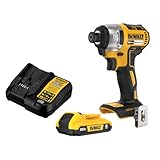
If you’re buying a tool for this work, compare a 12V impact driver kit with a compact 18V/20V-class variable-speed kit. The cheaper 12V option is a sensible choice for a handful of approved fasteners each year. If you already own compatible batteries, buying a bare tool may cost less than another kit; check that the charger and battery are included before comparing prices.
Use the right bit and setup
Use the exact drive type and size specified for the screw. A worn or undersized bit slips, damages the recess and can leave a screw stuck halfway in. Keep a fresh spare bit nearby. A magnetic bit holder is convenient, but a short, high-quality impact-rated bit gives less wobble for demanding screws. For hex-head structural screws, use the correct-size impact-rated socket or nut setter; a loose fit can round the head.
Seat the bit fully, hold the driver square to the screw and start slowly. If the screw maker calls for a pilot hole, drill the specified diameter and depth with a drill, then use the impact driver to fasten. An impact driver is not a substitute for a drill when you need a controlled, accurate pilot hole. Avoid using an impact-rated drill bit for unrelated drilling unless its packaging specifically allows it.
Drive without damaging the connection
Start with the driver’s low setting, if available, and squeeze the trigger gently until the threads engage. Keep steady pressure in line with the screw; leaning sideways encourages bit slip. Stop when the head reaches the specified position. Driving until the tool hammers aggressively after seating can strip the drive, crush wood fibers or overdrive the fastener. If a screw stalls, don’t simply switch to maximum power: back it out, inspect the bit and hole, and check that the screw and pilot hole match the instructions.
Engineered joists can conceal services, and drilling into a flange or web may be restricted. Locate any wiring or pipes before work, and do not notch, bore or add fasteners outside the manufacturer’s approved locations. If a screw spins without tightening, the hole may be stripped or the fastener may have missed the intended material. Stop and reassess; moving a screw a short distance can still violate required spacing or edge distances.
Make the buying decision
For occasional, light fastening, a basic impact driver with a variable-speed trigger and the correct bit is enough; paying extra for high torque is unlikely to improve the result. For repeated structural fastening where the plans and product instructions permit it, choose a comfortable brushless 18V/20V-class tool with speed control and buy the manufacturer-approved screws separately. A set of impact-rated driver bits is a more useful add-on than a larger battery if your current battery already lasts through the job.
Whichever driver you choose, treat the fastener schedule—not the tool’s maximum power—as the authority. The right screw, location and installation method matter more to the connection than driving it quickly.