What's inside
As an Amazon Associate I earn from qualifying purchases. This post may contain affiliate links at no extra cost to you.
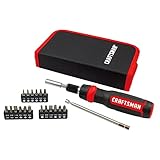
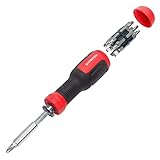
The best interchangeable screwdriver set for most repairs is a ratcheting or fixed-handle kit with a secure 1/4-inch bit holder, at least 12 useful bits, a comfortable handle, and storage that keeps each bit visible; Wera Kraftform Kompakt 60 is the strongest all-round workshop choice, while Klein Tools 11-in-1 suits electrical and household work and Megapro 13-in-1 is especially convenient for compact everyday carry.
As an Amazon Associate we earn from qualifying purchases at no extra cost to you.

What we cover
Quick comparison: which set fits your work?
| Set | Typical configuration | Best for | Main strength | Limitation |
|---|---|---|---|---|
| Wera Kraftform Kompakt 60 | 17 pieces: handle, holder, and 16 interchangeable 1/4-inch bits | Workshop repairs and frequent use | Excellent bit selection, grip, and holder security | More expensive and bulkier than basic kits |
| Megapro 13-in-1 | 13 pieces: handle plus 12 stored double-ended bits | Household maintenance and toolboxes with limited space | Bits store inside the handle for quick access | Less range than a larger bit case |
| Klein Tools 11-in-1 | 11 functions, including screwdriver tips and nut drivers | Electrical, appliance, and general service work | Useful integrated nut-driver sizes and rugged construction | Usually less suitable for precision electronics or specialty fasteners |
| Wiha multi-bit interchangeable sets | Common kits range from about 10 to more than 20 pieces | Users prioritizing precise fit and refined handles | Good machining and comfortable professional-style grips | Configuration and price vary considerably by model |
Piece counts need careful reading. A “13-in-1” tool may contain 12 double-ended bits, giving 24 usable tips, while a 17-piece kit may count the handle, holder, and every individual bit. Compare the actual tip inventory rather than the headline number.
What makes an interchangeable screwdriver set versatile?
Bit range and fit
A useful general-purpose set should cover Phillips PH1, PH2, and PH3; slotted sizes around 3, 4.5, and 6 mm; Torx T10 through T30; and at least one small hex or square-drive selection. PH2 and Torx T20 or T25 handle a large share of household, furniture, appliance, and workshop fasteners.
For furniture and woodworking, add Pozidriv PZ1 and PZ2. Pozidriv fasteners can look similar to Phillips screws, but the profiles are different; using a Phillips tip in a Pozidriv screw increases the chance of cam-out and damaged recesses. For automotive or machinery work, look for Torx T40 and larger sizes, metric hex bits, and security Torx if the fasteners require it.
Bit material matters less than correct sizing and heat treatment. S2 tool steel is common in better sets, but a carefully fitted bit from ordinary hardened steel can outperform a poorly sized “premium” bit. A bit should fill the recess without rocking, and its edges should remain crisp rather than rounded.
Holder security
The holder is the part that determines whether switching feels efficient or irritating. A magnetic 1/4-inch hex holder makes bit changes quick and helps retain a bit during overhead work. A locking collar or ball-detent mechanism is preferable when the driver will be pulled sideways or used with stubborn screws.
Magnet-only retention is adequate for light household work, but it can release a bit when the driver is shaken, inverted, or used in a deep recess. For workshop use, choose a holder with a positive sleeve lock or strong detent. Also check whether the holder is permanently attached to the handle: a short integrated holder is faster to use, while a separate extension offers greater reach and flexibility.
Handle comfort and control
A short, thick handle provides torque for cabinet hardware and seized screws. A slimmer handle improves access around hinges, electronics, and recessed fasteners. Dual-material grips generally offer better comfort than hard plastic, especially when a repair involves dozens of screws.
Look for a defined palm swell, a non-slip surface, and a smooth transition around the bit socket. A ratcheting handle reduces wrist movement, but it adds moving parts and can be less confidence-inspiring when maximum torque is needed. Ratchet mechanisms are best for repeated fastening, not for breaking loose heavily seized fasteners.
Best choices by situation
- Small budget and occasional repairs: choose a 10- to 13-function kit with Phillips, slotted, and common Torx tips. Avoid paying for specialty security bits you are unlikely to use.
- Limited storage: choose an internal-storage handle such as the Megapro format. It keeps the bits together, although the handle becomes thicker and the selection is harder to expand.
- Electrical and appliance service: the Klein Tools 11-in-1 format is practical because nut drivers and standard screwdriver tips share one handle. Confirm that the model has the insulated rating required for the task; a general multi-bit tool is not automatically suitable for live electrical work.
- Furniture, woodworking, and workshop repairs: choose the broader bit selection and stronger holder of a Wera Kraftform Kompakt 60 or a similar professional kit. Include PZ2, Torx T20–T30, and several slotted sizes.
- Precision work: buy a dedicated precision driver set instead of forcing a full-size interchangeable handle into small screws. Precision bits are thinner and can be damaged by excessive torque.
- Frequent use: spend more on a handle with a replaceable or robust holder, clearly marked bits, and a case that can be opened with one hand. Time saved finding bits soon matters more than the initial piece count.
Coverage calculation: is a larger set worth it?
Suppose a compact 13-in-1 tool covers 13 common functions and costs roughly $30–$45, while a broader 17-piece professional kit costs roughly $60–$100. At a middle estimate, the compact tool costs about $2.88 per function ($37.50 divided by 13), while the larger kit costs about $4.71 per listed piece ($80 divided by 17).
That does not make the compact tool better value. If the larger kit prevents only two damaged screws or one interrupted trip to buy a missing PZ2 or T25 bit, its additional cost may be justified for regular workshop use. For five household repairs per year, however, the compact kit is usually the more sensible purchase. Match the kit to the number and variety of fasteners you actually encounter.
Storage is part of the tool
Internal handle storage is fastest for a small selection, but it can make bits difficult to identify and limits capacity. A molded case gives a larger range and clearer labeling, provided the bits fit tightly enough that they do not spill when the case is carried vertically.
Check whether the case includes a place for loose or replacement bits. A set that holds 16 bits but has no spare capacity becomes inconvenient when one frequently used PH2 bit wears out. Color coding can help, but engraved size markings are more durable and easier to read under poor lighting.
Durability and maintenance realities
The first parts to wear are usually the most-used bits, the holder magnet or detent, and the ratchet mechanism. PH2, T20, and T25 often see disproportionate use. Replace a bit when its tip is visibly rounded, twisted, or no longer fills the recess. Continuing to use it damages both the screw and the bit.
- Brush sawdust, metal filings, and grit out of the bit socket rather than pushing debris deeper into the holder.
- Wipe bits dry after use; moisture left in a closed case can cause surface rust.
- Do not use an interchangeable screwdriver as a pry bar or chisel.
- Use a nut driver or wrench when the fastener requires substantial torque; a screwdriver handle is not a substitute for a socket.
- Keep bits organized by profile and size so the correct tip is selected before the screw recess is damaged.
For woodworking, clear dust from Torx and Pozidriv recesses before driving. For metalwork, apply appropriate penetrating lubricant to a seized fastener and use the correct full-size bit rather than trying to compensate with extra downward force.
Bottom line
Choose the Wera Kraftform Kompakt 60 when bit coverage, grip quality, and secure switching matter most. Choose the Megapro 13-in-1 when compact internal storage is the priority, or the Klein Tools 11-in-1 when integrated nut drivers make it a better match for service and electrical work. Whichever set you buy, prioritize the right bit profiles, positive holder retention, and accessible storage over an inflated piece count.