What's inside
As an Amazon Associate I earn from qualifying purchases. This post may contain affiliate links at no extra cost to you.
What we cover
What works on soft brick
For most holes in soft brick, start with a sharp carbide-tipped masonry bit in a regular cordless drill, with hammer mode switched off. Soft brick is easy to penetrate, and the extra impact from a hammer drill can break away the hole edges, loosen the brick face, or turn a snug anchor hole into a sloppy one. A basic set of carbide-tipped masonry bits is usually the sensible purchase for occasional shelves, signs, or light-duty fittings.
Bit size and hole quality matter more than buying the most expensive bit. Match the diameter to the anchor maker’s instructions, drill straight, and stop at the required depth. If the brick is unusually hard, the hole is large, or you have many holes to make, a hammer drill or SDS-plus rotary hammer can save time—but use its least aggressive suitable setting and test first.
As an Amazon Associate we earn from qualifying purchases at no extra cost to you.


Choose the bit for the job
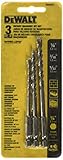
Most masonry bits use a carbide cutting tip brazed to a steel shank. The tip scrapes and chips masonry rather than slicing it like a wood bit. For small holes in soft brick, a standard straight-shank bit works well in a cordless drill’s three-jaw chuck. A basic bit set is cheaper and adequate for a few holes, provided the tips are sharp and the sizes include the one your anchors need.
For repeated drilling, consider a higher-quality bit with a robust carbide tip and a flute shape that clears dust efficiently. Better bits tend to stay sharp longer, but they will not compensate for the wrong mode, excessive pressure, or a loose chuck. SDS-plus bits are intended for tools with an SDS-plus holder; they do not fit a standard drill chuck unless you use an adapter, which is generally a poor choice for hammering.
Bit and tool comparison
| Setup | Best use | Trade-off |
|---|---|---|
| Carbide masonry bit, standard drill, hammer off | Small holes, soft brick, occasional anchor installation | Slower in hard brick; usually offers the best control |
| Carbide masonry bit, hammer drill | More holes or tougher brick when a standard drill stalls | Can chip soft brick or enlarge the hole if used aggressively |
| SDS-plus bit and rotary hammer | Frequent drilling, larger holes, hard masonry | More tool than most small soft-brick jobs need |
| Basic masonry bit set | Occasional holes where exact sizes are covered | May dull faster; replace a blunt bit rather than forcing it |
Match the hole to the anchor
Choose the anchor before drilling. Plastic masonry plugs commonly require a hole matching the plug’s stated diameter, but specifications vary, so follow the package rather than assuming a 6 mm plug always calls for a 6 mm hole. If the hole is too small, the plug may not seat; if it is too large, it can spin or pull out. A screw driven directly into brick without a suitable anchor may loosen under load.
For light items, a properly sized plastic plug may be enough. For heavier loads, repeated use, or uncertain brick condition, select an anchor rated for the material and expected load. Brick can vary substantially: a hole near a crumbling edge or in a damaged brick is less reliable than one placed in sound material. Avoid drilling close to an edge; where possible, leave at least about 25 mm between the hole and a brick edge, and more for larger anchors or brittle brick.
Drill without damaging the brick
Check for cables and pipes before drilling, especially around outlets, taps, and radiators. Mark the location, hold the drill square to the wall, and start slowly so the bit does not skate across the face. Use moderate, steady pressure. Let the bit cut; leaning hard on the drill can overheat the tip and make it wander.
For soft brick, keep hammer action off at first. If progress is very slow after a few seconds and the brick is sound, try hammer mode briefly at low pressure. Stop if the face begins to spall or the hole grows loose. A cordless drill with enough battery charge is fine for a handful of small holes; for a larger anchor hole, check that the bit and drill are rated for the diameter.
Drill slightly deeper than the anchor length—often about 5 mm extra—to leave room for dust, unless the anchor instructions specify otherwise. Withdraw the bit occasionally to clear debris, then vacuum or brush the hole clean. Dust left inside can prevent a plug from seating fully. Wear eye protection, and use respiratory protection if drilling produces substantial dust indoors.
When to spend more
A budget carbide bit is a reasonable choice for a few holes in soft brick. Replace it when it stops cutting cleanly, takes much longer than the first hole, or needs excessive pressure. Continuing with a blunt bit can create heat and an uneven hole, and can damage the brick without saving money.
If you routinely drill masonry, a reliable hammer drill and a small set of quality bits are a better investment than repeatedly replacing cheap bits. For frequent, larger-diameter holes, look at an SDS-plus rotary hammer and compatible bits. Its power is useful in hard masonry, but it is easy to overdo the impact in soft brick. For a single small anchor hole, buying one is rarely justified.
Common mistakes to avoid
Do not use a wood or metal bit for brick; it is not shaped to cut masonry and may quickly lose its edge. Do not assume hammer mode is always faster. In soft or hollow brick, impact can break internal webs or leave a ragged opening that will not hold an anchor. Avoid forcing a bit through rebar or another obstruction; stop, check the location, and choose another spot if appropriate.
Finally, do not judge an anchor by how tightly its screw turns. A plug that spins in an oversized or dusty hole is not secure. Remove it, clean and assess the hole, and use a suitable repair method or move to sound brick rather than relying on a larger screw to disguise a poor fit.