What's inside
As an Amazon Associate I earn from qualifying purchases. This post may contain affiliate links at no extra cost to you.
A handrail base puts more stress on an anchor than a typical wall-mounted shelf. People pull sideways, push off while climbing, and sometimes catch themselves on the rail. The best anchor depends on the masonry, the base plate, the hole location, and whether the rail is merely a convenience or a required safety feature.
For a solid concrete step or slab, a properly installed expansion anchor is usually the practical choice. For old, cracked, or questionable concrete, epoxy-set threaded rod gives more control. For concrete block or brick, avoid choosing an anchor by diameter alone: the masonry may be hollow, weak, or too close to an edge for expansion hardware.
As an Amazon Associate we earn from qualifying purchases at no extra cost to you.


What we cover
Best anchor types for a handrail base
| Anchor type | Best use | Strength and advantages | Main drawbacks |
|---|---|---|---|
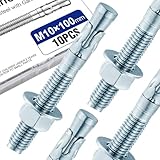
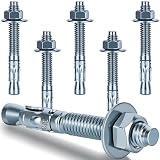
| Wedge anchor | Sound, solid concrete | Very strong; excellent resistance to pullout and shear | Needs accurate drilling, adequate edge distance, and a hole deeper than the embedment |
| Sleeve anchor | Light- to medium-duty work in concrete or some masonry | Simple installation; works in a range of base materials | Usually less robust than a wedge anchor for a heavily loaded handrail |
| Concrete screw | Small bases, repairs, and moderate loads | Fast to install and removable; no setting tool required | Can strip or lose capacity in weak concrete or oversized holes |
| Epoxy and threaded rod | Cracked, old, or uncertain concrete | No expansion force; flexible embedment and strong holding power when installed correctly | More expensive and slower; requires hole cleaning and cure time |
For solid concrete: wedge anchors are the default
A galvanized or stainless concrete wedge anchor is the normal first choice for a steel or aluminum handrail base mounted to sound concrete. Common diameters are 3/8 inch and 1/2 inch. A 1/2-inch anchor offers more capacity, but it also requires a larger hole and leaves less room near an edge.
Use the diameter and minimum embedment specified by the anchor manufacturer, not a guessed depth. As a general starting point, many handrail installations use roughly 2-1/2 to 4 inches of embedment, but the required depth varies by anchor and load. The drilled hole must be deeper than the anchor’s embedment so dust and the projecting tip do not bottom out.
Expansion anchors need adequate distance from slab edges and from one another. A hole near the edge can split or blow out the concrete when the anchor is tightened. The anchor’s instructions may require several inches of edge distance and spacing; if your base plate will not allow that, switch to a different layout or consider epoxy-set rod rather than forcing an expansion anchor into a bad location.
When concrete screws are enough
Concrete screws are a sensible, cheaper option when the base plate is compact, the concrete is in good condition, and the handrail will see ordinary residential use. They are especially convenient when you need to remove or reposition the railing. A 1/4-inch or 5/16-inch screw may be suitable for a small bracket, but do not assume several small screws automatically equal a structural anchor system.
Choose a screw with a published load rating and use the manufacturer’s specified drill bit. The hole must be cleaned and drilled to the correct depth. A hammer drill set to hammer mode makes the hole quickly, but excessive wobbling enlarges it and reduces thread engagement. Stop if the screw spins without tightening; an oversized or damaged hole is not fixed by driving the screw harder.
For a handrail that must withstand building-code loading, a larger heavy-duty concrete screw system or a tested wedge anchor is generally a better choice than relying on small screws.
Why epoxy anchors help in damaged concrete
Epoxy-set threaded rod does not expand against the sides of the hole. That makes it useful near edges and in concrete with some cracking, provided the engineer, anchor manufacturer, or project requirements allow that application. It is also useful when the base plate holes do not provide the spacing needed for expansion anchors.
Installation quality matters more than with a screw. Drill the specified diameter and depth, then brush and blow the hole repeatedly until loose dust is removed. Dust left in the hole can become a weak layer between the resin and concrete. Inject from the bottom of the hole, fill according to the resin instructions, and twist the threaded rod into place. Do not load it until the stated cure time has passed; cold temperatures can lengthen that time considerably.
Use a listed anchoring adhesive, not general-purpose construction adhesive. For outdoor stairs, select hardware and resin rated for exterior exposure. Stainless steel is preferable in wet or coastal locations, while hot-dip galvanized hardware is often adequate in ordinary sheltered conditions.
Brick and concrete block require a different approach
Do not use a standard wedge anchor in hollow block or the hollow face of brick. Expansion can crush the shell, and the anchor may have little material around it. A sleeve anchor may work in solid brick or fully grouted block, but verify the base material first by drilling a small test hole or checking the construction.
For hollow masonry, use a fastening system specifically rated for hollow block, such as a screen-and-resin system with threaded rod or a suitable toggle-style masonry anchor. The handrail base should ideally attach over a solid cell, filled core, or a properly installed structural backing plate. If the block is cracked, spalled, or deteriorated, repair or replace the masonry rather than depending on a larger anchor.
Drilling and installation details that prevent failures
Use a rotary hammer with an SDS-plus masonry bit for multiple or deep holes in concrete. A hammer drill with a carbide masonry bit works for a few holes, though it is slower and easier to overheat. Keep the bit straight, especially when drilling through a thin base plate or template. A crooked hole can prevent the anchor from seating fully.
Vacuum or blow out every hole. Concrete dust reduces friction for expansion anchors and interferes with adhesive bonding. Tighten nuts with a torque wrench when the manufacturer specifies torque. Under-tightening can leave an expansion anchor loose; over-tightening can strip threads, crush weak masonry, or damage the concrete around the hole.
Finally, check the base plate before drilling. You need enough metal around each hole, a flat bearing surface, and a post that cannot rock. If the plate flexes, the anchors receive repeated prying loads that can loosen even correctly installed hardware. For a safety-critical stair rail, use a tested railing bracket or base system and confirm local code requirements before choosing the least expensive anchor.