What's inside
As an Amazon Associate I earn from qualifying purchases. This post may contain affiliate links at no extra cost to you.
Robertson screws are a good fit for framing: the square recess holds a driver bit better than a Phillips recess, especially when you’re working one-handed or overhead. The right bit still matters. A worn, poorly sized, or overly long bit can cam out, chew the screw recess, or make a driver harder to control.
As an Amazon Associate we earn from qualifying purchases at no extra cost to you.


What we cover
Choose the right Robertson size
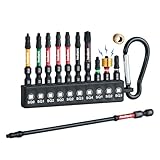
Match the bit to the screw, not just to the tool. Robertson bits are commonly identified by color: green for #1, yellow for #2, and red for #3. For framing screws, #2 is a frequent fit, but screw sizes and recesses vary. Check the screw packaging or test the bit in a sample screw before driving a full box.
A correct bit seats fully and has little side-to-side wobble. If it rocks in the recess, it may be too small or worn. If it won’t seat to the bottom, it may be too large or the recess may be packed with debris. Don’t force either condition. A mismatched bit is more likely to slip under load and round the recess.
Bit types and trade-offs
| Bit type | Best use | Trade-off |
|---|---|---|
| Standard 1-inch bit | General framing when the screw head is easy to reach | Requires a bit holder or magnetic sleeve for many quick-change tools |
| 2-inch or longer bit | Recessed screws, tight spaces, and reaching past a bracket or board edge | More flex and wobble than a short bit; can reduce control |
| Impact-rated bit | Repeated driving with an impact driver | Costs more; unnecessary for occasional low-load work with a drill |
| Magnetic bit holder | Holding a screw in place during starts and overhead work | Adds length and may collect metal shavings |
For frequent framing with an impact driver, choose impact-rated #2 Robertson bits in a short length for normal driving. Impact-rated bits are designed to tolerate the repeated torsional shocks of an impact driver. They can last longer under that use, but they do not prevent stripping caused by the wrong size, a crooked start, or excessive force.
Drill or impact driver?
A cordless drill gives smoother control and is often the better choice for smaller screws, delicate stock, or a job where you need to stop precisely. Use a low gear and a clutch setting that drives the screw without burying the head. Increase the clutch gradually if the tool stops too early.
An impact driver is useful for driving many structural screws or longer fasteners into dense lumber. Its hammering action can keep the bit turning under resistance, but it also makes it easier to drive a screw too far or damage the recess before you react. Start slowly, keep the bit square to the screw, and ease off as the head approaches the surface. For long structural fasteners, follow the screw maker’s installation instructions; a framing screw is not automatically a substitute for a specified nail or connector fastener.
Pick a useful length and holder
A 1-inch bit is compact and generally gives the best control when the screw head is accessible. A 2-inch bit reaches past obstructions and is convenient in a quick-change chuck, but its extra length can amplify wobble. Use the shortest bit that reaches the screw cleanly. Longer bits are a reach solution, not an upgrade for every task.
A magnetic holder can keep a screw on the bit during placement. That helps when starting screws with one hand, but magnets attract filings that can interfere with seating. Brush the holder and recess clean when the bit starts to sit shallowly. For overhead starts, a holder is helpful, but a screw with a damaged or shallow recess can still fall off.
Buying and inspecting bits
If you drive only a few framing screws a year, a basic Robertson bit set with #1, #2, and #3 sizes is usually enough. It lets you test the fit and replace a bit without buying an assortment of specialty lengths. For steady work, buy spare bits in the size you use most. A multi-pack is more practical than stopping mid-job because a tip has rounded off.
Inspect the tip when it begins to slip. Look for rounded corners, a chipped point, or polished wear on the working faces. Replace a damaged bit rather than leaning harder on the tool. More pressure may temporarily help, but it can force the bit out of the recess and leave a screw you cannot easily remove.
Drive cleanly and avoid stripping
Hold the driver in line with the screw. Set the bit firmly into the recess before pulling the trigger, then use steady pressure rather than pushing so hard that the tool tilts. For a screw that starts crooked, back it out and restart; trying to correct its angle while driving often damages the recess or bends the screw.
In framing lumber, knotty or dense areas can raise driving resistance. If the screw is binding, stop and check the bit fit, screw alignment, and whether the fastener is intended for that material and application. A pilot hole may help for some wood-screw tasks, but follow the fastener maker’s guidance for structural screws and connections. Driving a screw until its head is deeply buried can split wood, damage the surface, or compromise the connection.
Keep a spare bit and a few sample screws nearby when setting up. A quick fit check takes seconds and is cheaper than replacing a stripped fastener or repairing a damaged connection. For most framing work, a sharp, correctly sized #2 bit and a controlled driver matter more than buying the longest or most expensive bit on the rack.