What's inside
As an Amazon Associate I earn from qualifying purchases. This post may contain affiliate links at no extra cost to you.
A lightweight wall clock usually does not need a heavy-duty anchor. The right choice depends on the clock’s weight, the drywall condition, and whether you can place the fastener over a stud. For most clocks under about 5 pounds, a picture-hanging hook or a small self-drilling drywall anchor is enough. Larger or heavier clocks call for a rated anchor with more holding capacity.
As an Amazon Associate we earn from qualifying purchases at no extra cost to you.


What we cover
Check the clock and wall first
Weigh the clock if you are unsure; include any bracket or hardware that will hang from the wall. Check the back for a keyhole slot, wire, or mounting plate. A narrow keyhole may need a screw head of a particular size, while a wire can work with a picture hook.
Look for a stud near the intended spot. A stud finder helps, but confirm the location with a small finishing nail or by checking for a solid screw bite. If you can fasten into wood, a suitable screw driven into the stud is generally more secure than any drywall-only anchor. Avoid placing a clock where a failed fastener could land on a person, pet, or fragile item.
Anchor options at a glance
| Fastener | Best for | Typical trade-off |
|---|---|---|
| Picture hook or small nail | Very light clocks, often under 5 lb | Quick and inexpensive; depends on hook style and wall condition |
| Self-drilling plastic anchor | Light clocks with a screw-mounted bracket | Easy to install; can loosen or strip if overdriven |
| Expansion anchor | Light to medium loads in sound drywall | Needs a pilot hole; capacity varies by design |
| Toggle bolt or strap toggle | Heavier clocks or uncertain drywall strength | Strong when correctly installed, but needs a larger hole and clear space behind the wall |
Ratings on anchor packaging are not guarantees for every wall. They depend on drywall thickness, installation, load direction, and whether the material is damaged. For a clock, choose a fastener with a published working-load rating comfortably above the clock’s weight; do not treat a package’s maximum test load as a safe working load.
Best choice for most lightweight clocks
For a clock under about 5 pounds with a hanging wire or simple slot, a small picture hook is often the cheapest sensible choice. The angled nail spreads the load through the drywall, and the hook is designed for hanging objects. Follow the package rating and use a hook whose shape fits the clock hardware. A plain nail can work, but it is easier for a wire to slip off.
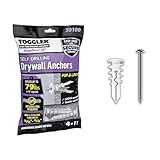
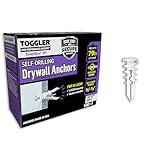
If the clock has a bracket that needs a screw, use a small plastic self-drilling anchor in intact drywall. These anchors cut or thread into the wall without a separate large pilot hole, making them convenient for a single household job. A small self-drilling drywall anchor kit is a reasonable purchase when you want matching screws and several sizes on hand. Choose one rated for the load rather than assuming that a larger-looking anchor is automatically stronger.
When a toggle is worth the extra work
For a clock above roughly 10 pounds, an irregular mounting plate, or drywall that feels soft, a toggle-style anchor offers more bearing area behind the sheet. A strap toggle is easier to position than a traditional metal toggle, but both need a hole large enough for the hardware. Check the cavity for pipes and wires before drilling, and make sure the toggle can open fully behind the wall.
For a typical lightweight clock, a toggle is usually unnecessary. It leaves a larger repair hole and takes longer to install. If you do need one, buy the size specified for your drywall thickness and screw diameter; a strap toggle anchor assortment can cover several mounting jobs, but a single appropriately sized fastener is enough for one clock.
Install without damaging the drywall
Mark the fastener position, then check that the clock will hang level and clear nearby doors or cabinets. For a self-drilling anchor, turn it straight into the drywall with a hand screwdriver or a drill on low speed. Stop when the flange is flush. Do not bury it or keep driving after it seats: overdriving can enlarge the hole and leave the anchor spinning.
For an expansion anchor, drill the pilot hole to the diameter on the package. Tap the anchor in gently until its collar sits flat, then drive the screw. If the anchor spins while tightening, stop; the hole may be oversized, or the drywall may be crumbly. Move the fastener to sound material and patch the failed hole rather than relying on a loose anchor.
For a toggle, drill the specified opening and install it exactly as directed. Keep the strap or toggle from turning while tightening. A screw that suddenly spins without becoming snug may mean the toggle did not open or the drywall has broken around the hole.
Hang the clock and pull down gently near its mounting point to check for movement. Do not use the clock as a handle or judge the anchor by a hard jerk; that can damage drywall even when the fastener is correctly installed. If the wall flexes, the screw loosens, or the clock shifts, remove it and reassess the anchor or use a stud.
What to buy for a one-clock job
For a very light clock, a rated picture hook is usually all you need. For a screw-mounted clock, a small assortment of self-drilling anchors is more useful than a large box of heavy toggles. Keep a hand screwdriver nearby for final tightening; a cordless drill is convenient for pilot holes, but high speed and excess torque can strip drywall or snap plastic anchors. Use a drill bit sized to the anchor instructions, not a guess.
If the clock is heavy, valuable, or mounted over a bed or seating area, favor a stud-mounted screw where possible. When there is no stud, use a properly rated toggle and install it in sound drywall. The best anchor is the one matched to the load and wall—not the biggest one in the package.