What's inside
As an Amazon Associate I earn from qualifying purchases. This post may contain affiliate links at no extra cost to you.
What we cover
The best SDS hammer drill for most masonry jobs
The best SDS hammer drill for most homeowners is the Bosch 18V EC Brushless SDS-plus Bulldog GBH18V-26: it combines a compact cordless body, a useful 1-inch drilling capacity in concrete, and enough impact energy for anchors and routine masonry holes. Choose the corded Bosch 11255VSR Bulldog Xtreme instead if you expect long drilling sessions and don’t want to manage batteries.
These six SDS-Plus models suit different jobs, but they don’t all accept standard round-shank bits directly. To use ordinary masonry or twist bits, check whether the tool includes a keyed chuck adapter or supports one approved for that model. An adapter is for rotary drilling, not hammer mode.
As an Amazon Associate we earn from qualifying purchases at no extra cost to you.
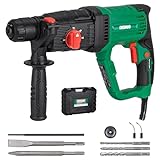


Six picks by job
- Best cordless all-rounder: Bosch GBH18V-26. A balanced pick for occasional concrete anchors, light chipping, and drilling where a cord would get in the way.
- Best for longer cordless sessions: DeWalt DCH273B. Its 3-mode design and relatively low vibration make it a strong choice for repeated overhead or wall drilling. The tool-only package requires a compatible battery and charger.
- Best compact cordless option: Milwaukee 2416-20 M12 FUEL. Smaller and lighter than 18V models, it’s convenient for anchor holes and tight spaces. Its lower power and capacity make it a poor substitute for a full-size rotary hammer on large or frequent holes.
- Best corded value: Bosch 11255VSR. A dependable corded option for a workshop or renovation where sustained power matters more than portability. It’s heavier and the cord can snag on ladders or clutter.
- Best corded control: Makita HR2475. A versatile 1-inch SDS-Plus rotary hammer with multiple operating modes, useful when one tool needs to drill, hammer-drill, and perform light chipping.
- Best for frequent drilling: Hilti TE 30-AVR. A more substantial choice for demanding work, with active vibration reduction. It costs more and is larger than most DIY users need; consider it when daily use and reduced fatigue justify the investment.
Quick comparison
Capacities and weights below are manufacturer-published figures where available. Weight varies by configuration; cordless figures may exclude the battery. Compare the exact tool variant and included accessories before buying.
| Model | Power | Max. concrete capacity | Published impact energy | Best fit |
|---|---|---|---|---|
| Bosch GBH18V-26 | 18V cordless | 1 in. | 1.9 ft-lb | General home and jobsite drilling |
| DeWalt DCH273B | 20V MAX cordless | 1 in. | 2.1 J (1.55 ft-lb) | Frequent holes with less vibration |
| Milwaukee 2416-20 | 12V cordless | 5/8 in. | 0.9 ft-lb | Small holes and tight access |
| Bosch 11255VSR | 8A corded | 1-1/8 in. | 2.0 ft-lb | Long sessions without battery swaps |
| Makita HR2475 | 7A corded | 1 in. | 2.7 J (2.0 ft-lb) | Drilling plus light chipping |
| Hilti TE 30-AVR | Corded | 1-1/8 in. | 3.6 J (2.7 ft-lb) | More demanding, repeated work |
Impact energy alone doesn’t tell you how quickly a drill will make a hole. Bit sharpness, concrete aggregate, hole depth, operator pressure, and dust removal all affect drilling speed. For a fair comparison, use the same diameter and length of new SDS-Plus bit in the same material.
Choose by holes per charge, not battery label
There is no dependable universal holes-per-charge figure for these cordless drills. A 1/4-inch anchor hole in soft block uses far less energy than a deep 3/4-inch hole in reinforced concrete. Battery capacity, temperature, bit condition, and pauses also change the result. Treat manufacturer runtime claims as test-specific, not a promise for your wall.
For a practical estimate, mark out a sample batch in the material you’ll actually drill. Make five holes at the intended diameter and depth with a fully charged battery, then check the charge indicator. If the batch uses roughly one-quarter of the charge, plan on about 20 similar holes per battery under those conditions—not 20 holes of every size or depth. Keep a second charged pack available for larger jobs.
When you need standard round-shank bits
SDS-Plus bits lock into the rotary hammer’s shank; ordinary round-shank bits do not. A compatible SDS-Plus-to-keyed-chuck adapter lets you install standard bits, but it adds length and leverage. Use it only in rotary mode, with hammer action switched off, and stay within the adapter maker’s limits. Hammering with a conventional chuck can loosen or damage the chuck and bit, and the added runout makes it less suitable for precise holes.
If you often switch between masonry and wood or metal drilling, a separate standard drill is usually the better setup. It’s quicker to change tools and avoids subjecting a chuck adapter to impacts.
What matters after the purchase
SDS-Plus bits are consumables: carbide tips dull, flutes wear, and damaged shanks can prevent proper locking. Replace bits that wander, overheat, or take noticeably longer to drill. Brush dust from the chuck area, keep the shank clean, and apply the bit grease recommended by the manufacturer. Don’t pack grease into the chuck or leave concrete dust on the shank; both can interfere with retention.
For faster, cleaner holes, use a sharp bit of the right diameter, hold the tool square, and let the hammer mechanism work without forcing the drill. Clear dust from deep holes periodically, following the anchor manufacturer’s installation instructions. If you repeatedly hit steel reinforcement, stop rather than leaning harder; check the location and use a suitable method for the obstruction.
Which one should you buy?
Pick the Bosch GBH18V-26 if you already own compatible 18V batteries and need a versatile cordless tool. Choose the Milwaukee 2416-20 for small holes in cramped spaces, or the DeWalt DCH273B if you drill often enough for vibration control to matter. For corded value, compare the Bosch 11255VSR and Makita HR2475 based on the modes and accessories you need. Move up to the Hilti TE 30-AVR when heavier, repeated work—not occasional household anchors—makes its added cost and size worthwhile.
Before ordering, verify the exact model number, included battery or charger, maximum bit capacity, and whether a round-shank chuck adapter is supplied. Tool-only listings and kit configurations can differ.