We research everything we recommend. When you buy through our links, we may earn a commission. As an Amazon Associate we earn from qualifying purchases.
Best Tin Snips for Cutting Sheet Metal in the Workshop
Compare the best tin snips for sheet metal work, from aviation snip sets to offset models, with cut direction, blade steel and cutting capacity explained.
Compare the best tin snips for sheet metal work, from aviation snip sets to offset models, with cut direction, blade steel and cutting capacity explained.
As an Amazon Associate I earn from qualifying purchases. This post may contain affiliate links at no extra cost to you.
⭐ Key Takeaways
Quick answer: Our top pick is Milwaukee 3-Piece Aviation Snip Set (48-22-4533), with Midwest MWT-6510C Offset Aviation Snip Set as a strong alternative.
Tin snips look simple, but the wrong pair will fight you on every cut. Aviation snips use compound leverage to slice sheet metal with far less hand effort than old-fashioned tinner’s snips, and they come in left-cut, right-cut and straight-cut versions that each follow a different line through the metal. Pick the wrong direction and the sheet curls into your knuckles, the cut wanders, and the edge comes out wavy.
The five picks below cover the main ways people actually cut sheet metal in a workshop: full three-piece sets for general fabrication, offset snips that keep your hand above the sheet on long cuts, and extra-hard blades for stainless. Every model here is rated by its maker for the gauges listed in its specs, so match the tool to the metal you cut most often.
As an Amazon Associate, we earn from qualifying purchases.
For most workshop users, the Milwaukee 3-piece aviation snip set is the best starting point because it covers left, right and straight cuts in one kit. If you make long cuts in flat sheet, the Midwest offset sets keep your hand clear of the metal, and the Crescent Wiss M6R is the single offset snip to buy for straight and left-hand work.
How to Choose
Cut direction comes first. Aviation snips are handed by the direction they cut best. Left-cut snips turn left and cut curves in a counterclockwise direction, right-cut snips mirror them, and straight-cut snips track a straight line or a gentle wide curve. Handle colors follow a common code: red grips usually mean left cut, green means right cut, and yellow means straight. A three-piece set removes the guesswork entirely.
Offset versus straight handles. On offset snips the handles sit above the cutting line, so your knuckles clear the sheet on long rips and the waste side can curl away underneath. Standard snips put your hand in the same plane as the cut, which is fine for short cuts and notches but tiring across a full sheet.
Match capacity to your metal. Ratings are given in gauge, and lower numbers mean thicker metal. Most aviation snips here are rated for 18-gauge cold-rolled steel, with a thinner limit for stainless, which is harder and work-hardens as you cut. If stainless is your regular material, look for blades heat-treated specifically for it rather than forcing a standard set.
Blade steel and serrations. Forged alloy steel and molybdenum steel blades hold an edge longer than stamped blades. Fine serrations grip the sheet and stop it sliding forward out of the jaws, which matters most on smooth galvanized stock.
This three-piece set is the straightforward answer for a shop that cuts a bit of everything. It includes one left-cut, one right-cut and one straight-cut snip, so you always have the tool that follows the line you marked instead of forcing a single pair into the wrong curve. The blades are forged alloy steel, and Milwaukee rates the set for cuts up to 18-gauge cold-rolled steel and 22-gauge stainless steel.
The serrated jaws bite into galvanized and painted sheet instead of letting it skate forward, and the flush pivot bolt is designed to avoid catching on the material as you pass. A one-handed locking latch keeps each snip closed in a tool bag, and the handles are color coded by cut direction so you can grab the right one without reading the stamp. For ductwork, flashing, patch panels and general fabrication, this is the set that covers the most ground.
Midwest builds this two-piece offset set in the USA, and it is the pick for long cuts across flat sheet. The offset head drops the blades below the handle line, so your hand rides above the panel while the waste curls away underneath. The set pairs a left-cut and a right-cut offset snip, which between them handle straight rips and curves in either direction.
The KUSH’N-POWER compound grips are shaped to spread the squeezing load across your palm, which you notice on repeated cuts in heavier stock. Midwest snips have a long-standing reputation with sheet metal trades for blades that stay tight at the pivot, and a tight pivot is what keeps thin sheet from folding between the blades instead of shearing. If your work is mostly long straight runs in duct or roofing metal, this set fits better than a standard three-piece kit.
Specs
Item
Detail
Set contents
Left-cut and right-cut offset snips
Handle style
Offset, above the cutting line
Grips
KUSH’N-POWER compound grips
Origin
Made in USA
Best for
Long cuts in flat sheet metal
Model
MWT-6510C
Midwest MWT-SS6510C Special Hardness Offset Snip Set
Midwest MWT-SS6510C Special Hardness Offset Snip Set
This is the Midwest offset set built for harder metal. The blades are heat-treated to a higher hardness than the standard MagSnips line, which is what stainless steel and other hardened sheet demand. Standard snip blades can roll or chip on stainless because the material work-hardens ahead of the cut; the extra hardness here is meant to keep the edge shearing instead of deforming.
Like the standard set, you get left-cut and right-cut offset snips with the same above-the-line handle position and cushioned compound grips, so the handling is identical and only the blade treatment changes. Choose this version if stainless flashing, appliance panels or kitchen and marine sheet work is a regular part of your jobs. For mild steel alone it is more tool than you need, but for mixed work that includes stainless it saves the frustration of a dulled standard set.
The M6R is the single-snip option for buyers who know their work runs mostly straight with left-hand curves. Wiss lists it as an offset snip that cuts straight lines and left curves, with the red grips that follow the usual color code for left cut. The offset head keeps your hand up off the sheet, and the blades are made from molybdenum steel, a hard-wearing alloy Wiss uses across the Metalmaster line.
At 9-1/4 inches long it is a compact tool that fits in a pouch or apron pocket better than a full-size set. The compound-action handles multiply your squeeze so cuts in typical sheet gauges do not demand two hands. It is a focused tool rather than a universal one: it will not turn a tight right-hand curve, so it suits installers and fabricators whose cuts follow one predictable pattern all day.
The Wiss answer to a full kit, the M123R bundles the three core Metalmaster snips: the M1R for left cuts, the M2R for right cuts and the M3R for straight cuts. Each uses molybdenum steel blades and the same compound-action linkage, so the feel stays consistent as you swap between them mid-job.
These are standard-pattern snips rather than offset models, which makes them a natural fit for bench work, short cuts, notching and trimming where you are working over the piece rather than ripping across a full sheet. The grips are color coded red, green and yellow by direction. Shops that already run Wiss snips will find the familiar pivot feel here, and the three-piece format means a worn or damaged direction can be replaced individually later with the matching single snip from the same line.
Specs
Item
Detail
Set contents
M1R left, M2R right, M3R straight
Blade material
Molybdenum steel
Action
Compound action
Grip colors
Red, green and yellow by direction
Best for
Bench work, notching and trimming
Model
M123R
Who Should Skip It
If your cutting is mostly thick plate, angle iron or bar stock, snips are the wrong tool entirely and a bandsaw, angle grinder or shear will do the job safely. Aviation snips top out around the light sheet gauges listed above. Also skip the full sets if you only ever make one kind of cut: a single well-chosen offset snip will serve you better than a kit that lives in a drawer. Left-handed users should note that aviation snips are designed around right-hand use, and cutting direction matters more than grip comfort, so try the set format to find which direction you actually use.
FAQ
What is the difference between red, green and yellow snip handles?
The colors follow a widely used code for cut direction. Red handles mark left-cut snips, green handles mark right-cut snips, and yellow handles mark straight-cut snips. The color refers to the direction the tool cuts and curves best, not to which hand you hold it in.
Can aviation snips cut stainless steel?
Yes, within their rated gauge. Stainless is harder than mild steel, so the stainless rating is always thinner, for example 22-gauge on a set rated for 18-gauge cold-rolled steel. For frequent stainless work, a special-hardness set like the Midwest MWT-SS6510C holds its edge longer than standard blades.
When should I choose offset snips over standard snips?
Choose offset snips for long cuts across flat sheet, because the handles ride above the cutting line and keep your knuckles off the metal while the waste side curls below. Standard snips are fine for short cuts, notches and bench trimming where the cut length is short.
Why does thin sheet fold instead of cutting cleanly?
Folding usually means the pivot has loosened, so the blades separate and pinch the sheet instead of shearing it. Tighten the pivot bolt if the design allows it. Dull or nicked blades cause the same problem, and at that point replacement is more effective than sharpening.
Final Verdict
Most workshops should start with a three-piece set, and the Milwaukee 48-22-4533 is the strongest all-round choice for its forged blades and clear gauge ratings. If long flat cuts dominate your work, step up to a Midwest offset set, choosing the special-hardness version when stainless is routine. The Wiss M6R and M123R round out the list for buyers who prefer the Metalmaster feel or need one dedicated left-cut offset snip. Match the cut direction to your work and every one of these will cut cleanly for years.
M
Miller the Driller Editorial Team
We compare specs, warranty terms, long-term owner feedback and street pricing before anything earns a spot. Rankings are never paid.
Affiliate disclosure. As an Amazon Associate we earn from qualifying purchases at no extra cost to you. Prices accurate as of the date shown.
Three wireless routers for small offices compared on device capacity, network separation, wired speed, and coverage, with specs taken from their Amazon listings.
Compare 5 mechanic tool sets for car repairs: a 247-piece DEWALT kit, a 450-piece CRAFTSMAN set, a drawer-box GEARWRENCH set, a 170-piece Crescent set and a 450-piece WORKPRO set.
Four splitting axes and mauls that actually split firewood: a long 36-inch axe for tall users, a shorter 28-inch option, and two 8 lb mauls for knotty rounds.
Learn whether a 20V rechargeable drill battery can be repaired, which faults you can check safely at home, and when replacing the pack is the safer choice.
A specs-based review of the officially licensed Retro-Bit Sega Saturn 2.4 GHz wireless controller: dual receivers, Genesis Mini and Switch support, battery, layout, limits, and FAQs.
Find the best drill battery for Power Wheels ride-on toys for families, with DeWalt, Milwaukee and Ryobi adapters, voltage and safety guidance in this guide.
Find the best hole saw for noching dom pipe: bi-metal saws, deep cups, and the right sizes for clean, tight notches in DOM tube for fabrication shops today.
Find the best diy tile saws for home tiling projects. Compare wet tile saws by blade size, cutting capacity, and features for ceramic and porcelain tile.

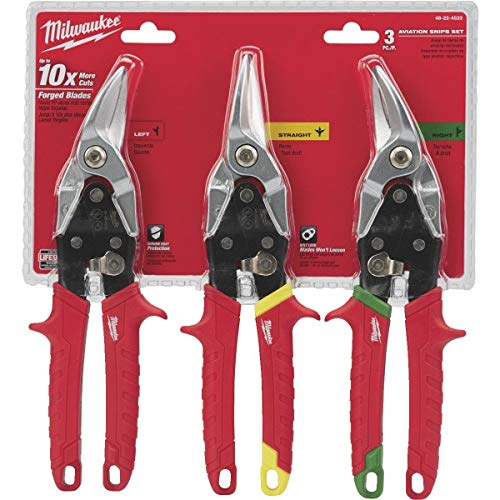 Milwaukee 3-Piece Aviation Snip Set (48-22-4533)
 Midwest MWT-6510C Offset Aviation Snip Set
 Midwest MWT-SS6510C Special Hardness Offset Snip Set
 Crescent Wiss M6R Metalmaster Offset Snips
 Crescent Wiss M123R Metalmaster 3-Piece Set









