Key takeaways
- The right compact drill for tight spaces is chosen on head length and grip, not torque, and the correct bits and pilot hole technique matter just as much inside a cabinet or stud bay.
What's inside
As an Amazon Associate I earn from qualifying purchases. This post may contain affiliate links at no extra cost to you.
The job that sold me on a compact drill for tight spaces was a disposal swap in a sink base with about eleven inches between the cabinet wall and the trap. My full-size 18V drill is a good tool, but it measures close to eight inches from the chuck face to the back of the housing. I could get the bit on my mark or a finger on the trigger. Not both.
Cramped work is almost never a power problem. It is a geometry problem. Stop shopping for torque numbers and start shopping for head length and overall height, and the decision gets simple fast. Here is how I sort the categories.
As an Amazon Associate we earn from qualifying purchases at no extra cost to you. Product prices and availability are accurate as of the date shown and are subject to change.




| Tool type | Typical head length | Where it earns its keep |
|---|---|---|
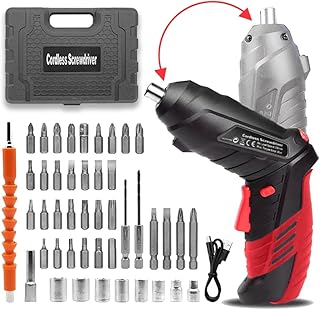
| 12V subcompact drill/driver | About 6 to 7 in. | Cabinets, appliance panels, furniture |
| 18V subcompact brushless | About 6.5 to 7.5 in. | Tight work plus lags and bigger bits |
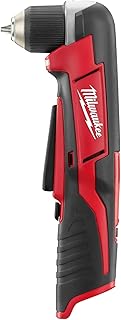
| Compact right-angle drill | About 3 to 4 in. at the head | Stud and joist bays, wire and PEX |
| 1/4 in. hex impact driver | About 4.5 to 5.5 in. | Screws in corners, no chuck to clear |
| Right-angle attachment | Adds 2 to 4 in. of offset | Light-duty holes, occasional access |
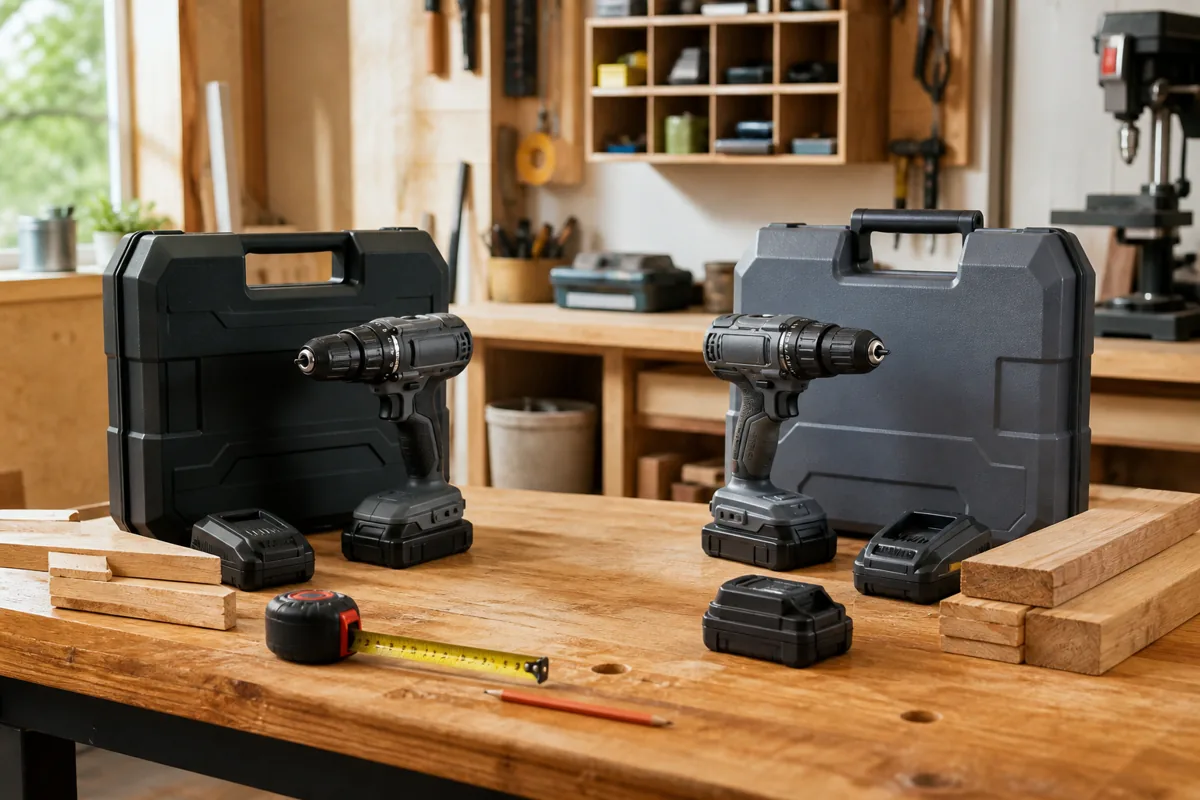
Why a compact drill for tight spaces beats reaching for the big one
Every inch of a full-size drill sits behind the chuck: big motor, metal gear case, fat handle. In open framing you never notice. Inside a sink base, behind a dishwasher, or in the back corner of a closet you notice right away, because the tool cannot line up square with the work. Cocked holes are the result, and cocked holes strip out, split stiles, and let hinge screws pull loose.
The other thing a small tool buys you is a free hand, and most tight work is one-handed work. The other hand is steadying a bracket or keeping a wire clear. A drill in the two-pound range with the battery in it can be aimed at arm’s length all afternoon. A four-pound drill starts to wander after a minute because your wrist is doing all the pointing.
The four measurements I check first
Head length. Measure from the front face of the chuck to the back of the motor housing. That number decides whether you fit, and nothing else on the spec sheet substitutes for it. Subcompact 12V models generally land in the six to seven inch range, and good brushless 18V subcompacts are not far behind. Past about seven and a half inches you are holding a general-purpose drill with a small badge on it.
Height with the battery in. Slide packs that tuck up into the handle keep the footprint tight. A stick pack hanging below the grip adds two or three inches you will feel every time you work overhead or down in a base cabinet.
Chuck. A 3/8 in. keyless chuck takes round shanks, brad points, step bits, and small hole saws, so that is what I want on a tight-space drill even though it costs me half an inch. A 1/4 in. hex collet is shorter and swaps bits one-handed, but hex shanks only.
Grip and trigger. A slim grip lets you choke up near the chuck and steer the bit by hand. Long trigger travel gives you usable control down at 200 or 300 rpm, and low controlled speed is most of the technique in cramped work.
Subcompact drill, right-angle drill, or impact driver?
Three different problems. The subcompact drill/driver is the everyday answer for cabinets, appliance panels, closet shelving, and furniture, and its clutch is what saves you when you are driving into 3/4 in. plywood you cannot see behind. Every major line has one now, from DeWalt XR and Xtreme to Milwaukee FUEL to the Makita LXT and CXT families.
A right-angle drill is for when the obstruction is on both sides of you instead of just behind. Boring 3/4 in. or 1 in. holes through the middle of a stud bay for cable or PEX is right-angle work, period. The head is only a few inches deep, so an auger spins square in a 14 1/2 in. bay.
An impact driver is not a drill, but it solves a cousin of the problem. No chuck jaws means a short nose, and it will sink a 3 in. screw in a corner where nothing else fits. Do not bore with it, and keep it off brass and small machine screws.
12V Brushless Subcompact Drill/Driver Kit
If you buy one tool off this page, buy this class. Look for a two-speed gearbox, a real clutch, and a slide pack that sits flush in the handle. Skip single-speed budget models: with no low gear you cannot hold 300 rpm through a pilot hole.
Technique for holes you cannot really see
Start with an awl or a punch. In a dark cabinet your eye lies to you about where the mark is, and a dimple gives the bit something to sit in instead of skating across a finished panel. On sheet metal, punch it. Do not let the drill walk.
Then go slow and let the bit cut. Low gear, feathered trigger, steady pressure straight down the axis of the bit. Leaning on it does not drill faster, it deflects small twist bits and cams driver bits out of screw heads. In wood I reach for a brad point when I can, since the center spur holds the line and the outer spurs keep melamine from chipping.
Pilot holes are not optional in tight work, because you cannot correct a split once it starts. Rough guide: in hardwood, match the pilot to the screw’s shank diameter under the threads; in softwood, go a hair smaller so the threads still bite. Within two inches of an end or an edge, drill deeper than you think you need.
Two tricks that buy real clearance. Use 1 in. insert bits in a low-profile magnetic holder instead of 2 in. or 3 in. power bits and you can shave an inch off your working length. And back the bit out every half inch in deep holes, because a flute packed with chips is what stalls a small drill, not a shortage of torque.
Compact Right-Angle Drill
Buy this when you are running wire, low voltage, or PEX. The value is the three or four inch head and a paddle switch you can brace against a stud. Pair it with a short auger. If you bore a few holes a year, an attachment covers you for less.
Where the small drill runs out of road
- ✔ Head length that clears cabinet walls, stud bays, and appliance backs
- ✔ Light enough to aim one-handed for long stretches
- ✔ Slide packs drop in an apron pocket
- ✔ Fine speed control for pilots and finish hardware
- ✘ Bogs on large hole saws, self-feed bits, and mixing paddles
- ✘ Small chuck jaws slip on round shanks if you do not snug them hard
- ✘ Short runtime if it is your only drill
- ✘ Angle attachments cost torque and kick your wrist
Stubby Bit and Short Driver Set
Before you buy a new drill, buy short bits. Stubby twist bits and a low-profile holder can shave an inch or two off the drill you already own. Sometimes that is the whole fix.
FAQ
Is a 12V drill strong enough for real work? For screws up to about 3 in. in softwood, yes. A modern brushless 12V will drive deck screws, bore up to roughly 1 in. in framing with a sharp auger, and run small bits in steel. It will not handle big hole saws, self-feed bits, or steady mixing.
Right-angle drill or just an attachment? Bore holes in bays regularly and you want the dedicated drill. Attachments lose torque through the gears, add offset that twists your wrist, and can shear under load. Once or twice a year on small holes, the attachment is fine.
What is the smallest useful chuck size? Stick with 3/8 in. It is shorter than a 1/2 in. chuck and still takes nearly every bit a remodeler or trim carpenter needs. A 1/4 in. hex collet is shorter yet, but it rules out most brad points, step bits, and small hole saws.
If your work keeps putting you inside cabinets, behind appliances, or between studs, buy for the geometry first and the spec sheet second. A short head, a slim grip, a real clutch, and a fistful of stubby bits will solve more problems than another hundred inch-pounds ever will.
Check prices on Amazon →