What's inside
As an Amazon Associate I earn from qualifying purchases. This post may contain affiliate links at no extra cost to you.
What we cover
Quick answer
For most cordless-drill owners, a keyless chuck is easier to use. You can loosen and tighten it by hand, so changing from a pilot bit to a driver bit takes seconds and does not require carrying a chuck key. A keyed chuck grips more positively when tightened properly, but it takes an extra tool and step.
Choose keyless for ordinary home repairs, furniture assembly, and routine drilling. Consider keyed if you regularly use large bits, work the drill hard, or have had bits slip in a keyless chuck. For most people, technique and a sound chuck matter more than the chuck style.
As an Amazon Associate we earn from qualifying purchases at no extra cost to you.


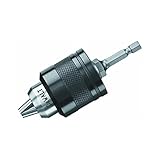
How the two chucks work
Both chucks hold a bit between three jaws. Tightening the chuck moves the jaws inward; loosening it retracts them. The difference is how you turn the chuck mechanism.
A keyless chuck has a sleeve you twist by hand. Many cordless drills have a ratcheting action that clicks as you tighten, helping you apply more grip. A keyed chuck has holes around its body. You insert the matching chuck key and turn it to tighten or loosen the jaws.
Neither type should be confused with a hex-bit holder on an impact driver. An impact driver usually uses a quick-release collet for hex-shank bits, not a standard three-jaw drill chuck.
Keyed vs. keyless at a glance
| Feature | Keyless chuck | Keyed chuck |
|---|---|---|
| Changing bits | Fast; tighten and loosen by hand | Slower; find and turn the chuck key |
| Grip | Good when the chuck is clean and tightened firmly | Can provide strong, controlled tightening with the key |
| Common problem | Bit slips if the chuck is under-tightened or worn | Key gets misplaced, or the jaws are tightened unevenly |
| Best fit | Frequent bit changes and general-purpose work | Heavy drilling where secure clamping is a priority |
Which is easier to use?
Keyless is easier for most routine work. A typical job might involve drilling a pilot hole, switching to a countersink, then fitting a driver bit. With a keyless chuck, you can make each change without stopping to find an accessory. That convenience matters more than it sounds when you are working on a ladder or moving around a room.
There is a small learning curve: hold the chuck sleeve and tighten it firmly. If your drill has a spindle lock, use it to keep the spindle from turning while you tighten. Otherwise, hold the chuck sleeve and briefly squeeze the trigger in the tighten direction only if your drill’s manual permits it. Keep fingers clear of rotating parts, and never use the drill’s motor to tighten a chuck while holding the sleeve by hand.
A keyed chuck is less convenient, but its operation is straightforward once the key is at hand. Insert the key fully into a chuck hole and turn it to tighten. For a more even grip, tighten at each chuck-key opening rather than relying on just one position. Remove the key before switching on the drill; a key left in place can fly off and cause injury or damage.
Grip, slipping, and common failures
A bit that spins in the chuck can damage its shank, the chuck jaws, or the workpiece. It is especially frustrating with a hole saw or a larger bit, where torque is high. A keyed chuck can be a good choice for this kind of demanding drilling because the key lets you apply firm clamping force.
But a keyed chuck is not immune to slipping. A worn chuck, a greasy bit shank, or jaws that do not close evenly can still lose grip. Likewise, a quality keyless chuck usually holds ordinary twist bits securely when tightened correctly. Before blaming the chuck, wipe oil and dust from the bit shank, seat the bit straight, and tighten the jaws on the shank rather than on its fluted cutting section.
If the bit keeps slipping despite those steps, inspect the jaws for visible wear or damage. Do not compensate by gripping a bit with pliers or running the drill at high speed to force the jaws tighter. Replace a damaged chuck or have the drill serviced.
What should you buy?
For household projects, choose a cordless drill with a good-quality keyless chuck. It is the practical pick for installing wall anchors, drilling pilot holes, assembling furniture, and switching between drill bits and driver bits. A cordless drill with a keyless chuck suits most DIY users.
If your work regularly involves larger bits, hole saws, or sustained drilling in tougher material, a keyed chuck may be worth the added hassle. Check that the drill accepts the bit sizes you need; chuck capacity is commonly 3/8 inch or 1/2 inch, and a bit must fit within that limit. A cordless drill with a keyed chuck can make sense for demanding jobs, but it is not an automatic upgrade for light work.
On a tight budget, do not reject a sound drill just because its chuck is keyed. If you change bits infrequently and can keep track of the key, the cheaper drill may be perfectly adequate. If you already own a drill with a keyless chuck and it holds bits securely, there is little reason to replace it solely for chuck style.
Change bits safely
Before changing a bit, release the trigger and wait for the chuck to stop. If the drill has a removable battery, take it out for extra security, especially if you are working in a cramped space. Open the jaws enough to remove the old bit, insert the new one straight, then tighten the chuck firmly. Pull lightly on the bit to check that it is seated.
For drilling masonry with a hammer drill, use a bit intended for masonry and follow the tool’s instructions. Hammer action and high torque put extra demands on the chuck and bit. If the bit slips, stop and retighten rather than continuing; slipping can polish or damage the shank and make the problem worse. Use a dedicated impact driver for frequent fastening instead of repeatedly changing a drill between drilling and driving tasks.