What's inside
As an Amazon Associate I earn from qualifying purchases. This post may contain affiliate links at no extra cost to you.
What we cover
Short answer: use both if you can
For a backyard fence, a cordless drill and an impact driver do different jobs. The drill makes clean holes for pilot holes and hardware. The impact driver drives the many screws that attach fence boards and rails. If you’re buying only one tool, an impact driver is usually the more useful choice for a typical wood fence built with screws—but you’ll need a way to drill neat holes when the job calls for them.
A basic cordless drill is enough if the fence is small, you’re using nails instead of screws, or you already have one and don’t mind driving fasteners more slowly. Don’t buy both just because kits bundle them together. Match the tools to the fence design and fasteners you’ll actually use.
As an Amazon Associate we earn from qualifying purchases at no extra cost to you.


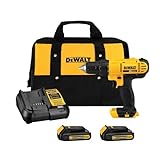
What each tool does on a fence
A drill uses a chuck to hold round-shank bits, such as twist bits and spade bits. Its trigger gives you relatively smooth control, and many drills have a clutch that helps limit torque. Use it to bore pilot holes, drill through posts for bolts, or make holes for gate hardware.
An impact driver holds bits with a 1/4-inch hex shank. As resistance rises, it adds short rotational impacts. Those impacts help drive long screws into dense lumber without putting the same twisting force on your wrist. The trade-off is less precise control and more noise. It can split wood, strip a screw head, or snap a small bit if you lean on it carelessly.
For common fence work, an impact driver is handy for driving exterior-rated screws through pickets into rails. A drill is the better choice for boring clean holes, especially near the end of a board or post where splitting is more likely.
Drill vs. impact driver
| Task | Cordless drill | Impact driver |
|---|---|---|
| Drive fence-board screws | Works well; slower on long screws | Fast, with less wrist kickback |
| Drill pilot holes | Best choice; accepts common drill bits | Only with a compatible hex-shank bit; control is less smooth |
| Install bolts or gate hardware | Good control with the right bit | Can over-tighten or damage hardware |
| Work close to board ends | Better speed control for careful driving | Can split wood if it hits too hard |
| Noise and handling | Quieter, but may twist your wrist if a bit binds | Louder; generally less rotational kickback |
If you’re buying only one
For a screw-fastened fence, choose a cordless impact driver kit if your priority is driving screws efficiently. A 12V model can handle many ordinary fence jobs; an 18V or 20V-class model gives more headroom for longer screws and repeated use. Those voltage labels are platform categories, not a direct measure of runtime or fastening power, so compare battery size, weight, and kit price too.
Choose a cordless drill-driver kit instead if you’ll drill more than you’ll drive, need a chuck for a variety of bits, or value fine control. For a short fence using nails, a drill may see mostly pilot-hole work, and a hammer or nailer—not an impact driver—may be the sensible fastening tool.
If you already own a drill, adding an impact driver is convenient but not essential. A drill can drive screws with the correct driver bit. It may slow down on long fasteners, and a bit that binds can twist the tool sharply, so hold it firmly and use the clutch where appropriate.
When a two-tool kit earns its keep
A drill-and-impact-driver combo lets you keep a drill bit in one tool and a driver bit in the other. That saves bit changes when you’re making pilot holes and then installing screws. It’s useful for a long run of pickets, but a kit is poor value if you’ll use the second tool only once. Check that both batteries are included and that the kit’s charger and batteries are compatible with tools you may already own.
When the job needs both tools, a cordless drill and impact-driver combo kit is often cheaper than buying two tools separately. Compare the kit’s total cost with the price of one tool and an extra battery; some bundles include small batteries that run down quickly during repeated driving.
Fasteners, pilot holes, and common failures
Use exterior-rated fence screws or nails suited to the lumber and exposure. Coated or stainless fasteners resist corrosion better than ordinary interior screws. Follow the fence plan and fastener manufacturer’s guidance for size and spacing; changing screw length or using drywall screws is a poor shortcut. Drywall screws are brittle and are not intended for outdoor structural fastening.
Pilot holes reduce splitting, particularly in dry lumber, near board ends, and when using thick or long screws. A practical starting point is a pilot bit close to the screw’s solid core diameter, not the full thread diameter; check the screw maker’s guidance if available. Make a test hole and drive a test screw in scrap from the same boards. If the screw still splits the wood, use a slightly larger pilot or move farther from the end.
Drive screws straight and stop when the head sits snug against the board. Countersinking too deeply can crush the surface and weaken the hold. An impact driver can bury a screw in a fraction of a second, so start slowly, keep the bit seated, and ease off near the end. Use a sharp, correct-size driver bit: a worn or mismatched bit cams out, chews up the screw head, and can leave the fastener stuck halfway in.
For repetitive board fastening, a spare battery helps avoid interruptions. Keep batteries out of direct sun when possible, and let an overheated battery cool before charging. If you need to bore larger holes for bolts or hardware, use a drill and the right bit rather than forcing a small driver bit to do the job.
A practical buying decision
For most DIYers building a screwed-together backyard fence, an impact driver is the faster single tool for the repetitive work, while a drill is the better tool for holes and controlled fastening. If you already own a drill, build the fence with it first and buy an impact driver only if driving screws becomes slow or uncomfortable. If you own neither, choose based on the work beyond this fence too: a drill suits general drilling and careful assembly; an impact driver suits repeated screw driving. A matched combo kit makes sense when both jobs are substantial, not simply because two tools sound better than one.