What's inside
As an Amazon Associate I earn from qualifying purchases. This post may contain affiliate links at no extra cost to you.
For most household wood-screw jobs, a cordless drill is the better all-around tool. It drills holes, drives screws, accepts small bits, and gives you control over the final depth. An impact driver is faster and more compact when you are driving many long screws, working in dense material, or dealing with stubborn fasteners. It is not automatically the better choice for everyday installation.
The practical decision comes down to the screws you use, the material you fasten, and how much control matters. A drill is usually the safer pick for furniture, cabinets, shelving, hardware, and wall anchors. An impact driver earns its place for deck work, framing, construction screws, and repetitive jobs where a standard drill starts to struggle.
As an Amazon Associate we earn from qualifying purchases at no extra cost to you.



What we cover
How the two tools work
A cordless drill applies steady rotary power through a clutch. You set the clutch to a low number for small screws or delicate material, then increase it when more torque is needed. The clutch slips when the screw reaches a set resistance, helping prevent stripped heads and overdriven screws.
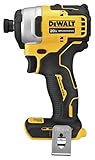
An impact driver also rotates, but it adds rapid internal hammering in the direction of rotation. Those impacts help turn a stuck or heavily loaded screw without requiring the user to twist the tool harder. The trade-off is reduced finesse. Most impact drivers have less precise depth control, and the repeated impacts can damage soft wood, small screws, or fragile bits.
| Feature | Cordless drill | Impact driver |
|---|---|---|
| Best everyday use | Furniture, cabinets, shelves, pilot holes, anchors | Long screws, decking, framing, repetitive fastening |
| Control | Excellent, thanks to clutch and variable speed | Good with practice, but easier to overdrive screws |
| Chuck or holder | Keyless chuck accepts round-shank drill bits and drivers | 1/4-inch hex quick-change holder |
| Noise and vibration | Quieter and smoother | Louder, with noticeable impact vibration |
| Typical screw range | Small screws through roughly 3-inch general-purpose screws | Short screws through long structural screws, depending on tool and material |
| Common failure | Stalls or overheats when pushed too hard | Strips heads, snaps bits, or buries screws too deeply |
Choose a cordless drill for control and versatility
A drill is the right choice for most indoor wood-screw installation. Use it for assembling flat-pack furniture, attaching hinges, mounting drawer slides, installing trim, and fastening hardware to plywood or softwood. The clutch lets you stop before the screw head disappears below the surface.
It is also the more useful tool for drilling. A standard 3/8-inch chuck accepts common twist bits, brad-point wood bits, countersinks, and larger hole saw accessories. Many compact drills run at about 400 to 1,500 revolutions per minute, which is a useful range for both drilling and driving.
For general home use, look for a 12-volt drill if compact size matters, or an 18-volt/20-volt class drill if you regularly drill larger holes or drive longer screws. A 12-volt cordless drill kit is often enough for furniture and light repairs. A basic 18-volt drill is the more flexible single-tool purchase.
Do not rely on the clutch to replace a pilot hole. In hardwood, near board ends, or close to an edge, drill a pilot hole slightly smaller than the screw’s solid shank. For a typical #8 wood screw, a bit around 1/8 inch works in many softwoods, while hardwood may need a bit closer to the screw’s minor diameter. Test on scrap because species and screw design vary.
Choose an impact driver for long or repetitive screws
An impact driver makes sense when you are driving dozens of screws or using screws longer than about 3 inches. Deck boards, fence construction, outdoor projects, and framing are common examples. The tool stays relatively compact while delivering high torque, and its impacts reduce the wrist-twisting force that can make a drill uncomfortable.
It is particularly useful when a drill stalls before the screw is fully seated. A drill may draw high current while stalled, heating the motor and battery. An impact driver usually keeps advancing, provided the bit remains engaged and the fastener is appropriate for the material.
Use only impact-rated driver bits in an impact driver. Standard bits can twist, chip, or snap under the repeated hammering. A set of impact-rated driver bits costs more than ordinary bits but is less likely to fail during heavy fastening.
Impact drivers still need restraint. A 3-inch screw driven too fast can sink well below the wood surface, especially in soft pine. That weakens the surface and can leave a pocket where water collects outdoors. Start slowly, keep the bit straight, and release the trigger as the head approaches the surface. For visible work, stop flush or use a drill with its clutch set low.
Match speed, screw, and material
Use coarse-thread screws for softwood and construction work, and fine-thread screws where the material calls for them. Choose screws with a head and drive style that matches the bit exactly. A mismatched Phillips or square bit will cam out, damaging both the screw and the workpiece.
For a screw going into the end grain of a board, use a pilot hole and avoid placing the fastener too close to the end. A practical minimum is about two screw diameters from an edge or end when the design allows it. Even with a pilot hole, driving too close to the end can split the board.
For wall-mounted items, the wood screw is only as reliable as the anchor behind it. Use a stud when possible. In drywall, select an anchor rated for the load rather than simply using the longest screw available. A drill’s controlled speed is usually better for drilling the anchor hole; an impact driver can enlarge the hole or crush a plastic anchor.
Which tool should you buy first?
If you are buying one tool, choose a cordless drill with a clutch, two-speed gearbox, and a 3/8-inch or 1/2-inch keyless chuck. Include at least one battery and a charger. The cheaper option is fine when your projects involve fewer than a few dozen screws at a time and mostly use screws 2-1/2 inches or shorter.
Buy an impact driver as a second tool when your drill regularly stalls, your hand tires from repetitive fastening, or you are building decks, fences, sheds, or framing projects. A cordless impact driver kit is often sold on the same battery platform as a drill, which makes the second purchase cheaper if you already own batteries.
Some kits pair both tools with a battery. That combination is convenient, but do not buy it merely because an impact driver has a higher torque number. For everyday wood screws, careful speed control, the correct pilot hole, and a properly fitting bit prevent more problems than maximum power does.