What's inside
As an Amazon Associate I earn from qualifying purchases. This post may contain affiliate links at no extra cost to you.
Building a backyard fence is not a demanding job for a cordless drill, but it is demanding on batteries, bits, and fasteners. You may drill pilot holes in dozens of pickets, drive several hundred screws, and occasionally bore through treated lumber that is still wet and dense. The best setup is usually a drill/driver paired with an impact driver—not the most powerful single tool you can buy.
As an Amazon Associate we earn from qualifying purchases at no extra cost to you.


What we cover
What you need for a fence project
Use a drill/driver for drilling pilot holes, boring larger holes, and driving screws where you need precise clutch control. Use an impact driver for long structural screws and repeated fastening. Its quick-change hex chuck and hammering action reduce wrist strain, especially when attaching rails to posts.
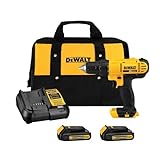
A basic 18V cordless drill/driver kit is enough for a small fence. For a larger job, a kit with both tools is more practical. A 12V drill can handle pilot holes and picket screws, but an 18V or 20V-max platform gives you more reserve when driving 3-1/2-inch structural screws into posts.
| Tool setup | Best for | Limitations |
|---|---|---|
| 12V drill/driver | Small repairs, pickets, light-duty screws | Slower on long structural fasteners; smaller batteries |
| 18V/20V drill/driver | Pilot holes, wood bits, general fence construction | Can be tiring if used for every long screw |
| 18V/20V impact driver | Structural screws, repeated fastening, tight spaces | Less clutch control; can strip screws or overdrive them |
| Hammer drill | Drilling masonry for post bases or wall attachments | Unnecessary for a wood-only fence |
The features that matter most
Choose a drill with a two-speed gearbox, a 1/2-inch chuck, and a usable clutch. The low-speed range is useful for boring clean holes; the high-speed range is better for small pilot holes and ordinary screws. A 1/2-inch chuck accepts larger auger and spade bits than a 3/8-inch chuck, although a 3/8-inch model is perfectly serviceable for pickets and rails.
Clutch settings are more important than maximum torque when installing fence boards. Start at a moderate setting and increase it only when the screw stops short. This helps prevent cracked pickets, stripped heads, and screws driven below the surface where water can collect. For structural screws, bypass the clutch only if the manufacturer permits it and keep the final seating controlled.
Brushless motors generally run cooler and deliver better runtime, but they cost more. For one weekend fence, a brushed drill is not automatically a bad purchase. The cheaper tool is fine if it has a solid chuck, enough battery capacity, and a warranty you can use. Brushless becomes easier to justify for repeated construction work or several hundred fasteners.
When an impact driver is worth buying
An impact driver is the better choice for long screws fastening rails, gates, and hardware to posts. The pulsing action transfers more driving force with less twisting at your wrist. It also fits into narrow corners where a drill body and chuck may interfere with the fence frame.
That power creates failure modes. An impact driver can snap a screw, strip a bit, or bury the head too deeply in soft cedar. Use impact-rated bits, keep the driver aligned with the screw, and release the trigger as soon as the head reaches the intended depth. For decorative hardware or small screws, a drill’s clutch is safer.
A brushless cordless impact driver kit is a sensible upgrade if your fence has many posts or uses structural screws. If you are installing a short run of six-foot pickets, a drill/driver alone can be cheaper and easier to control.
Battery size and runtime
Battery capacity is measured in amp-hours. A 2.0Ah pack is lighter and often adequate for a small repair. A 4.0Ah or 5.0Ah pack runs longer, but adds noticeable weight at the top of the tool. For a full fence, two batteries are more useful than one oversized battery: keep one charging while using the other.
As a rough planning figure, expect a busy fence build to consume several amp-hours per day, depending on screw length, wood hardness, and drilling. Dense pressure-treated lumber can use much more energy than dry cedar. Keep batteries out of direct sun and stop using one if it becomes unusually hot, swells, or loses power abruptly.
Bits and fasteners that prevent problems
Buy a separate set of impact-rated driver bits and wood drill bits. Standard screwdriver bits can fracture in an impact driver. Keep multiple Phillips or star bits available; a worn bit is a major cause of cam-out and damaged screw heads.
Use a pilot hole when the screw is near an end, close to a board edge, or longer than about 2-1/2 inches. A pilot hole should be roughly the diameter of the screw’s solid core, not the outside of its threads. For a 3-1/2-inch structural screw, drill deep enough to clear most of the unthreaded shank and part of the threaded section. Pull the bit out occasionally to clear chips and prevent overheating.
Use exterior-rated, corrosion-resistant screws. Hot-dipped galvanized screws are suitable for many ordinary treated-lumber fences; stainless steel is a better choice near salt air or for some cedar and redwood applications. Do not substitute drywall screws. They are brittle, rust-prone, and not designed for outdoor structural work.
When a hammer drill is necessary
You do not need a hammer drill to build a fence in soil. You may need one if the fence attaches to a concrete wall, masonry retaining wall, or slab. For a few small holes, a standard drill with a masonry bit may work, but it will be slow and can overheat.
For repeated holes, choose a cordless hammer drill with a side handle. Use masonry bits and the anchor manufacturer’s stated hole size. Blow or brush dust out of each hole before installing an anchor; packed dust can prevent the anchor from seating fully. A hammer drill is not a replacement for a rotary hammer when drilling large, deep holes in hard concrete.
A practical buying recommendation
For most homeowners, buy an 18V or 20V drill/driver kit with two batteries, then add an impact driver only if the fence is large or uses many structural screws. Select the same battery platform for both tools. That matters more than a small difference in advertised torque because compatible batteries and chargers reduce cost and downtime.
Before starting, test the drill on scrap from the actual fence boards. Set the clutch so screws finish flush, predrill split-prone boards, and keep a sharp bit nearby. Those simple steps prevent more fence problems than buying the highest-torque tool.