Key takeaways
- I mounted a whole wall of shelves into concrete with this hammer drill. Here is why it earned a permanent spot in my kit.
What's inside
As an Amazon Associate I earn from qualifying purchases. This post may contain affiliate links at no extra cost to you.
Regular drills and concrete do not get along — ask anyone who’s tried to anchor a shelf into a block wall with a plain driver and a prayer. A proper hammer drill changes everything, and this one made a wall of concrete anchors feel almost easy.
The difference is not power, it is mechanism. A plain drill only rotates, and rotation on its own barely touches cured concrete. The carbide skates, polishes a shiny spot, heats up and quietly loses its edge while you lean harder and tell yourself this wall is unusually hard. The wall is normal. The tool is wrong.
As an Amazon Associate we earn from qualifying purchases at no extra cost to you. Product prices and availability are accurate as of the date shown and are subject to change.


A hammer drill fixes that by spinning and pounding at the same time, and the pounding is what actually breaks the material. Once you have felt the difference, drilling masonry with a standard driver feels like cutting plywood with a butter knife.
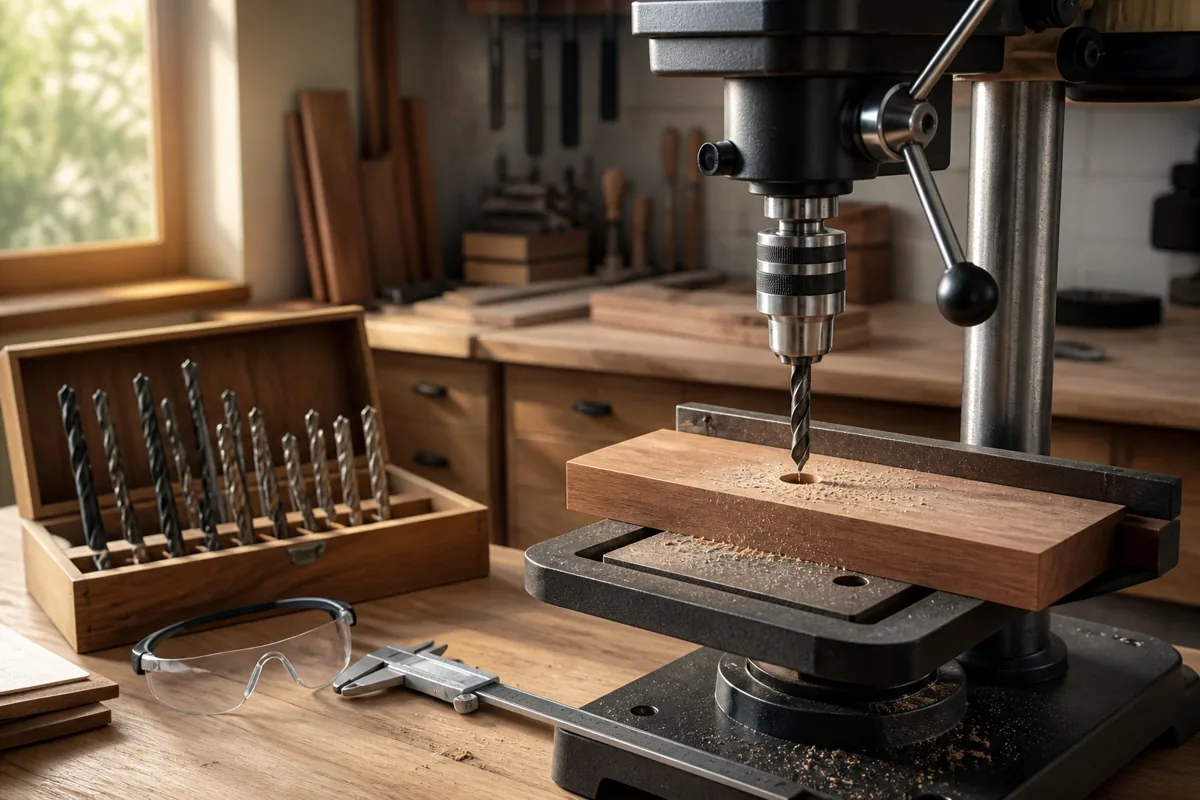
The hammer action does the work
Flip it into hammer mode and the bit pulses forward thousands of times a minute while it spins. That pounding pulverizes concrete so the bit can bite. What used to be a sweaty, smoking ordeal became quick, clean holes.
Mechanically it is simpler than it sounds. Two ridged plates sit behind the spindle, and when you press the tool into the wall those ridges climb over each other and drop, shoving the bit forward a hair each time. Spec sheets count those blows in the tens of thousands per minute, but every one of them is tiny. The bit is chipping dust, not chiselling chunks.
Two practical things follow. Hammer mode only works when you push, so a light touch gives you noise and no hole. And because every blow lands on the carbide, bit quality and dust clearing matter as much as the drill does. Back the bit out every half inch to let the dust escape, or the last inch of a hole takes longer than the first three.
Hammer drill or rotary hammer?
This is where buyers waste money in both directions. A hammer drill is a drill with percussion added. A rotary hammer is a percussion tool that happens to spin: a piston and air cushion deliver far fewer, far harder blows through an SDS shank that slides in its own chuck instead of being clamped in jaws.
My rule of thumb: anchors up to roughly half an inch, occasional holes, and mixed wood-plus-masonry work all belong to the hammer drill. Big-diameter holes, all-day conduit runs and any chipping belong to the rotary hammer. Buying a rotary hammer for four shelf brackets is renting an excavator to plant tulips, and using a hammer drill for a full day in block is a slow kind of punishment.
What actually matters when you buy one
Spec sheets are written so that every tool sounds like the same tool. Here is what separates the ones that last, roughly in the order I weigh them.
- A positive hammer selector. The mode collar should click and stay put. Vague ones drift under vibration and you finish the hole in rotation only, wondering why it stopped cutting.
- A serious chuck. Metal-bodied, half-inch, hardened jaws. A round masonry shank spinning inside a soft chuck means a chewed bit, a wallowed hole and a bad afternoon.
- Two speeds. High range for small bits, low range for big diameters and hole saws. Single-speed is a compromise you feel on every hole past three-eighths.
- Side handle and depth rod. The handle saves your wrist when a bit catches; the rod is how every anchor hole ends up the same depth. Both cost pennies to include, which tells you something when they are missing.
- Clutch behaviour. A mechanical clutch, or electronic kickback control on better tools, decides whether a bind-up stalls the motor or spins the tool out of your hands.
- Weight and balance. Some mass helps percussion, but a nose-heavy tool held overhead is misery. Pick it up one-handed before you commit.
- Cord or brushless battery. Corded gives endless runtime; brushless cordless gives freedom and runs cooler. Masonry drains packs fast, so budget for higher-capacity batteries.
How to trade them off: selector, chuck and side handle are non-negotiable at any price. Two speeds is the next thing I would pay for. Raw torque and battery-platform loyalty come last, because a strong drill with a slipping chuck is still a bad drill.
Moving up the price ladder
Entry level
Fine for a handful of holes a year in brick or block. Insist on a metal chuck and a crisp mode switch, and accept the rest. What you give up is heat management, vibration and switch life, and those failures arrive gradually rather than dramatically. Walk away from anything with a plastic chuck body or a hammer collar that already feels mushy in the store.
Mid-range
Where most readers should land. Two-speed gearbox, real side handle, a chuck that grips round shanks, and enough motor to run a half-inch masonry bit without bogging. Good picks in this band feel over-built for the job. Bad ones have the right bullet points and cut the corners you cannot see: gearcase, switch, bearings.
Pro tier
Here you are buying consistency and comfort — brushless motors, vibration control, kickback protection, dust extraction ports, and spare parts you can still order years later. Worth it if masonry is part of your week. If it is only part of your year, that money buys better bits and a decent dust vac, and you will get more out of both.
The one I keep reaching for
What sold me is that it does not sit in a case waiting for masonry day. It is a drill first, with hammer mode on tap when the wall turns out to be block.
Hammer Drill
Two modes — regular drilling and hammer for masonry — so it earns its spot as a do-it-all. I sank a dozen concrete anchors without breaking a sweat. If you’ve got block or brick walls, you want this.
- ✔ Eats concrete & brick
- ✔ Doubles as a regular drill
- ✔ Comfy grip
- ✔ Strong for the size
- ✘ Heavier than a plain driver
- ✘ Loud in hammer mode
Mistakes that cost people holes
Pushing harder instead of steadier. Percussion wants firm, even pressure, not body weight. Leaning on it slows the hammer, cooks the carbide and glazes the tip.
The wrong bit. A twist bit meant for wood or steel has no carbide and no business in concrete. Masonry bits only, sharp ones, and let the tip cool if it starts changing colour.
Hammer mode in the wrong material. Tile, stone veneer and glass block chip out if you pound them. Rotation only, gentle pressure, and a bit made for tile.
Fighting rebar. When progress stops dead and the tool starts bouncing, you have probably found steel. A masonry bit will not cut it. Move the hole an inch or two, or switch to a bit made for rebar. Grinding away at it just kills the carbide.
Setting anchors in a dusty hole. Blow or vacuum the hole before the anchor goes in. Mechanical anchors lose grip in dust and adhesive anchors fail outright.
Breathing the dust. Concrete dust carries silica. Use extraction if you have it, a proper respirator if you do not, and never dry-sweep the pile afterwards.
Who it suits, and who should skip it
Buy one if your house has block, brick or poured walls, because TV mounts, handrails, ledger boards, hose reels and garage shelving all end in masonry eventually. Buy one if you are a woodworker or remodeler who occasionally has to anchor into a foundation, since one tool covers both sides of the job.
Skip it if you only work wood — a good drill and driver pair serves you better. Skip it too if you are in masonry all day, every day; go straight to SDS and save your elbows.
FAQ
Can a hammer drill replace a rotary hammer?
For small anchors, yes. For large diameters, deep holes or chipping, no. Its blows are fast and light, so past about half an inch in concrete the work slows down and you feel it in your arms.
Do I need special bits?
Yes — carbide-tipped masonry bits with round or hex shanks. SDS bits will not fit a keyless chuck, and wood or metal bits will not survive. Buy the sizes your anchors actually call for and retire bits once the tip rounds over.
Corded or cordless?
Cordless if you already own the batteries and drill holes occasionally; the freedom is worth it. Corded if you drill masonry in volume or work somewhere charging is awkward, because percussion is hard on packs and a cord never fades halfway through a hole.
Why did my bit stop making progress?
Three usual suspects: packed dust in the hole, a dull or glazed tip, or rebar. Pull the bit out and clear the hole, inspect the carbide, and if it is steel you have hit, relocate.
Miller’s verdict
If you ever drill into masonry, a hammer drill isn’t optional — it’s the difference between a five-minute job and a ruined afternoon. Grab good masonry bits too. And for driving screws all day, keep an impact driver in the other hand.
One tool, two jobs, and it turns the worst part of a hanging project into the quick part. That is a fair trade for a little extra weight in the case.