Key takeaways
- Batteries got good. So is there any reason left to own a corded drill? Miller settles it.
What's inside
As an Amazon Associate I earn from qualifying purchases. This post may contain affiliate links at no extra cost to you.
Ten years ago the answer was easy — corded for power, cordless for convenience. But batteries got seriously good, and now people ask whether a corded drill is even worth owning. Let me settle it.
The real cordless vs corded drill question is not which tool is stronger, it is which one you will actually pick up — and what happens on the two or three jobs a year that punish the wrong choice. Both classic mistakes come from treating power as one number when it is two. Peak power is how hard a tool pushes for a few seconds: starting a big bit, sinking a long lag, breaking a seized screw loose. Sustained power is how hard it pushes for ten minutes without heat, current limits or a fading pack reeling it in. Cordless has caught corded on peak. It has not caught it on sustained, because a battery is a fuel tank and an outlet is a pipeline.
As an Amazon Associate we earn from qualifying purchases at no extra cost to you. Product prices and availability are accurate as of the date shown and are subject to change.

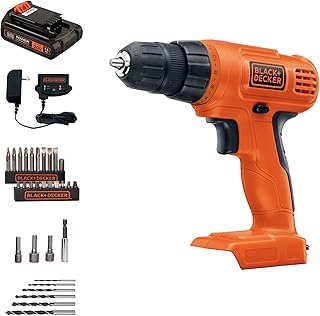


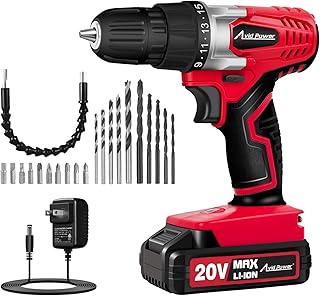


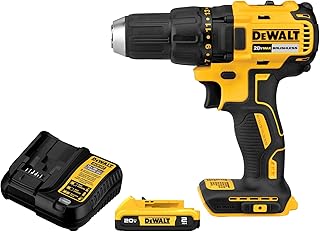
Cordless wins for 95% of jobs
Modern brushless cordless drills have the power and runtime for almost everything a hobbyist or even a pro does day to day. No cord to drag, grab-and-go convenience — it’s the obvious daily driver.
Look at what that 95% really consists of: pilot holes, pocket holes, cabinet and deck screws, anchors, dowels, shelf pins, hinge cups, a run of 3/4″ holes through studs for wire, a 2-1/8″ hole saw through a door. Every one of those is a short burst with a pause after it — precisely the duty cycle a cordless drill is engineered around.
The deeper reason cordless wins is friction, not specs. A drill sitting on the shelf with a pack on it gets used for the two-minute job. A drill that needs a cord unwound, routed around a doorway and plugged into an outlet that is not already feeding the saw does not. Over a year, the tool you grab without thinking does nearly all of your holes, so it may as well be the good one.
Brushless Cordless Drill
Enough power and runtime for nearly any job, no cord to fight. For the vast majority of drilling and driving, this is all you need. Grab a second battery and you’ll never stop mid-task.
The features that actually matter
Ignore the headline torque figure. It is measured in a way you cannot reproduce and it is the least useful number on the box. These are what you feel every day:
- Brushless motor. More work per charge, less heat, nothing to wear out, and far better manners at low speed under load. The biggest dividing line in the cordless market.
- Two-speed gearbox. Low gear multiplies torque for big bits and long fasteners, high gear gives you drilling speed. You notice a single-speed drill the first time you run a hole saw.
- A metal chuck that closes true. Cheap chucks let the jaws close unevenly, so the bit orbits, the hole starts off-center, and the operator gets blamed for it.
- The platform, not the packs in the box. You are buying chargers, batteries and the impact driver you will add later. Choose the platform first, the drill second.
- Head length and balance. A short head fits between joists and inside cabinets, and a nose-heavy drill tires your wrist overhead no matter what it weighs.
- Clutch, brake, light. Clutch steps that mean something, a brake that stops the bit when you let go, and a light above the chuck rather than behind it.
How to weigh them against each other
They are not equal. Platform first, because it outlives the tool. Brushless second, unless you honestly drill a dozen holes a year. Chuck third, because it quietly limits the accuracy of everything else. Ergonomics fourth. Faced with more torque on paper versus a better platform with quieter numbers, take the platform every time.
What changes as you spend more
At the bottom of the market you get brushed motors, sloppy chucks, one small pack and a slow charger. The tool is often survivable; the batteries are not. Off-brand packs fade quickly, and replacements either cost more than the original kit or vanish from shelves a year later. Fine if you assemble flat-pack furniture twice a year, bad if you intend to build anything.
The middle band is where the value sits, and it is not close: a brushless drill on a major platform, two packs, a charger that finishes fast, a metal chuck, two speeds. That combination covers the whole 95% and stays repairable and re-batteried for years. Buying one drill for a home shop? Buy here and stop reading spec sheets.
The pro tier buys sustained-load electronics, better heat management, a shorter and better-balanced head, a service network, and a deep catalog of bare tools you can add without paying for another charger. Returns diminish fast for weekend use, and stop diminishing when the drill is in your hand daily.
When a cord still wins
For marathon mixing (thinset, paint), big hole saws, or hours of continuous heavy drilling, a corded drill never needs a battery break and keeps constant power. It’s a specialist now, not a default.
Mixing is the clearest case. A paddle in a bucket of thinset or self-leveler is continuous, high-load and low-speed — the exact inverse of burst-and-pause. Cordless there runs hot, sags, trips its thermal cutout and eats packs. Do it regularly and you will spend more on replacement batteries than the corded drill would have cost.
Big holes are the second case. Large hole saws, self-feed bits, long augers through joists, wire wheels and slow-speed work in steel all want torque that does not fade as the cut deepens. A corded drill with a 1/2″ chuck and a side handle pulls as hard at minute nine as it did at minute one.
The third case is unglamorous: a corded drill does not age on a shelf. Leave one in a damp garage for three years and it still runs; leave a battery there and you have a paperweight. That is why plenty of shops keep a beater corded drill for the abusive jobs.
If you buy one, judge it on amp rating as your proxy for sustained grunt, a 1/2″ chuck, real control at the bottom of the speed range, and a side handle that bolts on properly. Use the handle — there is no clever electronics deciding you are in trouble, and when a big bit grabs, the tool tries to twist out of your hands. For serious mixing, look at a spade-handle or dedicated mixing drill instead of a pistol grip.
- ✔ Cordless = freedom & convenience
- ✔ Modern power is plenty
- ✔ Corded for marathon heavy work
- ✘ Cordless batteries cost extra
- ✘ Corded ties you to an outlet
Common mistakes I keep seeing
- Shopping by torque number. Buy the platform, the motor and the chuck; the torque sorts itself out.
- Buying a kit for the free packs. Two undersized batteries on a platform you will abandon is worse value than one good pack you can grow around.
- Collecting platforms. Three brands means three chargers, three shelves of dead packs, and no spare battery when it matters.
- Mixing with a drill/driver. More than a couple of buckets a year is a corded job. Your batteries are not a consumable you want to burn.
- Leaving it in high gear. Hole saws, augers and big spade bits belong in low gear, both for torque and for the heat you avoid putting into the motor.
Who each option suits
Cordless only — most of you. Furniture, home repair, remodeling, decks, cabinets, general trades. One good brushless drill, two packs, done.
Cordless plus a corded second. Tilers, painters, anyone stirring buckets, timber framers, people drilling steel, and shops that want a tool they can treat badly.
Corded first — rare. Only if your next year of drilling is genuinely mixing and heavy hole work in one fixed spot on a tight budget. Otherwise skip it, and nobody should own a cheap corded drill as their only drill.
FAQ
Is a corded drill more powerful than a cordless one?
Not on peak output any more — a good brushless cordless drill holds its own against mid-range corded drills in short bursts. It is still ahead on sustained output, which is what matters for mixing and long, heavy cuts.
How many batteries do I actually need?
Two, minimum: one in the tool, one on the charger. If your work varies, a compact pack for overhead and daily driving plus a high-capacity pack for heavy days beats two identical middling ones.
Can I mix thinset or paint with a cordless drill?
A bucket of thin paint in low gear, occasionally, yes. Thinset, mortar or self-leveler, repeatedly, no — that continuous load is what kills packs and motors. Use a corded drill or a proper mixer.
Bare tool or full kit?
Kit if this is your first tool on the platform, because you need the charger and the packs. Bare tool once you own packs — that is where the platform decision pays you back.
Miller’s answer
One thing to take away: spend on the cordless side, and let the cord be a specialist you buy for a job you can name out loud.
Buy cordless first — it’ll handle almost everything. Add a cheap corded drill later only if you do heavy continuous work. For most of you, a good cordless (or hammer) drill is the whole answer.