What's inside
As an Amazon Associate I earn from qualifying purchases. This post may contain affiliate links at no extra cost to you.
For a stubborn screw, the right tool depends on why it will not turn. A drill driver gives you adjustable speed and clutch control; an impact driver adds rapid rotational blows that can break a screw loose. Either can damage a fastener if you use the wrong bit, too much force, or the wrong technique.
As an Amazon Associate we earn from qualifying purchases at no extra cost to you.



What we cover
Quick answer
Use a drill driver first when the screw is accessible, the head is in good shape, and you need careful control. Switch to an impact driver when a correctly fitted bit still slips or the screw resists steady turning. Impact drivers are especially useful for long screws driven into wood, but their extra force can snap a screw, strip its head, or damage the workpiece.
If you only drive occasional household screws, a drill driver is usually enough. Buying an impact driver makes more sense if you regularly install long fasteners, build decks, or remove tight screws. A cordless impact driver is a useful addition, not a replacement for a drill driver.
How the tools differ
A drill driver turns its chuck smoothly and usually has a numbered clutch. The clutch slips when resistance reaches the setting you choose, helping prevent overdriving. Many models offer roughly 15 to 20 clutch settings, but the numbers are not standardized; start low and raise the setting as needed.
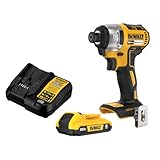
An impact driver uses a collet for 1/4-inch hex-shank bits and delivers short rotational impacts when the fastener meets resistance. Those impacts help keep the bit turning without requiring as much sustained force from your wrist. Most impact drivers have a variable-speed trigger, but usually lack the drill driver’s adjustable clutch. That makes them powerful and compact, but less forgiving on small screws or soft materials.
Which tool fits the job?
| Situation | Better first choice | Why | Main risk |
|---|---|---|---|
| Small cabinet or appliance screw | Drill driver | Better speed and torque control | Stripping the head if the bit does not fit |
| Long screw in framing lumber | Impact driver | Impact action handles high resistance | Snapping the screw or driving too deep |
| Rusted screw in metal | Hand screwdriver or drill driver, then impact if needed | Allows careful assessment before applying force | Breaking a brittle or corroded fastener |
| Delicate trim or thin sheet material | Drill driver | Clutch control reduces overdriving | Splitting, denting, or stripping the material |
| Screw with a badly damaged head | Neither, until you improve the grip | A driver bit may not engage securely | Making the head harder to remove |
Try this before switching tools
First check the bit. A Phillips bit that is too small, worn, or mismatched to the screw will cam out under pressure. Seat the bit fully and press it straight into the head. For a square, Torx, or other drive, use the exact bit type and size rather than forcing a near match.
Next, clear debris from the recess and check whether the screw is turning or merely slipping. Apply firm pressure along the screw’s axis. With a drill driver, set the clutch low and use a slow trigger pull; increase the clutch only if the motor stalls before the screw moves. If the screw begins to turn, keep the tool straight and back it out steadily.
If the head is exposed, a hand screwdriver may give you better feel than either power tool. For a screw stuck by paint, cut around the head with a utility knife. For rust or corrosion, a penetrating oil may help, but allow it time to work and keep it away from surfaces it could stain.
Using an impact driver safely
When steady turning fails with a sound bit, try an impact driver at low speed. Start with brief trigger pulses rather than holding the trigger down. Keep the bit aligned and pressed firmly into the recess; impacts will not compensate for a poorly seated bit. If the screw starts moving, continue with controlled pulses and stop once it is loose enough to turn by hand.
Impact drivers can break small screws, especially in brittle plastic, thin metal, or dry wood near an edge. They can also twist a bit or damage a screw head if the bit slips. Wear eye protection, and use impact-rated bits: ordinary drill bits and many standard driver bits are not designed for repeated impact loading. A set of impact-rated driver bits is a sensible purchase if you use the tool often.
Do not assume more torque is always better. If the screw does not move after several short attempts, stop and inspect the head, bit, and material. Continued hammering can round off the recess or shear the screw. On a stuck screw in a wall anchor, the anchor may spin or pull out before the fastener releases.
When neither tool is the answer
If the recess is stripped, try a fresh bit of the correct type and size, press hard, and use a slow drill-driver setting. A screw-extractor kit may work when enough of the head remains, but follow its instructions and drill a centered pilot hole. If the head is raised, locking pliers may grip it. Do not use an impact driver on a nearly rounded head; it often makes the damage worse.
For a screw that is flush or buried, extraction is harder. A left-hand drill bit or extractor may help, but drilling off-center can damage the surrounding material. If the screw is in a load-bearing connection, or the workpiece is valuable, avoid escalating force without a plan for repair.
What to buy
If you are choosing one tool for general household repairs, start with a drill driver. It can drill holes as well as drive screws, and its clutch is helpful for furniture, cabinets, hinges, and anchors. A cordless drill-driver kit is the more versatile first purchase for most occasional users.
Choose an impact driver if you frequently drive large or long screws and want a compact tool that handles repeated high-resistance fastening. Check that the battery platform matches tools you already own, and compare tool weight and speed modes rather than relying on advertised torque alone. For light-duty work, a drill driver and the correct bit are usually cheaper, quieter, and easier to control.