What's inside
As an Amazon Associate I earn from qualifying purchases. This post may contain affiliate links at no extra cost to you.
Removing deck screws is one of the jobs where an impact driver usually earns its place. It delivers short bursts of rotational force that help break loose rusted, overdriven, or partially seized screws without requiring you to lean heavily on the tool. A cordless drill can still be the better choice for clean, undamaged screws and for anyone who wants more control.
As an Amazon Associate we earn from qualifying purchases at no extra cost to you.


What we cover
Quick answer
Choose an impact driver if you are removing dozens or hundreds of deck screws, working with long structural screws, or dealing with screws that are stuck in pressure-treated lumber. Choose a drill if the screws are in good condition, you already own one, and you need careful speed control near the board surface.
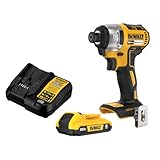
For a typical deck teardown, I would use a 1/4-inch hex cordless impact driver with a high-quality square-drive or star-drive bit. A basic cordless drill is a perfectly reasonable choice for a small repair or a few dozen easy screws.
How the tools differ
A drill applies steady torque. Its chuck accepts round-shank drill and driver bits, and its clutch can limit torque when driving screws. That makes a drill predictable, but a stubborn deck screw may simply stop turning or cause the bit to cam out of the head.
An impact driver applies torque in rapid hammering pulses. The impacts occur in the direction of rotation, not down the screw axis. Those pulses can crack loose a screw that a drill cannot move. They also reduce the force you need to apply, which is useful when removing screws overhead or from a kneeling position.
The trade-off is less finesse. Impacts are noisy, can damage soft screw heads, and can snap a bit if you keep hammering against a completely seized fastener. Most impact drivers also have only a few speed settings rather than the smoothly adjustable trigger and clutch control found on a drill.
| Factor | Impact driver | Cordless drill |
|---|---|---|
| Stuck or corroded screws | Usually better; impact pulses break resistance | May stall or strip the head |
| Clean screws in sound wood | Fast, but easier to overdo | Excellent control |
| Typical bit connection | 1/4-inch hex quick-change shank | Keyless chuck accepts many bit types |
| Noise and vibration | High | Lower |
| Best battery size | 2.0 Ah is lighter; 4.0 Ah or larger lasts longer | 2.0–4.0 Ah is usually adequate |
When an impact driver is the better choice
Use an impact driver when the deck has several hundred fasteners or when the screw heads are dirty, painted, rusted, or buried slightly below the decking. A driver rated around 1,500 to 2,000 inch-pounds of fastening torque has ample capacity for ordinary deck screws. More torque is not automatically better: old screws can shear below the head, leaving a shaft embedded in the joist.
Impact drivers are particularly helpful with long screws, such as 3-inch or 4-inch structural fasteners, and with screws driven into dense hardwood. They also work well when removing screws from wet pressure-treated lumber, where swelling and corrosion can hold the threads tightly.
Start at the lowest speed or use short trigger pulls. Put firm downward pressure on the bit and keep the tool aligned with the screw. Let the impact mechanism work for one or two seconds. If the screw does not move, stop and inspect the bit and head rather than continuing until the recess rounds out.
When a drill is enough
A drill is the economical option for a small deck repair, a handful of screws, or a deck built with newer coated fasteners. It is also preferable when the screw heads are close to the board surface and the wood is soft. Set the clutch low at first, use reverse, and increase the setting only as needed.
The drill’s chuck is useful if you need a specialized extractor, a larger driver bit, or a bit with a non-hex shank. A drill is also less tiring for inspection and light disassembly because it produces less noise and vibration. If you already own a capable 18-volt drill, buying an impact driver solely for ten easy screws is hard to justify.
For a replacement or general-purpose tool, look for a cordless drill driver with a two-speed gearbox. The low range provides more torque; the high range is useful for faster removal when the screws are loose.
Bits matter more than advertised torque
Use the exact bit style and size that matches the screw. Common deck fasteners use square-drive, Torx-style star, or Phillips heads. A worn bit may appear to fit but will slip under load. Keep several fresh bits available, especially if removing screws with square recesses that have become packed with dirt.
Impact drivers require bits rated for impact use. Standard hardened driver bits can shatter or snap under repeated impact loading. Buy a impact-rated driver bit set that includes the sizes used by your deck screws.
Clean packed debris from the recess with an awl or pick before inserting the bit. If the bit rocks in the head, do not apply more power. Replace it. A bit that fits tightly transfers force to the screw instead of chewing up the recess.
What to do with stripped or seized screws
For a damaged but partly usable head, press down firmly and try a fresh bit at low speed. Sometimes a drill’s clutch and steady reverse torque work better than an impact’s hammering. If the head is already rounded, hammering a slightly oversized bit into it can provide temporary grip, but it may destroy the bit.
For a screw that turns but will not rise, pry gently under the head with a flat bar while running the tool in reverse. The threads may be stripped in the decking. If the head breaks off, remove the board and grip the exposed shaft with locking pliers if enough remains. Severely rusted screws may need to be cut between the deck board and joist with an oscillating tool or reciprocating saw.
A practical removal routine
Wear safety glasses; old screw heads and broken bits can eject suddenly. Clear leaves and loose debris so you can see each head. Set the tool to reverse, seat the bit fully, and keep your wrist straight. Remove screws in manageable sections rather than stacking loose boards around your feet.
Expect roughly 100 to 200 screws from a small platform deck and several hundred from a larger one. A 2.0 Ah battery may handle a small repair, but a 4.0 Ah battery or a spare is more comfortable for a full teardown. Keep a magnetic tray or bucket nearby, and do not leave corroded screws in grass where they become a hazard.
Which should you buy?
Buy an impact driver if deck removal is a recurring task, the deck is large, or you regularly work with structural screws. Buy a drill if you need one versatile tool for drilling holes, installing wall anchors, and driving ordinary screws, and the deck fasteners are in decent condition. If you can afford both, the combination is useful: use the drill for controlled work and the impact driver for stubborn fasteners.