What's inside
As an Amazon Associate I earn from qualifying purchases. This post may contain affiliate links at no extra cost to you.
A standard cordless drill can make holes in brick, but it is slow and easy to overwork. A hammer drill adds a rapid forward tapping action that helps a masonry bit cut into hard material. That extra action matters most in concrete and dense brick; for a few small holes in soft brick, a standard drill may be enough.
As an Amazon Associate we earn from qualifying purchases at no extra cost to you.


What we cover
What the tools do
A standard drill rotates the bit without striking. It is suited to wood, metal and screwdriving, and it can drill some masonry with a sharp carbide-tipped masonry bit. In brick or concrete, though, the bit has to grind its way through without help from impacts.
A hammer drill rotates the bit while delivering short blows along the bit’s axis. On cordless models, a selector usually lets you choose drill, hammer-drill or screwdriving mode. Use hammer mode only for masonry: the impacts can damage ordinary drill bits and make screwdriving uncontrollable.
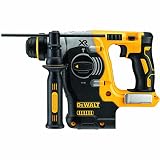
Neither tool should be confused with a rotary hammer. Rotary hammers use a stronger impact mechanism and SDS bits, making them a better fit for repeated holes, larger diameters and tough concrete. If you’re installing one shelf with a handful of small anchors, that may be more tool than you need.
Which tool for the job
| Job | Standard drill | Hammer drill |
|---|---|---|
| One or two small holes in soft brick | Often adequate, with a masonry bit and patience | Faster and easier, but not essential |
| Several holes for wall anchors | Can be slow; bit may skate or overheat | Usually the practical choice |
| Dense brick or poured concrete | Likely to struggle, especially with a cordless model | Better for occasional small holes; rotary hammer for frequent or larger holes |
| Driving screws | Good in drill or clutch mode | Use drill or clutch mode, not hammer mode |
For occasional home repairs, a cordless hammer drill is a useful all-round choice if you also need a regular drill. If your work is mostly wood, metal and screws, buy a standard cordless drill and borrow or rent a hammer drill when masonry comes up. A hammer drill costs more and adds weight; its masonry advantage is no reason to pay for it if you rarely drill masonry.
Brick is not concrete
Brick varies widely. Soft, older brick can yield to a standard drill, while hard-fired brick can be nearly as frustrating as concrete. Mortar is usually easier to drill than brick, but placing an anchor in mortar may give a weaker or less durable fixing. Follow the anchor maker’s placement guidance, and avoid drilling close to brick edges, where the material can crack or spall.
Poured concrete is generally the tougher test. A standard drill may take several minutes to make a small hole, and the bit can become hot or stop cutting. A hammer drill helps with typical anchor holes, but dense aggregate, reinforced concrete and larger holes can still bog it down. If progress stalls, don’t lean hard on the tool. Check for a worn bit, switch to a rotary hammer for demanding work, or stop if you may have reached rebar, a pipe or wiring.
Bits, anchors and hole quality
Use a masonry bit with a carbide tip, sized to the anchor instructions. A dull or cheap bit can wander at the start, cut slowly and leave an oversized hole that won’t hold the anchor properly. Hammer action makes cutting easier, but it doesn’t compensate for the wrong bit.
Mark the hole and start slowly to keep the bit from skating. A piece of tape on the bit can mark the required depth, or use a depth stop if the drill has one. Keep the drill square to the surface. Once the hole is deep enough, clear out the dust with a bulb blower or vacuum; dust left in the hole can prevent an expansion anchor from seating correctly. Avoid blowing concrete dust around with your mouth.
Use a clutch or low speed when driving screws into anchors, and switch hammer mode off. For a small plastic plug in soft brick, a standard drill’s slower, more controlled cut may help prevent an oversized hole. For concrete anchors, match both the bit diameter and hole depth to the anchor’s specified requirements.
Avoiding common problems
Too much pressure can slow the bit, heat it and strain the drill. Let a sharp bit cut; ease off if the motor labors or the bit binds. Pull the bit out occasionally to clear dust, especially in deeper holes. A compact drill with a small battery may manage a few holes but run hot or lose speed during a longer set. A larger battery can improve runtime, though it also makes the tool heavier.
Wear eye protection and hearing protection, and check the wall before drilling for likely plumbing and electrical runs. Concrete and masonry dust can contain harmful silica; use dust collection or suitable controls, and follow local safety guidance. Stop if the drill suddenly catches or the surface cracks. The cost of repairing damaged masonry—or hitting something hidden in the wall—can outweigh the time saved by pushing ahead.
A sensible buying decision
Choose a standard drill if masonry holes are rare and limited to soft brick or small, shallow holes. Buy a hammer drill if you expect regular anchor installation in brick or occasional small holes in concrete. For repeated drilling in concrete, holes larger than typical anchor sizes, or work in reinforced concrete, look at a cordless SDS rotary hammer instead. It is more capable, but heavier, costlier and less handy for everyday screwdriving.
Whichever tool you choose, budget for good masonry bits and the right anchors. In many home projects, those make more difference to a clean, secure hole than buying a more powerful drill than the job requires.