What's inside
As an Amazon Associate I earn from qualifying purchases. This post may contain affiliate links at no extra cost to you.
Drilling pilot holes in hardwood is not a high-power job, but it is an unforgiving one. A dull bit can burn the wood, a fast drill can snap a small bit, and an underpowered tool may stall when the bit reaches dense end grain. The best cordless drill is usually a compact, variable-speed model with a good clutch—not necessarily the most powerful drill on the shelf.
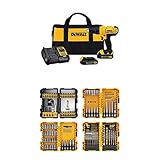
For most furniture, trim, cabinetry, and hardwood flooring work, choose a 12V or compact 18V drill with a two-speed gearbox, a sensitive trigger, and a 3/8-inch or 1/2-inch chuck. Pair it with a sharp brad-point or quality twist-bit set. The bit matters as much as the drill.
As an Amazon Associate we earn from qualifying purchases at no extra cost to you.



What we cover
What matters most in a cordless drill
Low-speed control is the first priority. Small pilot holes commonly range from 1/16 to 1/8 inch. At those sizes, full trigger speed can overheat the cutting edges or make the bit wander. A drill that creeps smoothly at roughly 200 to 400 rpm is easier to control than one that jumps abruptly when the trigger is pressed.
A two-speed gearbox is more useful than an extreme top-speed rating. Use low gear, generally around 0 to 500 rpm, for larger pilot holes, long holes, and dense end grain. High gear, often around 0 to 1,500 or 2,000 rpm, is useful for small holes in face grain when the bit is sharp.
A clutch prevents the drill from driving a screw too deeply after the pilot hole is complete. It also provides a rough safety limit when drilling near an edge, although you should not rely on the clutch to stop a drill bit every time. Set it low for delicate work and increase it only when the tool slips too easily.
Compact size and low weight reduce mistakes. A 12V drill is often enough for pilot holes up to about 1/4 inch and is less tiring during cabinet installation. A compact 18V drill gives more reserve for hardwood, larger bits, and occasional boring work. Heavy-duty 18V models are capable, but their extra weight is rarely helpful for small holes.
The best drill types for hardwood pilot holes
| Drill type | Best use | Advantages | Trade-offs |
|---|---|---|---|
| 12V compact drill | Small pilot holes, trim, cabinets | Light, precise, easy to hold | Less reserve for large holes and long screws |
| Compact 18V drill | General hardwood work and repairs | Good balance of power, runtime, and control | Heavier and usually more expensive |
| Heavy-duty 18V drill | Large bits, thick stock, repeated drilling | High torque and strong chucks | Bulky for small pilot holes; easier to overdrive screws |
| Hammer drill | Hardwood plus occasional masonry | Works as a normal drill with the hammer mode off | Extra weight and cost are wasted for wood-only work |
For a wood-focused buyer, start with a 12V compact cordless drill kit if portability matters. Choose a compact 18V cordless drill kit if you also expect to drill larger holes, install long screws, or work in thick oak, maple, or beech.
Choose the bit before the drill
Brad-point bits are usually the easiest choice for clean pilot holes in hardwood. Their center spur starts accurately, while the outside spurs score the fibers before the main cutting edges remove material. This reduces wandering and chipped edges, especially on finished boards.
Standard twist bits work, particularly in a pinch, but they can skate across a smooth surface. A small indentation from an awl or center punch helps. For holes larger than about 1/4 inch, brad-point bits, twist bits, or a stepped-up drilling sequence are preferable to forcing one small bit through thick stock.
Size the pilot hole to the screw and the wood. In hardwood, the pilot hole should generally match the screw’s solid shank diameter, not the outside diameter of the threads. For example, a #8 wood screw often needs a pilot around 1/8 inch to 9/64 inch in dense hardwood, depending on the screw design. Check the bit manufacturer’s chart when available.
Use a countersink when the screw head must sit flush. A combination countersink bit saves time, but separate tools can make cleaner holes when appearance matters. For a broad selection, a brad-point drill bit set for hardwood is a better purchase than a large collection of generic bits.
How to drill a clean pilot hole
Mark the hole carefully and clamp the work if possible. Set the drill to low gear and start at slow speed. Keep the drill perpendicular to the surface; a small angle becomes obvious when the screw head is installed. Once the bit has established a groove, increase speed only enough to maintain smooth cutting.
Withdraw the bit every 1 to 2 inches in deep hardwood holes. This clears chips and reduces heat. Stop if the bit squeals, smokes, or leaves a dark ring around the hole. Let the bit cool rather than dipping a hot bit in water, which can damage its temper.
When drilling near an end or edge, reduce pressure and increase the pilot-hole size slightly if the screw is splitting the wood. Predrilling does not eliminate splitting if the screw is too long, too close to an edge, or driven with excessive torque.
Common failures and when cheaper is fine
A budget drill is fine for occasional assembly, soft hardwood such as poplar, and pilot holes under 1/8 inch. Spend more for a better battery system, smoother trigger, stronger chuck, and improved ergonomics if you drill weekly or work with dense hardwoods.
The most common failure is a slipping chuck, followed by a burned or broken bit. A keyless chuck should grip a small bit firmly without excessive force, and the bit should be straight. If the drill stalls repeatedly, use a sharper bit, a lower gear, or a larger battery—not simply more trigger pressure.
Do not buy a hammer drill solely for hardwood. Its hammer function must remain switched off, and the mechanism adds little value in wood. Buy one only if the same tool will also drill brick or concrete. For wood-only pilot holes, a lighter conventional drill is the more useful tool.