What's inside
As an Amazon Associate I earn from qualifying purchases. This post may contain affiliate links at no extra cost to you.
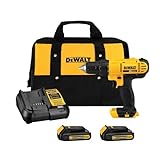
Drilling into hardwood table legs looks simple until the bit wanders, the leg splits, or the hole exits with a large chip missing. The best cordless drill for this job is not necessarily the most powerful one. Control, a good chuck, a low-speed setting, and a sharp bit matter more than extreme torque.
As an Amazon Associate we earn from qualifying purchases at no extra cost to you.


What we cover
What to look for in a cordless drill
For most table-leg work, a compact 12V or 18V/20V cordless drill is the right tool. A compact drill is easier to hold square to a narrow leg and less likely to twist your wrist when the bit catches. An 18V/20V drill gives you more reserve power for large holes, dense species such as maple, or long drilling sessions.
Choose a drill with a two-speed gearbox. Use the low range for larger bits and the high range for small pilot holes. A variable-speed trigger is essential because starting slowly keeps the bit from skating across the finish. A 3/8-inch keyless chuck is adequate for most furniture work; a 1/2-inch chuck is useful only if you regularly use larger shank bits.
A clutch with several settings is helpful when driving screws into a leg, but it does not control drilling torque in the same way. Set the drill to the drill icon when boring holes. For delicate work, a drill with a bright work light and a battery-level indicator is convenient, but neither feature compensates for a dull bit.
If you do not already own a battery platform, a compact 12V cordless drill is often enough for table legs, drawer parts, and small furniture repairs. Buy an 18V/20V drill instead if you also expect to drill into masonry, install large hardware, or use hole saws.
The best drill types for hardwood legs
| Drill type | Best use | Main advantage | Trade-off |
|---|---|---|---|
| Compact 12V drill | Pilot holes and hardware holes up to about 3/8 inch | Light, controllable, easy to keep square | Less power for large bits and thick hardwood |
| 18V/20V drill driver | Frequent furniture work and holes up to about 1 inch | More torque and longer runtime | Heavier; easier to apply too much force |
| Right-angle drill | Holes in cramped spaces or assembled furniture | Fits where a standard drill cannot | Usually expensive and unnecessary for a loose leg |
| Hammer drill | Masonry, not hardwood | Hammer function for brick and concrete | Extra weight; hammer mode can damage wood and hardware |
A regular drill driver is preferable to a hammer drill for wood. A hammer drill can drill wood with the hammer function switched off, but it adds bulk and cost. If you need both wood and masonry capability, a cordless hammer drill driver is a reasonable compromise. Do not use hammer mode on a table leg.
Use the right bit for the hole
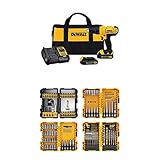
For clean, accurate holes in hardwood, brad-point bits are the best general choice. Their center spur starts the hole precisely, while the outer spurs score the surface before the main cutting edges remove material. A set covering 1/8 to 1/2 inch handles most furniture hardware and dowel work.
Standard twist bits work for pilot holes, particularly when they are sharp and used at moderate speed. They are more likely to wander on a finished surface. For flat-bottomed holes, use a Forstner bit. Forstner bits make clean holes for concealed hardware and tenons, but they need more torque and generate heat. A brad-point wood bit set is usually a better first purchase than an oversized assortment of general-purpose bits.
Use a countersink when a screw head must sit flush. For a hole larger than about 1/2 inch, switch to a Forstner bit or a sharp hole saw rather than forcing a small drill bit to do the job. Pushing hard on a dull bit can burn the wood, stall the drill, and twist the workpiece.
How to drill without splitting the leg
Mark the hole with a sharp pencil, then make a small starting dimple with an awl or the point of a brad-point bit. Clamp the leg securely to a bench. Do not hold it with your free hand: a stalled drill can rotate the leg suddenly or pull the bit sideways.
Start at low speed until the bit is fully engaged. For a 1/8-inch pilot hole, moderate to high speed is normally suitable. For a 1/2-inch bit in dense hardwood, use the low gear and roughly 300 to 600 rpm if your drill provides speed control. Let the bit cut rather than leaning heavily on the drill.
When drilling all the way through, clamp a scrap board tightly against the exit face. This backing board supports the fibers and greatly reduces breakout. Another option is to drill from one side until the center point just appears on the far side, then finish from that side. This takes longer but gives the cleanest exit.
Withdraw the bit every inch or so in a deep hole to clear chips. Packed chips increase friction and heat. If the bit becomes too hot to touch, stop and let it cool. Heat can darken the hole, soften surrounding finish, and shorten bit life.
Common failures and buying advice
The most common failure is using a powerful drill with a dull bit and too much pressure. The drill may have enough torque to split a narrow leg before its clutch reacts. A smaller drill with a sharp bit is safer for thin stock. Another failure is drilling near the end grain or within about 1/4 inch of an edge without a pilot hole; the wood can split along its grain.
A cheaper drill is fine if you are making a few 1/8-inch or 1/4-inch pilot holes and already own compatible batteries. Spend more on the drill when you need low-speed control, frequent large holes, better balance, or a long warranty. Spend first on sharp bits and clamps if the project is a one-time repair.
For larger furniture holes, a brushless 18V/20V drill driver offers useful efficiency and runtime, but it is not mandatory. A brushed compact drill will still make excellent holes when paired with the correct bit, steady support, and a backing board.