What's inside
As an Amazon Associate I earn from qualifying purchases. This post may contain affiliate links at no extra cost to you.
What we cover
Why the bit matters in brittle plastic
Impact drivers deliver short bursts of rotational force. That is useful for long screws in wood, but brittle plastic can crack, split around a hole, or strip before the screw is seated. A good bit helps keep the driver engaged with the screw head; it does not make impact driving safe for every plastic part. For a plastic enclosure, trim piece, or molded bracket, a hand screwdriver or drill with a clutch is often the better tool.
If you use an impact driver, choose a bit that fits the screw precisely, keep the tool square, and stop as soon as the head seats. Excess force is a common cause of damage. A slipping bit can chew up the screw head, while a screw driven too far can crack the plastic or pull its threads loose.
As an Amazon Associate we earn from qualifying purchases at no extra cost to you.



What to buy
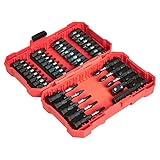
For occasional work, a standard, well-made bit in the exact screw-head size is usually enough. A short bit gives you more control and less wobble than a long extension. If you drive screws often with an impact driver, buy impact-rated bits with a torsion zone—the narrowed or flexible section is designed to absorb some of the repeated torque pulses. It can improve bit life, but it will not protect the plastic from overdriving.
Start by identifying the screw head. Phillips, Pozidriv, Torx, and square-drive bits are not interchangeable, even when they look similar. Using the wrong type or size increases cam-out, which is when the bit climbs out of the recess under load. For common Phillips screws, match the bit to the recess rather than assuming a #2 fits everything. A snug fit with little side-to-side movement is the goal.
For frequent impact-driver use, consider impact-rated bits with a torsion zone. For one repair, a single quality bit in the correct size is a sensible, cheaper choice. Avoid buying a large set just to get one bit you need.
Bit choices at a glance
| Bit choice | Best for | Trade-off |
|---|---|---|
| Standard driver bit | Occasional screws and light-duty work | Often cheaper; may wear or break sooner in repeated impact use |
| Impact-rated torsion bit | Regular use with an impact driver | Costs more and still cannot prevent plastic damage from excess torque |
| Hand screwdriver | Small parts, delicate housings, final tightening | Slower, but gives direct control over seating force |
| Drill-driver with clutch | Repeated fastening where torque control matters | Requires a suitable clutch setting and a steady hand |
Choose the tool before the bit
When a screw enters a thin plastic boss, a small pilot hole and gentle, controlled driving matter more than a premium bit. If the part has a manufacturer-specified hole size or screw, follow that guidance. Otherwise, test on a scrap piece or an unseen area when possible. A hole that is too small can wedge the plastic apart; one that is too large may leave the screw with little grip. Do not assume a wood-screw pilot-hole chart applies to every plastic.
A cordless drill-driver with an adjustable clutch is usually easier to control than an impact driver for this work. Begin with a low clutch setting, then increase it only if the screw will not seat. The clutch is not a guarantee against cracking, so keep the drill square and stop to finish by hand if the head is nearly flush. A drill-driver with an adjustable clutch is a better purchase than an impact driver if most of your jobs involve delicate plastic parts.
If you must use an impact driver
Use the lowest speed or power mode available. Start slowly, apply steady pressure, and release the trigger as soon as the screw head meets the surface. Avoid trying to countersink a screw into plastic: unlike wood, many molded plastics do not compress cleanly around the head. If the screw needs a washer or a specified shoulder, use the correct hardware instead of forcing the head deeper.
Keep the bit aligned with the screw axis. Tilting the tool puts uneven force on the recess and can make the bit slip. If the bit starts to cam out, stop immediately; pressing harder can ruin the head and send the bit across the plastic. Check the bit for a rounded tip and replace it if it no longer seats firmly. A fresh, correctly sized impact-rated bit in the screw’s exact drive type is safer than trying to make a worn or mismatched bit work.
Recognize the point to stop
Stop if you hear a new crack or see whitening, a hairline split, or the plastic boss beginning to bulge. These can be signs of stress even if the screw still turns. Also stop if the screw spins without advancing: the plastic threads may be stripped. Continuing to drive it will usually remove more material, not restore grip. Back the screw out gently and assess whether the part needs a different fastener, a manufacturer-approved repair, or replacement.
Heat can also soften some plastics. If a screw is binding, do not keep pulsing the impact driver; friction and repeated impacts can worsen the fit. Remove the screw, check for a misaligned hole or damaged threads, and correct the cause before trying again. For a fastener that must hold a load, do not rely on a damaged plastic boss simply because the screw feels tight.
A practical buying decision
For a one-off repair, buy the correctly sized bit and use a hand screwdriver or clutch-equipped drill. A basic bit is fine if it fits and is not worn. For regular impact-driver work, an impact-rated bit set is worth considering because it is built for repeated shock loading; choose a compact set with the drive types you actually use. If you often fasten screws into brittle plastic, spend the money on a drill-driver with a clutch rather than expecting a tougher bit to solve a tool-control problem.