What's inside
As an Amazon Associate I earn from qualifying purchases. This post may contain affiliate links at no extra cost to you.
What we cover
Best Cordless Drills for Drilling Holes in Wooden Handrails
Drilling a hole in a wooden handrail is a small job, but it rewards a controlled drill more than a powerful one. You are usually drilling close to an edge, working on a finished surface, and trying to keep holes straight for balusters, screws, or mounting hardware. A bulky drill with a harsh trigger can split the rail or let the bit wander.
For most handrails, the best choice is a compact 12V or 18V cordless drill/driver with a variable-speed trigger, a clutch, and a keyless chuck. You do not need hammer action for ordinary wood. A hammer drill is useful only if the same tool will also drill masonry elsewhere.
As an Amazon Associate we earn from qualifying purchases at no extra cost to you.
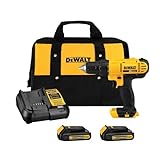


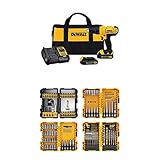
What to look for in a cordless drill
A 12V cordless drill driver is often the easiest tool to handle on a handrail. These drills are shorter and lighter, commonly weighing about 2 to 3 pounds with a battery. That makes it easier to hold the drill square to the rail while standing on stairs or a ladder. Their main limitation is runtime and lower torque, though neither is usually a problem for a few wood holes.
An 18V or 20V compact drill is the better all-purpose choice if you also drill large holes or drive long screws. Look for a compact brushless model if the price difference is reasonable. Brushless motors generally offer better runtime and smoother low-speed control, but a basic brushed drill is perfectly adequate for occasional handrail work.
| Drill type | Best use | Advantages | Trade-offs |
|---|---|---|---|
| 12V drill/driver | Small holes, balusters, pilot holes | Light, compact, easy to control | Less power for large hole saws |
| 18V/20V compact drill/driver | Mixed household drilling and fastening | More torque and battery capacity | Heavier and often more expensive |
| Hammer drill | Wood plus occasional brick or concrete | Handles masonry with the hammer mode switched on | Usually heavier; hammer mode is unnecessary for wood |
| Impact driver | Driving screws, not clean wood drilling | High fastening torque and short length | Less precise; can damage edges and small bits |
Features that matter on a handrail
A two-speed gearbox is more useful than a very high advertised maximum speed. Use the low range, usually around 0 to 400 or 500 rpm, for large bits and careful starting. Use the high range, often up to 1,500 or 2,000 rpm, for small pilot holes. The variable-speed trigger should let you creep forward at very low speed without stalling or jumping.
A 3/8-inch chuck is sufficient for most handrail work. A 1/2-inch chuck is useful if you expect to use large auger bits or hole saws, but it adds size and weight. A clutch with at least 15 settings helps when driving screws into the rail. Set it low at first; overtightening can strip the wood, crush the finish, or pull a screw head below the surface.
Choose a drill with a narrow body and a comfortable grip. A belt hook, work light, and battery gauge are convenient but not essential. Two batteries are worthwhile if you are installing many balusters. For one or two holes, the cheaper kit with one battery is fine, especially if you already own compatible batteries.
Use the right bit for the hole
For clean holes in finished wood, use a sharp brad-point bit. Its center spur starts accurately, while the outer cutting spurs score the surface before the main cutting edge removes material. A standard twist bit can work, but its tip tends to wander and its flutes can tear the exit side.
For holes larger than about 1/2 inch, use a sharp brad-point wood bit set, Forstner bit, or hole saw, depending on the required diameter and depth. Forstner bits leave a clean, flat-bottomed hole but need more pressure and can heat up. Auger bits remove waste quickly in thick stock, but their aggressive screw point can pull the bit into the rail and cause a breakout.
Do not use a masonry bit in wood. Its blunt carbide tip rubs rather than cuts and can leave a rough, oversized hole. Avoid dull bits of any type. A dull bit requires more pressure, overheats the finish, and increases the chance that the drill will twist when it finally breaks through.
How to drill the handrail without splitting it
Mark each hole carefully with a sharp pencil or knife point. If the hole is for a baluster, measure from a consistent edge and use a simple spacing block. Check the rail for knots and cracks before drilling; knots are harder and can deflect a bit.
Place painter’s tape over the mark when drilling through a finished rail. The tape does not prevent all tear-out, but it helps keep the surface fibers together and makes the mark easier to see. Clamp a scrap board tightly against the exit side if the hole goes completely through the rail. This backing board supports the fibers as the bit exits.
Start at low speed with light pressure. Keep the drill aligned with the intended hole rather than correcting aggressively once the bit has entered. For a through-hole, slow down as the tip approaches the opposite surface. You can also drill from both sides: drill until the center point just breaks through, then flip the rail or finish from the opposite face. This produces a cleaner exit than forcing a large bit through in one pass.
When another cordless tool is better
A compact 18V cordless drill driver is the best compromise for most homeowners who want one tool for handrails and general repairs. Choose a hammer-drill version if you also need to drill anchor holes in brick or concrete, but leave the hammer setting off in wood.
An impact driver is excellent for driving structural screws into a newel post or stringer, but it is not my first choice for drilling precise handrail holes. Its impact mechanism makes low-speed control less refined, and small hex-shank bits can break if they bind. If you already own one, use it for fastening and buy a small drill chuck attachment only for light-duty holes.
For a single installation, the cheapest compatible 12V drill and a quality brad-point bit are enough. Spend more on the bit and on accurate layout before spending on extra torque. The drill should make the job controlled and repeatable; it should not compensate for a wandering mark, a dull cutter, or unsupported wood fibers.