What's inside
As an Amazon Associate I earn from qualifying purchases. This post may contain affiliate links at no extra cost to you.
A toggle bolt is a good choice when a wall-mounted bracket has to hold a meaningful load and you can reach the hollow space behind the drywall. The right fastener depends on the bracket’s hole size, the drywall thickness, the depth of the cavity, and how the load will pull on the wall. A toggle is not a substitute for a stud: for heavy or safety-critical mounts, fastening to framing is usually the better option.
As an Amazon Associate we earn from qualifying purchases at no extra cost to you.



What we cover
Choose the toggle type for the job
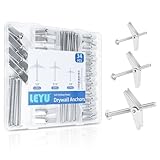
Traditional spring-wing toggles use a machine screw and two metal wings that open behind the wall. They are inexpensive and strong for their size, but the wings can fall into the cavity if you remove the screw. They also need a relatively large drilled hole, and the bracket must stay in place while you start the screw.
Strap-style toggles use a metal channel behind the wall, connected to a plastic installation strap. You push the channel through a smaller hole, pull it snug against the back of the drywall, and slide a collar forward. The screw can then be removed and reinstalled without losing the toggle. The trade-off is price: strap-style anchors usually cost more per fastener, and their ratings still depend on wall material and installation.
For a typical bracket mounted to hollow drywall, compare strap-style toggle bolts with metal spring-wing toggles. Match the screw diameter and length to the bracket and wall; do not choose by the package’s maximum load number alone.
Toggle bolt options at a glance
| Type | Hole and installation | Best fit | Main drawback |
|---|---|---|---|
| Spring-wing toggle | Typically needs a larger hole; wings must open behind wall | Low-cost, permanent or rarely removed bracket | Wings can drop into wall if screw is removed |
| Strap-style toggle | Smaller hole on many designs; channel is set before screw installation | Brackets that may need adjustment or removal | Costs more; installation steps vary by brand |
| Plastic expansion anchor | Small pilot hole; expands in the drywall | Light-duty bracket with modest load and little leverage | Can pull out or crush drywall under higher loads |
A basic plastic anchor may be enough for a small cable guide or lightweight accessory. For a bracket that projects from the wall, carries a shelf, or will be tugged, a metal toggle is generally a more dependable choice. See plastic drywall anchors only when the load and leverage are genuinely light.
Size the fasteners to the bracket and load
Check the anchor package for the supported drywall thickness and required hole diameter. Drywall is often 1/2 inch thick, but 5/8-inch board is common in some walls and ceilings. A toggle that fits one thickness may not clamp correctly in another. Confirm that the cavity is deep enough for the wings or channel to open, and check for pipes, wiring, or insulation before drilling.
Use the number and spacing of fasteners specified by the bracket maker. A bracket with two or four mounting holes should generally use all of them, provided each anchor fits properly. A load sitting close to the wall creates less leverage than the same load on a long projecting arm. Pulling, vibration, and repeated movement also raise the risk of the drywall paper tearing or the anchor loosening. Do not treat an anchor’s advertised load as a safe working load for a complete bracket installation.
If the bracket will support a person, a large screen, a heavy cabinet, or anything that could injure someone if it falls, locate studs or add proper blocking. Toggle bolts in drywall alone are not the right default for a safety-critical installation.
Install without damaging the drywall
Mark the bracket holes and inspect the area with a stud finder and, where appropriate, a wire or pipe detector. If using a toggle in a confirmed hollow section, drill the exact diameter stated on the package. A cordless drill with a sharp bit is sufficient; use a general-purpose drill bit set only if it includes the specified size. Do not force an oversized bit through the board: a ragged hole gives the anchor less sound material to clamp.
For a spring-wing toggle, thread the screw through the bracket and wings, fold the wings, and push them through the hole. Keep gentle outward pressure on the screw as you tighten so the wings stay seated against the back of the wall. For a strap-style toggle, follow its sequence: pass the channel through, pull it flush, lock the collar, snap or trim the straps as directed, then fit the bracket and screw. Keep the screw straight to avoid cross-threading.
Tighten until the bracket is secure, then stop. Excess torque can crush the gypsum core, tear the paper face, or spin the anchor in an enlarged hole. An impact driver can make that damage happen quickly; use a hand screwdriver or a drill on a low clutch setting for final tightening. If the anchor spins, the hole crumbles, or the bracket still moves, remove the load and reassess rather than tightening harder.
Common failure points
A toggle may fail because the wings never opened, the screw was too short to engage them, or the wall cavity blocked their movement. It can also fail when a bracket hole is too large for the screw head, when fasteners are crowded near a drywall edge, or when the load repeatedly rocks the bracket. A washer can help provide a larger bearing surface when the bracket’s hole allows it, but it cannot restore damaged drywall.
Before loading the bracket, check that it sits flat and does not shift under firm hand pressure. If the drywall is cracked, soft, damp, or already damaged, do not rely on it to hold a toggle. Move the mounting point to sound material, use framing, or repair the wall first.