What's inside
As an Amazon Associate I earn from qualifying purchases. This post may contain affiliate links at no extra cost to you.
What we cover
Why use an impact driver for sheet-metal screws?
An impact driver can run self-tapping screws quickly, especially when you have many to install or are fastening into thicker sheet metal. Its short rotational impacts help keep the bit turning as resistance rises, while its compact body is easier to handle in tight spaces than many drills.
But more torque is not automatically better. Thin sheet metal can strip, dimple, or tear if a screw is driven too far. For a few screws in light-gauge material, an ordinary drill with a clutch may offer better control. For larger jobs, an impact driver with a variable-speed trigger and a low-speed mode is a practical choice.
As an Amazon Associate we earn from qualifying purchases at no extra cost to you.



What to look for when buying
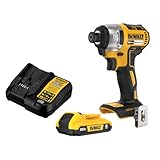
Choose a 1/4-inch hex impact driver with a variable-speed trigger. A lower speed setting or selectable drive mode makes it easier to start the screw and stop once its head seats. A belt hook and compact head are useful overhead or in cramped locations, but neither matters as much as controllable speed.
Battery voltage alone does not tell you how suitable a driver is. Most current cordless impact drivers are in 12V or 18V/20V-class tool systems. A 12V model is usually lighter and can be plenty for occasional sheet-metal work; an 18V/20V-class tool is a sensible pick for frequent use, longer run time, or other demanding tasks. If you already own compatible batteries, staying in that platform can save more than buying a bare tool from another brand.
For help comparing cordless impact drivers, focus on trigger control, available modes, weight with battery, and tool-platform cost—not the highest torque figure on the package.
Which setup fits the job?
| Setup | Best for | Main trade-off |
|---|---|---|
| Drill/driver with clutch | A few screws in thin sheet metal; careful work where stopping point matters | May stall or feel slower in thicker material |
| 12V impact driver | Light to moderate fastening, especially in tight spaces | Less run time and reserve power than many larger tools |
| 18V/20V-class impact driver | Repeated fastening or mixed jobs that also need a general-purpose driver | Often heavier; can overwhelm thin stock if used carelessly |
A basic drill is the cheaper option and is fine for occasional repairs. Its clutch can limit how hard it drives, which is helpful when screw heads must stop flush without crushing the work. A hammer drill is not an upgrade for this task: its hammering action is intended for masonry, not sheet metal. Do not use hammer mode on screws.
Match the bit and screw to the work
Use a driver bit that fits the screw head snugly. A loose Phillips or hex bit can cam out, chew up the recess, and leave a damaged screw that is difficult to remove. Check that the bit is rated for impact use; ordinary bits can wear or break sooner under repeated impacts. Keep a spare bit nearby for a long job.
Pick a self-tapping screw intended for the materials and thickness you are joining. A screw that is too short may have inadequate thread engagement; one that is too long can protrude into a space where it may damage wiring or other components. Follow the screw maker’s guidance for pilot holes, especially with thicker metal or stainless steel. When a pilot hole is called for, choose the specified size rather than guessing.
For assorted impact-rated driver bits, verify the tip style and size against your fasteners. A magnetic bit holder can help retain small screws, though it does not replace a properly fitted bit.
How to drive screws without stripping the metal
Clamp or support the sheet so it cannot flex away from the screw. Place the screw square to the surface and start at low speed with steady forward pressure. Once the threads bite, increase speed only as needed. Stop when the head is seated; do not keep triggering the driver to “make sure.” On thin material, a fraction of a second of extra impact can strip the hole or pull the head through.
Make a test fastening in a scrap piece of the same material when possible. Check that the screw holds without spinning, the sheet is not badly dimpled, and the head is seated consistently. If the screw spins without tightening, stop: the hole may be stripped, the screw may be wrong for the material, or the sheet may be too thin for that fastener. Moving to a fresh location or using a fastening method designed for the application is safer than forcing the screw.
For repeated work, a drill/driver’s clutch or an impact driver with a low-speed mode can improve consistency. Practice on scrap and adjust the setting; there is no universal torque setting because screw size, metal thickness, and joint design vary.
Common mistakes and when to choose a drill
Driving at full trigger speed from the start can make the bit jump and damage the screw recess. Leaning hard on the tool can also bend the sheet or push the screw through. If you hear the driver hammering but the screw is not advancing, stop and inspect the bit, screw, and hole rather than continuing. A worn bit or a mismatched screw can turn a simple fastening job into a stripped-out hole.
Choose a clutch-equipped drill for a small number of screws, delicate panels, or work where repeatable depth matters more than speed. Choose an impact driver when there are many fasteners, access is tight, or the material puts more resistance on the screw. A cordless drill/driver with an adjustable clutch is often the more forgiving buy for household repairs. If you already have an impact driver, use its slowest practical mode, a fresh impact-rated bit, and a scrap-metal test before committing to the finished panel.