What's inside
As an Amazon Associate I earn from qualifying purchases. This post may contain affiliate links at no extra cost to you.
For most self-tapping metal screws, either a drill or an impact driver can do the job. The better choice depends on screw size, sheet thickness, access, and how much control you need. A drill is easier to stop at the right depth; an impact driver is compact and useful for driving many screws, but can strip the screw head or damage thin metal if you let it run unchecked.
As an Amazon Associate we earn from qualifying purchases at no extra cost to you.


What we cover
Quick answer
Choose a variable-speed drill for occasional screws, thin sheet metal, or work where a clean, controlled stop matters. Choose an impact driver for a large batch of longer or larger self-tapping screws, especially into heavier-gauge steel, once you have practiced controlling it. For either tool, use the correct driver bit, start square to the surface, and slow down as the screw seats.
If you already own a drill, you probably do not need to buy an impact driver just to install a few screws. A clutch-equipped drill is often the cheaper and more forgiving option. If you are buying a tool mainly for repeated fastening, an impact driver can save effort, but it does not remove the need for good technique.
How the tools differ
A drill applies steady rotation. Its trigger usually gives fine speed control, and its clutch can slip when resistance reaches a chosen setting. That makes it easier to avoid crushing a washer, stripping a head, or driving a screw too far. Many drills also have a low gear for slower, higher-torque work.
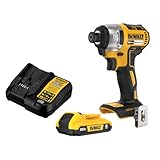
An impact driver rotates in short bursts when resistance rises. Those impacts help drive screws without requiring as much force from your wrist, and the short body fits into tighter spaces. But the bursts make it easier to overdrive a screw in thin metal. Most impact drivers also use a 1/4-inch hex collet rather than a drill’s three-jaw chuck, so check that your bits are compatible.
Drill vs. impact driver
| Job detail | Drill | Impact driver |
|---|---|---|
| Occasional screws | Usually the sensible choice; no extra tool needed if you own one | Works, but may be unnecessary |
| Thin sheet metal | Easier to control seating depth | Can work with a light trigger, but overdriving is easier |
| Many long or large screws | Capable, though it may stall or twist your wrist | Less tiring for repetitive driving |
| Clutch control | Common and useful for limiting drive force | Usually no conventional adjustable clutch |
| Noise and feel | Smoother and generally quieter | Louder, with a pulsing feel under load |
Choose by screw and metal
Self-tapping screws cut or form their own threads as they enter metal. Their point style, diameter, length, and the material’s thickness all affect how they drive. A short screw in thin sheet may need very little torque; a larger screw going through several layers or into thicker steel needs more. Do not assume that a higher tool speed will make a difficult screw go in better.
Check the screw packaging for the recommended pilot-hole diameter and drill one when specified. A hole that is too small can make the screw bind, break, or strip its head; one that is too large can leave weak threads and a loose joint. For very thin sheet, the right screw and backing support matter more than choosing a more powerful tool.
A drill with an adjustable clutch is a good fit when you are installing a few screws into light-gauge sheet, fastening a trim piece, or working near a surface that can dent. A cordless drill with an adjustable clutch can also handle drilling the pilot holes, so it may be the only tool you need.
An impact driver makes more sense when you are driving dozens of screws, using larger fasteners, or working in a cramped spot. It is not automatically the right tool for every metal screw: small screws and soft, thin material can be damaged quickly by repeated impacts. If you buy one, a cordless impact driver should be paired with bits rated for impact use.
Technique that prevents damage
Use a sharp, correctly sized driver bit that fully engages the screw head. A loose fit can cam out, rounding the recess and leaving the screw difficult to remove. Hold the tool in line with the screw rather than leaning on it from the side. Start slowly and keep steady pressure until the screw has caught its threads.
As the head approaches the surface, ease off the trigger. Stop when the head or washer is seated as intended; do not keep driving just because the tool can. On an impact driver, brief trigger pulses give you more control than holding the trigger down. On a drill, start with a low clutch setting and increase it only if the screw repeatedly stops before seating.
Wear eye protection: metal chips and broken screw tips can fly. If the screw spins without tightening, stop. The hole may be oversized, the threads may be stripped, or the screw may be the wrong type for the material. A stronger tool will not repair a failed connection. Use an appropriately sized replacement fastener or another repair method rather than repeatedly forcing the same screw into the damaged hole.
What to buy
If you need one tool for household repairs and occasional self-tapping screws, buy or use a variable-speed drill with a clutch. It is quieter, versatile for drilling pilot holes, and easier to control at the final turn. A basic model is enough for light sheet-metal work; spending more for a high-torque tool is not worthwhile unless your other jobs require it.
If fastening is frequent and you already have a drill for holes, an impact driver is a useful second tool. It can reduce fatigue during long runs of screws, but keep the trigger light and test the setup on scrap first. For a few screws into thin metal, the drill you already own is often the better value.