What's inside
As an Amazon Associate I earn from qualifying purchases. This post may contain affiliate links at no extra cost to you.
What we cover
What matters when driving self-tapping screws
For sheet metal, an impact driver’s main advantage is its short bursts of rotational force. That helps when a screw starts to bind, but it does not make every fastener easier to install. Self-tapping screws cut or form their own threads, and too much speed or torque can strip the hole, snap the screw, or dimple thin sheet before you notice.
Look for a cordless 18V or 20V-class driver with a variable-speed trigger, a low-speed mode, and a usable clutch or selectable power settings. A compact 12V model can handle occasional work with small screws; a higher-voltage tool is more comfortable for repeated fastening or larger screws. Voltage alone is not a reliable measure of control, so compare trigger behavior and settings, not just the biggest torque figure on the box.
As an Amazon Associate we earn from qualifying purchases at no extra cost to you.

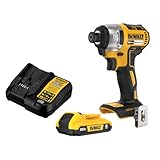


A variable-speed cordless impact driver is a practical choice for general metal fastening. If you already own batteries in a tool platform, staying with that platform is usually cheaper and more convenient than buying a new battery and charger for a modest gain in performance.
Choosing a driver for the job
| Tool choice | Good fit | Main trade-off |
|---|---|---|
| Compact 12V impact driver | Occasional small screws, light sheet metal, tight spaces | Less reserve for long or larger fasteners |
| 18V/20V impact driver with speed settings | Regular shop, roofing, HVAC, or general metal work | More tool than needed for a few small screws |
| Cordless drill/driver with clutch | Thin sheet, delicate assemblies, or work where consistent depth matters | May stall more readily in thicker material |
| Drill press or predrilling setup | Many holes, harder stock, or repeatable alignment | Slower to set up and less portable |
For a first tool, a 18V or 20V impact-driver kit makes sense if you expect regular use and need batteries. For a handful of screws in thin sheet, a basic drill/driver with a clutch may actually be easier to control. The clutch can stop rotation at a repeatable resistance; an impact driver keeps delivering blows until you release the trigger.
Features worth paying for
Variable speed is essential. On thin material, begin with light trigger pressure and let the screw establish its path. A tool with two or three speed modes can make this easier, but a “precision” mode is not a substitute for practice: some modes reduce speed or torque, while others change how the tool behaves as resistance rises.
A brake that stops the bit promptly helps avoid driving the screw too far after the head seats. A belt hook, work light, and compact body are useful conveniences, but they matter less than trigger control and a secure hex collet. Most impact drivers take 1/4-inch hex bits. Use a short, well-fitting bit; a loose or worn bit can cam out, damage the screw recess, and make a small job surprisingly frustrating.
Do not buy based on maximum torque claims alone. Metal screw installation often needs restraint, not maximum output. For long production runs, compare battery capacity and tool weight: a larger battery lasts longer but can make overhead work tiring. A mid-size pack is a reasonable balance for most home and site work.
Match the screw and hole to the material
Use a screw intended for the metal and thickness involved. Self-drilling screws have a drill-point tip; ordinary self-tapping screws may require a pilot hole. Follow the fastener maker’s guidance for pilot-hole diameter and material thickness. A hole that is too small can overheat or break the screw; one that is too large leaves weak threads and can let the screw spin without tightening.
For thin sheet, support the work so it does not flex, and keep the driver square to the surface. Start slowly. When the head reaches the material, ease off immediately. A stripped hole, spinning screw, snapped shank, or dimpled panel usually points to poor alignment, the wrong hole size, excessive speed, or too much time on the trigger. Backing out and retrying in the same damaged hole rarely restores a reliable connection; move to a suitable larger fastener or repair the hole as the application allows.
For repeated fastening, a metal-rated drill-bit set is useful when pilot holes are called for. Keep bits sharp and clear chips from the hole. If the screw or sheet gets hot, pause and check that the bit, pilot size, and screw type are correct rather than pushing harder.
A reliable driving routine
First, test the screw and setting on scrap of the same thickness. Hold the driver straight, start at low speed, and let the point bite before increasing trigger pressure. Stop as soon as the head seats firmly. The screw should clamp the materials without crushing a washer, stripping the threads, or pulling the panel out of shape.
If screws vary in length or the material changes, repeat the test. For work requiring very consistent seating depth, use a clutch-equipped drill/driver or a depth-control accessory rather than relying on an impact driver’s feel. An impact driver is the better buy for portability and stubborn fasteners; it is not automatically the best tool for precision or delicate sheet metal.
What to buy
Choose a compact 12V driver for occasional small fasteners and tight spaces, provided it has a responsive trigger. Choose an 18V/20V model with selectable speed for regular use, especially if you already own compatible batteries. Skip premium torque features if your work is limited to a few thin-sheet screws; put that money toward the right screws, sharp bits, and a drill/driver clutch if controlled seating is the priority.