What's inside
As an Amazon Associate I earn from qualifying purchases. This post may contain affiliate links at no extra cost to you.
Hardwood stair treads are not difficult to drill, but they punish the wrong setup. A dull bit can burn the wood, tear out the finish, or leave a hole that will not accept a screw cleanly. The best cordless drill for this job is usually a compact 18V or 20V variable-speed drill with a clutch, a two-speed gearbox, and enough control to start slowly. Maximum torque matters less than smooth operation.
As an Amazon Associate we earn from qualifying purchases at no extra cost to you.


What we cover
What to Look for in a Cordless Drill
Choose a drill with a 3/8-inch or 1/2-inch keyless chuck, two mechanical speeds, and a usable clutch. A 3/8-inch chuck is adequate for most stair-tread work, including pilot holes and holes up to about 3/8 inch. A 1/2-inch chuck gives you more capacity and accepts larger bits, but the drill is often heavier.
For drilling through a tread to install balusters, newels, trim, or fasteners, a compact 12V drill can work well. It is easier to control near a stair edge and less tiring when you are working at an awkward angle. For repeated holes, thick treads, or larger bits, an 18V or 20V drill is the better all-around choice. Look for a tool weighing roughly 3 to 4 pounds with its battery, rather than an oversized high-torque model designed for construction framing.
A hammer function is not needed for hardwood. It can damage the hole and does nothing useful unless you are drilling masonry beneath the tread. If you also need to drill concrete or brick elsewhere in the project, a cordless hammer drill kit is a reasonable multipurpose purchase, but keep hammer mode switched off for wood.
| Drill type | Best use | Trade-off |
|---|---|---|
| 12V compact drill | Small pilot holes, trim work, occasional tread repairs | Less power and smaller batteries |
| 18V/20V compact drill | Most stair-tread holes and general DIY work | Heavier than a 12V tool |
| 18V/20V high-torque drill | Large holes, thick hardwood, repeated drilling | More weight and easier to overdrive screws |
| Cordless impact driver | Driving long screws after holes are drilled | Poorer control for delicate drilling and finish work |
The Best General Choice
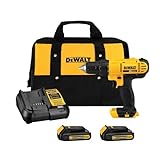
For most homeowners, buy a compact brushless drill driver in the 18V or 20V class. Brushless motors are not essential for a few holes, but they generally provide better efficiency, longer runtime, and more controlled low-speed operation. A brushed drill is perfectly adequate if it has a good clutch and costs substantially less.
Choose a drill with at least two amp-hours of battery capacity. A 2.0Ah battery is lighter and sufficient for a few dozen small holes. A 4.0Ah battery lasts longer for installing many balusters, but its extra weight becomes noticeable on stairs. If you already own a compatible battery platform, staying with it is usually cheaper than buying a new ecosystem for this single job.
Do not select a drill based only on advertised torque. High torque can twist a bit, split the tread near an edge, or bury a screw below the surface. Low-speed trigger control and a clutch that engages predictably are more useful.
Use the Right Bits
For clean holes in finished hardwood, use a sharp brad-point bit for holes up to about 1/2 inch. Its center point keeps the bit from wandering, while the outer spurs score the perimeter before the cutting edges remove wood. A standard twist bit can work, but it is more likely to skate across the finish and leave a rougher entry.
For larger holes, use a sharp Forstner bit when you need a flat-bottomed recess, or a quality spade bit when speed matters and the hole will be hidden. Spade bits are cheaper, but they can tear the bottom surface and require more pressure. A hole saw is appropriate for unusually large openings, though it creates more heat and is harder to control on a stair.
A set of brad-point wood drill bits is the sensible first purchase. Keep bits sharp. If the bit squeals, smokes, requires heavy pressure, or produces dark brown dust, stop and replace or sharpen it. Burning can permanently discolor the tread.
How to Drill Hardwood Stair Treads
Mark the hole carefully and check what is below the tread before drilling. You may encounter a riser, stringer, blocking, wiring, or plumbing depending on the staircase design. Use a stud finder where practical, inspect from below, and avoid drilling blindly through a tread.
Place painter’s tape over the mark if the tread has a fragile finish. The tape helps reduce minor surface chipping, but it cannot compensate for a dull bit. Start the drill at its low-speed setting, hold it square to the tread, and let the center point establish the hole before increasing speed. For a typical 1/8-inch to 1/4-inch pilot hole, moderate speed and light pressure are enough.
When drilling near an edge, stay at least 3/4 inch from the edge whenever the design allows. Hardwood is less forgiving when a screw is driven close to an end or side. For a larger hole, drill a smaller pilot hole first and clear chips every few seconds. A 1/2-inch hole through a dense tread may take only several seconds, but forcing the bit can overheat it quickly.
If the hole must pass completely through the tread, clamp a scrap block tightly underneath the exit point. This backing prevents the bit from blowing out a chunk of wood as it breaks through. Stop applying pressure as soon as the pilot point appears on the underside, then finish from that side if the location is accessible.
When an Impact Driver Helps
An impact driver is useful after drilling when you need to drive structural screws or long trim screws. Its hex chuck accepts impact-rated drill and driver bits, but it is not the first choice for clean visible holes. The impact mechanism makes it harder to maintain a steady start and can chip the finish if the bit slips.
For ordinary screws into predrilled hardwood, the cheaper option is fine: a basic drill driver with a clutch. Set the clutch low, increase it only as needed, and stop when the screw head is flush. Do not use an impact driver to compensate for an undersized pilot hole. That often leads to stripped screws, split wood, or a fastener that is impossible to remove.
A Practical Buying Decision
Buy a 12V drill if you have fewer than 20 small holes and value low weight. Buy a compact 18V or 20V drill driver if you want one tool for stair work, cabinetry, wall anchors, and general repairs. Choose a high-torque model only if you regularly drill large holes or drive long structural fasteners. Add sharp brad-point bits before spending extra on extreme motor output; bit quality and technique have a greater effect on the finished tread.