What's inside
As an Amazon Associate I earn from qualifying purchases. This post may contain affiliate links at no extra cost to you.
Phillips and Pozidriv bits may look nearly identical, but their tips are shaped differently. Using the wrong one can make a screw hard to drive, chew up its recess or cause the bit to slip. For construction work, the practical choice depends on the screw head—not on whether you’re using a cordless drill or impact driver.
As an Amazon Associate we earn from qualifying purchases at no extra cost to you.


What we cover
How to tell Phillips from Pozidriv
A Phillips recess has one cross-shaped set of slots. A Pozidriv (often marked PZ) adds four smaller ribs between the main slots. Those extra contact points help a correctly matched Pozidriv bit stay engaged under higher driving force.
Check the screw head before loading a bit. Look for the four fine marks between the main slots, or for a PZ marking on the screw packaging. Phillips is commonly marked PH. If the head is worn, clean out sawdust or coating first; debris can hide the markings and stop either bit from seating fully.
Why matching matters on site
Phillips screws are designed to cam out: under excessive torque, the bit tends to climb out of the recess. That can help limit overtightening in some applications, but it also means the driver may slip and damage the head when you push hard or use a poorly fitting bit. Pozidriv’s added ribs provide more engagement when paired with a PZ screw, reducing that tendency.
The advantage disappears if you mix the types. A Phillips bit in a Pozidriv head usually contacts only part of the recess and may wobble or slip. A Pozidriv bit in a Phillips head can ride on the wrong surfaces and damage the screw. Either mismatch can turn a quick fastening job into a removal job, especially with small screws or when driving near a surface you need to keep clean.
Phillips vs Pozidriv at a glance
| Feature | Phillips | Pozidriv |
|---|---|---|
| Head appearance | One plain cross recess | Cross recess plus four smaller ribs |
| Common markings | PH, such as PH2 | PZ, such as PZ2 |
| Best match | Phillips-head screws | Pozidriv-head screws |
| Driving feel when matched | Can cam out under high force | Typically holds more securely under load |
| Interchangeable? | No | No |
Choose the right bit for the screw
For everyday construction screws, start with the screw manufacturer’s specified drive type and size. A #2 bit is common for both PH2 and PZ2, but the number does not make them interchangeable: PH2 and PZ2 are different profiles. The bit should sit fully in the recess with minimal rocking. If it feels loose before you apply power, try another type or size rather than compensating with more pressure.
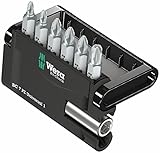
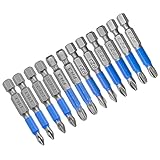
If you regularly install Pozidriv screws, a set of PZ2 impact-rated driver bits is a sensible purchase. For mixed repair and construction work, keep common PH and PZ sizes in the same organizer, clearly marked. A small assortment costs more than one bit but avoids forcing the wrong tip into an unfamiliar screw.
Phillips screws are widespread in general hardware and some building products. If that is what your fasteners use, matched PH2 impact-rated bits are the right buy. There is no need to pay for an extensive premium assortment if you only drive a few screws occasionally; a basic, correctly sized bit is fine when it fits well and is replaced once worn.
Using a drill or impact driver
An impact driver’s rapid rotational blows can drive screws quickly, but they also make a poor fit more destructive. Use an impact-rated bit for impact-driver work, keep the tool aligned with the screw and start at a low speed. Apply steady forward pressure without leaning so hard that you cannot feel the bit slipping. Stop as soon as the fastener is seated; continuing to drive can strip the recess, snap the screw or bury the head below the surface.
A cordless drill works well for many construction screws, particularly when you can set the clutch. Start with a modest clutch setting, then increase it only if the screw stalls before reaching its intended depth. The clutch can reduce overdriving, but it cannot correct a mismatched bit or prevent damage from a worn recess.
Common failures and fixes
If the bit spins in the head, stop immediately. Confirm PH versus PZ, verify the size, and inspect the tip for rounded edges. A worn bit may look usable but contact too little of the recess. Replace it rather than pressing harder. With a damaged screw, switch to a fresh, correctly matched bit and use firm, straight pressure at low speed; badly stripped heads may need a screw extractor or another removal method.
If screws repeatedly cam out even with a fresh bit, check that the fasteners are actually Phillips or Pozidriv and that the driver is square to the work. Also consider the material: dense lumber, long screws and knots raise driving resistance. A pilot hole can lower that resistance where the fastener manufacturer or the job allows it. For exterior or structural fasteners, follow the screw maker’s instructions for bit type, installation method and depth rather than substituting based on appearance.
What to keep in the kit
For a single known fastener, buy one good-quality bit that matches its head. For varied work, keep PH2 and PZ2 on hand, plus the sizes specified for your other screws. Bits are consumables: replace them when their edges round, when they no longer seat securely or when they begin slipping despite a clean, undamaged screw head. Correct fit matters more than brand or price, and the cheapest bit is often adequate for light use—provided it is the right type and still in good condition.