What's inside
As an Amazon Associate I earn from qualifying purchases. This post may contain affiliate links at no extra cost to you.
What we cover
Choosing an impact driver for sheet-metal screws
Self-tapping screws can be quick to install with an impact driver, but sheet metal is easy to strip or deform. The right tool is less about maximum torque than controllable speed, a good screw bit, and stopping as soon as the head is seated. For occasional ductwork or light-gauge panels, a basic 12-volt driver may be enough. For frequent work, a compact 18- or 20-volt model gives more power and usually a broader battery ecosystem.
Look for a variable-speed trigger and, ideally, a low-speed or fastening mode. A shorter, lighter tool is easier to keep square against a panel and reduces wrist fatigue when driving many screws overhead. If you already own cordless tools, staying with that battery platform is often better value than buying a new system for a small difference in driver performance.
As an Amazon Associate we earn from qualifying purchases at no extra cost to you.

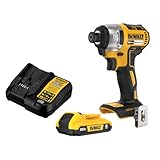


Impact driver or drill?
An impact driver delivers short bursts of rotational force when resistance rises. That makes it useful for driving screws without the reaction torque that can twist a conventional drill in your hand. But those bursts can also spin a small self-tapper past its grip point in thin metal. A drill’s clutch gives more direct control and can be the safer choice when screw size, metal thickness, or finish quality demands a consistent stop.
For a mix of construction fastening and sheet-metal jobs, an impact driver with variable speed and multiple modes is a practical general-purpose buy. If your work is mostly delicate or repetitive fastening, consider a drill-driver with an adjustable clutch instead.
Features that matter at the fastener
| Feature | Why it matters | Trade-off |
|---|---|---|
| Variable-speed trigger | Lets you start slowly and keep the screw from skating or overdriving. | Trigger sensitivity varies; practice on scrap first. |
| Low-speed or fastening mode | Reduces the chance of stripping thin metal or snapping a small screw. | Not every tool’s mode behaves the same with every screw. |
| Compact body | Fits between framing and is easier to control overhead. | Small tools may have less sustained power for larger fasteners. |
| Battery size | A larger pack can extend runtime on a long installation. | It adds weight and can make accurate starts harder. |
Most impact drivers use a 1/4-inch hex collet, so you need a suitable hex-shank driver bit. Match the bit to the screw recess: a loose Phillips or square bit can cam out, chew up the head, and leave you with a stuck fastener. Use impact-rated bits for impact-driver use; ordinary bits can wear or break sooner under repeated hammering. A set of impact-rated hex driver bits is a sensible addition if your current bits are worn or don’t fit securely.
Match the tool to the work
A compact 12-volt impact driver is a good budget choice for occasional small screws and tight spaces, provided it has a responsive trigger and the fasteners are within its capacity. It may bog down on larger self-tappers or long runs through heavier material. A 18- or 20-volt driver is the better all-round choice for regular use, but a high-power model is not automatically gentler or more suitable for thin sheet. For jobs where finish and repeatability matter, prioritize a low setting over headline torque numbers.
Battery kits cost more up front than a bare tool, but make sense if you need batteries and a charger. If you already have compatible packs, a bare tool can keep the cost down. For a homeowner installing a few panels or repairing a duct, the least expensive compatible driver with a good trigger may be entirely adequate; paying extra for the most powerful tool is unlikely to improve the result.
Drive screws without damaging the sheet
Start with the screw manufacturer’s guidance for screw type, drill point, and material thickness. Self-drilling screws have a drill-shaped tip; self-tapping screws may require a pilot hole, depending on the screw and metal. Don’t assume one screw style works for every gauge. A fastener that is too long can hit wiring or other material behind the sheet, while one that is too short may not engage enough threads.
Keep the driver and screw perpendicular to the surface. Start at low speed with light pressure until the point bites, then increase speed only as needed. Stop when the head is seated and the washer, if present, is compressed as specified—not when the driver has hammered for another second. Overdriving can strip the threads, dimple the panel, or break the screw; underdriving can leave a loose joint or a gap under the head.
On a visible or thin panel, test the setup on an offcut of the same material. If the screw spins without tightening, the hole may be oversized, the threads may be stripped, or the screw may not suit the material. Don’t keep driving it: move to an appropriate repair fastener or use the hole-repair method specified for the application. If the screw repeatedly walks across the surface, improve bit fit and alignment, or mark the position before driving.
Safety and practical limits
Wear eye protection: metal chips and broken screw tips can travel quickly. Keep hands clear of the bit, clamp loose work where possible, and remove the battery before changing bits. For roofing, structural connections, or equipment exposed to vibration or weather, follow the project’s fastener and installation requirements rather than relying on a general-purpose driver technique.
For most buyers, a compact 18- or 20-volt impact driver with variable speed is the versatile choice for regular fastening, while a 12-volt model is enough for light, occasional work. Choose a clutch-equipped drill instead when precise torque control matters more than speed. Whichever tool you buy, a correctly matched screw and bit—and a stop before the metal is crushed—will matter more than extra power.