What's inside
As an Amazon Associate I earn from qualifying purchases. This post may contain affiliate links at no extra cost to you.
What we cover
Best 4-Volt Cordless Screwdrivers for Home and Workshop Tasks
For most light household jobs, the Bosch GO 3 is the best 4-volt cordless screwdriver to choose: it combines adjustable torque with a compact, rechargeable design. Pick the BLACK+DECKER 4V MAX BCF601 for a lower-cost tool with a pivoting handle, or the Milwaukee M4 2101-22 if you want a 4-volt-class driver with a replaceable battery and more workshop-oriented support.
These are drivers for cabinet hardware, flat-pack furniture, outlet covers, and other small fasteners—not substitutes for a drill or an impact driver. Model specifications and included accessories can vary by market and package, so confirm the exact version before buying. The table compares representative U.S. configurations; listed weights are approximate tool-only weights, not necessarily package weights.
As an Amazon Associate we earn from qualifying purchases at no extra cost to you.

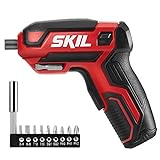
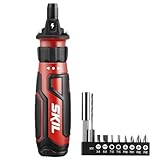

Quick comparison
| Model | Power and torque control | Battery and charging | Weight | What to know about bits |
|---|---|---|---|---|
| Bosch GO 3 | 3.6V nominal; 7 mechanical torque settings plus maximum setting | Integrated 2.0Ah lithium-ion battery; USB-C charging | About 0.6 lb | Uses standard 1/4-inch hex bits; included bit selection depends on package |
| BLACK+DECKER 4V MAX BCF601 | 4V MAX; variable-speed trigger and forward/reverse control | Integrated lithium-ion battery; USB charging | About 0.7 lb | Check the kit for its supplied bits; standard 1/4-inch hex bits fit |
| Milwaukee M4 2101-22 | 4V-class system; two-speed operation and clutch settings | Replaceable 4V lithium-ion battery; charger included in the 2101-22 kit | About 1.0 lb | Kit contents vary; standard 1/4-inch hex bits fit |
“4V MAX” is a marketing description based on the battery’s maximum voltage; some manufacturers give the same class of lithium-ion battery a 3.6V nominal rating. Treat voltage as a category, not a direct measure of useful torque or runtime. For regular jobs, clutch behavior, grip, charging convenience, and battery serviceability matter more.
Which one fits your kind of work?
Best for delicate assembly: Bosch GO 3
The GO 3 is the strongest fit for assembling furniture and working near hinges, cabinet fittings, or plastic parts, where a fast driver can easily overtighten a screw. Its mechanical torque settings let you choose a lower limit for small hardware and increase it only when necessary. Start low, test on a spare piece or an inconspicuous fastener, and finish by hand if the screw needs precise final seating.
Its integrated battery keeps the tool compact and USB-C charging is convenient if you already have a suitable cable. The trade-off is downtime: the battery is not a quick-swap pack, so an empty tool has to charge before it is ready again.
Best for occasional household use: BLACK+DECKER BCF601
The BCF601’s pivoting handle is useful when a straight screwdriver will not fit comfortably, such as inside a cabinet or beside an appliance. Its trigger offers speed control, but a trigger is not the same as a torque-limiting clutch. Ease off as the screw approaches the surface; for softwood, small screws, or delicate fittings, complete the last turns manually.
This is a sensible choice if you want a simple driver for intermittent jobs and value flexible grip positions. Check the box contents carefully: a kit’s bit assortment can matter more than a small difference in tool price. A broad assortment is only useful if it includes the sizes and profiles your fasteners actually need.
Best for a workshop with repeat jobs: Milwaukee M4 2101-22
The M4 is the more workshop-oriented pick of these three. Its replaceable battery is an advantage for repeated fastening: a charged spare can reduce interruptions, and a worn pack does not automatically make the tool unusable. The extra weight is noticeable if you are holding the driver at arm’s length or overhead, but less important for short bench tasks.
Choose it when battery replacement and a more substantial grip are priorities. For a few screws each month, a compact integrated-battery model is usually easier to justify.
Decide by task, not just voltage
| Your situation | A practical choice | Reason |
|---|---|---|
| New to power screwdrivers; assembling furniture now and then | Bosch GO 3 | Selectable torque makes it easier to avoid driving small screws too far. |
| Tight spaces and varied hand positions | BLACK+DECKER BCF601 | The pivoting handle can make awkward access more comfortable. |
| Frequent small fastening jobs and preference for replaceable batteries | Milwaukee M4 2101-22 | A spare pack can reduce charging interruptions. |
| Very occasional use and limited storage | A compact integrated-battery driver | Lower weight and fewer loose parts can matter more than all-day runtime. |
Runtime, charging, and the bit question
Manufacturers do not provide a consistent, directly comparable runtime test for these drivers, so a precise “screws per charge” figure would be misleading. Runtime depends on screw length, material, pilot holes, clutch setting, and how often the motor is stalled. Driving short screws into predrilled holes uses far less power than repeatedly forcing long screws into dense wood. If you expect a long assembly session, prioritize a replaceable battery or plan charging breaks rather than relying on voltage alone.
USB charging is convenient at home, but check whether the package includes the cable and power adapter. Charging time depends on the charger and battery state; avoid assuming a USB-C port means every high-output adapter will charge faster. For integrated batteries, recharge after a demanding session and store the tool somewhere dry, away from excessive heat.
Most 4-volt drivers in this group use a 1/4-inch hex holder. That broad compatibility is helpful, but supplied bits vary by kit. Before purchasing, check for the sizes you need—often Phillips, square-drive, Torx, and slotted bits—and consider a small set of reputable impact-rated bits only if the manufacturer permits them. These drivers are not impact tools, so impact-rated bits are not a requirement. Discard bits with rounded tips: a worn bit slips, damages the screw head, and can make a modest driver seem weaker than it is.
Limits and ownership realities
A 4-volt screwdriver is best for small screws and controlled fastening. It may struggle with long structural screws, dense hardwood, or a fastener that needs substantial breakaway force. Drill a pilot hole when appropriate, keep the bit aligned with the screw, and stop if the motor bogs down. For heavier woodworking, use a drill/driver sized for the job rather than repeatedly forcing a compact screwdriver.
On any model, the most common wear points are the bits and, over time, the battery. Clean dust from the bit holder with a dry brush or cloth; do not let fine workshop dust pack into the chuck area or charging port. Avoid using the screwdriver as a pry bar, and do not use the motor to force a fastener after it has stopped turning. Those habits reduce strain on the gearbox and battery and help preserve control.
Bottom line
For light assembly where avoiding overtightening matters, choose the Bosch GO 3. For occasional home repairs and awkward grip positions, the BLACK+DECKER BCF601 is a practical alternative. For more frequent workshop fastening where replaceable batteries are valuable, consider the Milwaukee M4 2101-22. Whichever you choose, match the bit to the screw, start with a light touch, and keep a manual screwdriver nearby for the final adjustment.