What's inside
As an Amazon Associate I earn from qualifying purchases. This post may contain affiliate links at no extra cost to you.
What we cover
Best Hollow Ground Screwdriver Sets for Slotted Screws
For the best hollow ground screwdriver set, choose one with parallel-sided tips in several carefully sized widths, hardened steel blades, and a case that keeps each driver easy to identify; the right pick depends more on the slotted screws you handle than on the number of pieces in the set.
A hollow ground tip is ground thinner toward its edge while keeping its sides relatively parallel. Unlike a wedge-shaped, tapered tip, it is designed to sit deeper in a straight-sided slot and spread turning force across more of the slot’s walls. That can reduce cam-out and slot damage—but only when the blade thickness and width match the screw.
As an Amazon Associate we earn from qualifying purchases at no extra cost to you.
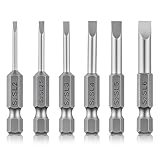

What matters when choosing a set
- Tip thickness: This is the critical measurement for engagement. A tip that is too thick will not seat fully; one that is too thin can twist or concentrate force on the slot edges.
- Tip width: The blade should nearly fill the slot from end to end without riding up on the screw head. Width and thickness are separate dimensions; a set with many widths may still lack the thickness you need.
- Steel and heat treatment: Chrome-vanadium and S2 tool steels are common. Steel designation alone does not establish durability: heat treatment, tip geometry, and careful use matter too. A polished or corrosion-resistant finish helps with storage, but does not prevent a poorly fitted tip from damaging a screw.
- Organization: Marked sizes and secure slots make it easier to select the right blade. A roll or compact case is useful for portability; a rack is quicker to use on a bench.
Compare the set styles
The figures below are practical selection ranges, not specifications for a particular brand or model. Actual tip dimensions and included sizes vary, so check the manufacturer’s published measurements before buying.
| Set style | Typical slotted-tip coverage | Blade and steel considerations | Case and best use |
|---|---|---|---|
| Compact household set | About 3–6 blades; roughly 2–6 mm wide | Often chrome-vanadium; verify thickness for the smallest tips | Small rack or pouch; occasional repairs and furniture hardware |
| General workshop set | About 6–10 blades; roughly 2–10 mm wide | Chrome-vanadium or S2; look for size markings and stated tip dimensions | Bench rack or organized roll; mixed household and shop work |
| Precision set | About 4–8 micro drivers; roughly 1–3 mm wide | Small blades need especially careful sizing and controlled torque | Indexed case; small instruments and fine hardware, not large cabinet screws |
| Heavy-duty cabinet or maintenance set | About 4–8 larger blades; roughly 6–12 mm wide | Stout shanks and secure handle-to-blade construction are useful under higher loads | Durable rack or roll; larger slotted fasteners and frequent use |
These ranges help narrow the category; they do not guarantee a fit for a particular screw. Some sets include tapered slotted drivers alongside hollow ground ones, so confirm the tip profile rather than relying on the set name alone.
Choose by the work you do
| Your situation | What to prioritize | Suitable choice |
|---|---|---|
| Occasional home repairs, limited storage | A few useful widths, legible markings, compact protection | Compact household set with measured tip sizes |
| Regular woodworking or furniture repair | Broad coverage, comfortable handles, quick size selection | General workshop set in a rack or labeled roll |
| Small screws and delicate hardware | Fine increments in width and thickness; controlled handle | Precision set, supplemented with larger drivers if needed |
| Frequent work on larger slotted screws | Stiffer blades, substantial handles, secure storage | Heavy-duty set sized for the actual fasteners |
| You already own most common sizes | Exact replacement dimensions rather than duplicate pieces | Individual drivers or a smaller set that fills the gaps |
Fit the blade before applying force
A simple fitting check is more useful than choosing by screw-head diameter alone:
- Measure the slot width. Use a caliper if available. The blade should span most of the slot without touching the raised rim around the head.
- Check the slot depth and blade thickness. The tip should enter far enough to engage the straight slot walls. If it bottoms out before seating, the blade may be too thick; if it sits loosely, it may be too thin or too narrow.
- Test for rocking. With the screw unloaded, gently move the seated driver side to side. Noticeable rocking is a warning that the size or profile is wrong.
- Turn with the driver aligned. Keep the shaft centered and in line with the screw. If the fastener is stuck, use an appropriate penetrating lubricant and allow it time to work rather than levering sideways against the slot.
For example, if a slot measures about 6 mm across but a 1.0 mm-thick tip barely enters, a thinner blade of similar width may seat more securely. Do not compensate for a mismatch by forcing the driver: a narrow tip can deform the slot even when its width looks close.
Ownership: what wears first
With slotted drivers, the tip usually tells the story. Rounded corners, a chipped edge, or a visibly twisted blade can make a once-useful driver slip. Small precision blades are especially vulnerable to side loading. Stop using a damaged tip on a fastener you need to preserve.
Wipe blades clean after work, especially if they have contacted oil, moisture, or abrasive dust, and return them to their labeled slots. Avoid using screwdriver tips as chisels or pry bars; those jobs apply force in directions the blade is not designed to handle. A well-organized set also reduces wear indirectly: when the right size is easy to find, there is less temptation to force the nearest alternative.
Bottom line
For mixed woodworking and household work, a labeled general workshop set with roughly 6–10 slotted drivers is a sensible starting point—but only if it specifies useful tip widths and thicknesses and includes genuinely hollow ground tips. Choose a compact set for infrequent repairs, a precision set for small hardware, or a heavier selection for larger fasteners. Match the blade to the slot, not the screw’s overall size, and case organization will make the right match quicker to repeat.