What's inside
- Best variable-speed cordless screwdriver: the right pick depends on the fastener
- Shortlist by situation
- Comparison: what the specifications mean in practice
- How to choose for delicate or heavy fastening
- Runtime, battery cost, and bit-holder trade-offs
- Decision matrix
- Ownership details that affect value
- Bottom line
- Related Guides
- Best variable-speed cordless screwdriver: the right pick depends on the fastener
- Shortlist by situation
- Comparison: what the specifications mean in practice
- How to choose for delicate or heavy fastening
- Runtime, battery cost, and bit-holder trade-offs
- Decision matrix
- Ownership details that affect value
- Bottom line
- Related Guides
As an Amazon Associate I earn from qualifying purchases. This post may contain affiliate links at no extra cost to you.
What we cover
- Best variable-speed cordless screwdriver: the right pick depends on the fastener
- Shortlist by situation
- Comparison: what the specifications mean in practice
- How to choose for delicate or heavy fastening
- Runtime, battery cost, and bit-holder trade-offs
- Decision matrix
- Ownership details that affect value
- Bottom line
- Related Guides
Best variable-speed cordless screwdriver: the right pick depends on the fastener
For most home and workshop tasks, the best variable speed cordless screwdriver is a compact 12V drill-driver with a two-speed gearbox, a trigger that varies speed smoothly, an adjustable clutch, and a 10 mm (3/8-inch) keyless chuck. It covers careful hinge and cabinet work as well as routine drilling and screw driving; choose a dedicated 4V screwdriver for light assembly, or a stronger 18V drill-driver for frequent large screws and heavier work.
There is no single winner for every job. A tool that is comfortable for assembling furniture may lack the torque, battery capacity, or chuck range needed for long structural screws. The comparison below focuses on what changes the decision: usable speed control, clutch behavior, torque, runtime, bit retention, and weight.
As an Amazon Associate we earn from qualifying purchases at no extra cost to you.


Shortlist by situation
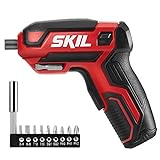
- Light furniture assembly and electronics enclosures: A compact 4V driver, such as the Bosch GO, keeps weight and bulk down. Its hex bit holder is quick to load but does not accept ordinary round-shank drill bits without an adapter.
- One tool for household repairs and occasional drilling: A 12V drill-driver such as the Bosch 12V Max brushless drill-driver range is the most balanced type. Check the exact model’s clutch, chuck capacity, included battery, and weight before buying.
- Frequent deck, framing, or long-screw work: An 18V drill-driver or impact driver is more suitable than a small screwdriver. A drill-driver offers adjustable clutch control; an impact driver is effective for driving but is less appropriate when repeatable, low-force fastening matters.
- Very tight storage or occasional flat-pack furniture: A pen-style rechargeable driver can fit where a drill-driver cannot. Treat it as a low-torque tool, not a substitute for a full-size driver.
Comparison: what the specifications mean in practice
Exact specifications vary by model and battery configuration. These representative ranges help compare tool classes; verify the manufacturer’s current model sheet before purchasing. Published maximum torque is not a promise of controlled torque at the bit, and runtime depends heavily on material, screw size, and clutch setting.
| Tool class / example | Speed control | Typical weight | Holder and capacity | Best suited to |
|---|---|---|---|---|
| 4V rechargeable driver, such as Bosch GO | Low-speed powered driving; control method varies by generation | About 0.3–0.5 kg (0.7–1.1 lb) | 1/4-inch hex bit holder | Small screws, furniture assembly, light household fixes |
| 12V drill-driver, such as Bosch 12V Max brushless models | Variable trigger; commonly two gearbox ranges around 0–400 and 0–1,500 rpm | About 0.7–1.2 kg (1.5–2.6 lb), tool only | Commonly 10 mm (3/8-inch) keyless chuck | Cabinetry, pilot holes, general repairs, moderate screws |
| 18V drill-driver, such as a Makita 18V LXT model | Variable trigger; two-speed models often reach roughly 0–500 and 0–1,900 rpm | About 1.3–2.0 kg (2.9–4.4 lb), tool only | Commonly 13 mm (1/2-inch) keyless chuck | Frequent shop use, larger bits, long screws, harder materials |
How to choose for delicate or heavy fastening
For delicate work, prioritize control over maximum torque
On softwood, small hinges, or furniture hardware, a smooth low-speed trigger and a clutch with clearly repeatable settings matter more than a high torque figure. Begin with a low clutch setting on scrap from the same material. Drive a test screw, increase the setting only if it stops before seating, and finish the real work with the same screw and pilot-hole setup. This reduces split wood, stripped heads, and screws buried below the surface.
For tiny screws, use the correct driver bit and keep the tool aligned with the fastener. A cordless screwdriver’s clutch is a useful limiter, but it is not a precision torque wrench: material density, screw coating, bit wear, and hand pressure all affect the result.
For heavy fastening, match the tool to the screw and material
A 12V drill-driver handles many home repairs, but repeated long screws in dense lumber can drain a small battery and overheat a compact tool. For that work, move to an 18V drill-driver, predrill where appropriate, and use the high-torque range only when the fastener requires it. An impact driver can reduce strain during repeated large-screw driving, but its pulsing action makes it easier to overdrive delicate hardware.
For holes, select the gearbox’s slower range for larger bits and higher load. The faster range is generally for smaller bits and quicker drilling. Avoid forcing a stalled bit; back it out, clear chips, and check whether the bit is binding.
Runtime, battery cost, and bit-holder trade-offs
Battery capacity is measured in amp-hours (Ah), but that number alone does not predict screw count. A 2.0 Ah pack stores twice the nominal charge of a 1.0 Ah pack at the same voltage, yet a larger pack also adds weight. Driving short screws into soft pine may yield many more fasteners per charge than drilling large holes in hardwood.
For occasional household jobs, a kit with one battery may be enough if charging between sessions is acceptable. For a workshop or a full day of installation, a second battery can prevent interruptions. If you already own batteries in a manufacturer’s platform, staying compatible may cost less than buying a slightly lighter tool with a new charger and packs.
A 1/4-inch hex holder makes bit changes fast and keeps the tool compact, but it limits what you can fit directly. A keyless chuck accepts round-shank drill bits and a wider range of accessories, at the cost of added size and weight. Check that a chuck grips small bits securely and that the jaws close evenly; a bit that sits off-center can make accurate pilot holes difficult.
Decision matrix
| Your situation | Recommended type | What to prioritize |
|---|---|---|
| Infrequent use, limited budget | 4V driver or entry-level 12V kit | Included battery and charger, comfortable grip, replacement-bit availability |
| New DIYer, mixed repairs | 12V drill-driver | Variable trigger, useful clutch range, 10 mm chuck, two gears |
| Small apartment or cramped storage | Compact 4V driver | Short body, low weight, common 1/4-inch bits |
| Frequent workshop or renovation work | 18V drill-driver, or a compatible 18V impact driver for repetitive heavy screws | Battery platform, 13 mm chuck for drilling, spare pack, service support |
Ownership details that affect value
Bits often wear before the tool does. A rounded driver tip slips, damages screw heads, and can make a clutch seem inconsistent. Replace worn bits, match the bit profile to the screw, and avoid using a driver bit as a drill bit. Keep ventilation slots clear of sawdust with a dry brush or low-pressure air; do not store a battery tool damp or leave a hot pack charging unattended.
Common mistakes include using high gear for a large screw, tightening the chuck around a bit shank that is too small, and relying on the clutch to prevent every split. Pilot holes are still important near board ends and in dense wood. If buying a bare tool, include the cost of the required battery and charger when comparing general market prices: 4V drivers are usually the lowest-cost class, 12V kits sit in the middle, and 18V kits typically cost more, especially when sold with larger batteries.
Bottom line
Choose a 12V drill-driver with a variable trigger, two speed ranges, an adjustable clutch, and a 10 mm chuck for the most versatile home-and-workshop setup. Choose a 4V screwdriver when compactness and gentle assembly matter more than drilling capacity. Step up to 18V for frequent heavy fastening, and keep a clutch-equipped drill-driver in the mix when delicate work needs repeatable control.