What's inside
As an Amazon Associate I earn from qualifying purchases. This post may contain affiliate links at no extra cost to you.
What we cover
What a joinery drill needs to do
For a home workshop, a cordless drill earns its place by making clean pilot holes, driving screws without stripping them, and fitting into the work without wearing out your hands. Most furniture and cabinet joinery does not need hammer action or maximum torque. It needs a controllable trigger, a clutch that works predictably, a useful low-speed range, and a chuck that holds bits straight.
A compact 12-volt drill is enough for many projects involving screws up to about 2½ inches and holes up to ½ inch in softwood. Choose an 18- or 20-volt drill if you often bore larger holes, work in hardwood, or want one tool for both shop work and heavier household repairs. Voltage labels are not a reliable measure of power across brands; compare the tool’s size, speed settings, clutch, battery availability, and stated torque instead.
As an Amazon Associate we earn from qualifying purchases at no extra cost to you.

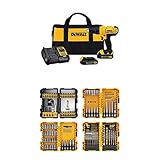

Choose the right drill type
A standard drill-driver is the sensible first purchase for joinery. Its clutch limits screw-driving force, reducing the chance of snapping a screw or burying its head below the surface. A two-speed gearbox is useful: the low range gives better control for screws and larger bits, while the high range suits small twist bits. For most wood screws, start with the clutch set low and increase it until the fastener seats consistently.
A hammer drill adds a percussion setting for masonry. That feature does not improve ordinary wood drilling, and the extra size can make a drill less comfortable for repetitive cabinet work. Buy one if you also need to drill into brick or concrete for wall anchors; otherwise, save the money and weight. A separate cordless hammer drill is worth considering when masonry work is frequent.
An impact driver is built to turn fasteners, not to provide the same control as a drill-driver. Its hammering action can drive long screws efficiently, but it can also damage a small screw head, split an edge, or overdrive a fastener before you react. It is a useful second tool for building projects with many long screws, not a replacement for a drill when clean holes and careful joinery matter.
Quick comparison
| Tool | Best use | Main trade-off |
|---|---|---|
| 12V drill-driver | Pilot holes, cabinet hardware, small screws | Less reserve for large bits and tough hardwood |
| 18/20V drill-driver | General workshop use and larger boring tasks | Often heavier; easy to overdrive small fasteners |
| Hammer drill | Woodwork plus occasional masonry holes | More bulk; hammer mode is unnecessary in wood |
| Impact driver | Repeated driving of long or large screws | Less finesse; needs hex-shank bits or adapters |
Features that matter at the bench
Weight and balance show up quickly when drilling overhead or holding a part in position. If possible, hold the drill with a battery fitted; a tool that feels manageable bare can become tiring with a large pack. A belt hook, work light, and battery charge indicator are useful conveniences, but they matter less than a straight-running chuck and a trigger that lets you start slowly.
Most general-purpose drills use a ⅜-inch or ½-inch chuck. A ½-inch chuck accepts larger shanks, but it does not make a drill more accurate. Check that the jaws close evenly and hold small bits securely. A slipping bit can make an oversized or ragged hole, especially when a twist bit catches as it breaks through thin stock.
For wood screws, use a pilot hole sized to the screw’s core, particularly near board ends and in hardwood. A pilot hole that is too small raises splitting risk; one that is too large weakens the screw’s grip. Test on scrap of the same material, and clamp the work so the bit cannot pull it out of position. Backing up thin stock with scrap helps prevent tear-out as the bit exits.
Bits, batteries, and value
Good bits can improve results more than buying a larger drill. A basic set of brad-point bits gives cleaner starts in wood than ordinary twist bits; twist bits remain useful for metal and general-purpose holes. For larger holes, use a sharp spade or auger bit at low speed, keeping a firm grip because these bits can grab suddenly. Let the bit cut rather than forcing it. Heat, smoke, or a stalled drill are signs to back off, clear chips, and check the bit.
Buy into a battery platform you can use with other tools you expect to own. A kit with two batteries is convenient for longer jobs, but a single battery is fine for occasional furniture work if charging time is not a problem. For many home workshops, a 12-volt drill-driver kit offers adequate power at a lower weight. If your work regularly includes large holes or long screws, compare it with an 18-volt drill-driver kit before choosing a platform.
A practical buying decision
For a first joinery drill, favor a compact drill-driver with two speeds, a working clutch, and a comfortable grip over a high torque figure or a large accessory bundle. The cheaper option is fine if it has a dependable chuck and enough capacity for your usual screws and bits; you do not need a premium brushless tool for occasional shelf brackets, small boxes, or cabinet repairs. Spend more when the drill will see regular use, when battery runtime matters, or when you need the extra capacity for larger boring tasks.
If a project includes only a few masonry holes for wall anchors, a rented or borrowed hammer drill may cost less than buying one. For anchors, use a masonry bit matching the anchor instructions, drill to the specified depth, and clear dust from the hole before inserting the anchor. In wood joinery, keep hammer mode off, clamp the work, and check the clutch on scrap before driving the final screws.