What's inside
As an Amazon Associate I earn from qualifying purchases. This post may contain affiliate links at no extra cost to you.
The best computerized quilting machines for beginners with auto thread features are the Brother CS7000X for simple setup and low weight, the Singer Quantum Stylist 9960 for larger throat space and stitch variety, and the Janome 3160QDC for more durable build and precise stitch control, with the right pick depending on your available space, budget, and how often you plan to quilt.
As an Amazon Associate we earn from qualifying purchases at no extra cost to you.


What we cover
What to Compare Before You Buy
Automatic needle threading is not the same across all machines. For beginners, the difference between a one-touch lever and a push-button automatic threader matters because it affects how often you actually use the feature, especially when changing thread colors frequently during quilting. Also evaluate these criteria together, not in isolation:
- Automatic threading mechanism: Lever-assisted vs. one-push electronic. Lever systems require you to hook the thread and pull the lever; electronic systems do it with a button press. Both reduce eye strain, but electronic is easier if you have dexterity issues.
- Throat space (harp space): Distance between the needle and the machine body. For beginner quilts, 6+ inches is workable; 8+ inches makes rolling a twin-size quilt far less frustrating.
- Stitch control and computerization: Look for LCD screen with stitch selection, adjustable stitch length/width, needle up/down memory, and speed control slider. These let you slow the machine without using the foot pedal.
- Included quilting accessories: Extension table, walking foot, quilting guide, 1/4-inch piecing foot, and free-motion foot should be included rather than purchased separately.
- Setup complexity: Top-loading drop-in bobbin with clear cover, automatic bobbin winding, and printed threading guides cut setup time from 15 minutes to under 3 minutes for a beginner.
Top Beginner-Friendly Computerized Quilting Machines Compared
These four models are widely available in 2026, all offer computerized controls and automatic needle threading, but they target slightly different beginners.
| Model | Throat Space | Machine Weight | Built-in Stitches | Auto Threading Type | Needle Up/Down Button | Included Quilting Feet |
|---|---|---|---|---|---|---|
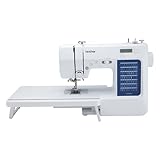
| Brother CS7000X | 6.4 inches | 10.5 lbs | 70 stitches (7 one-step buttonholes) | One-step lever automatic | Yes | Walking foot, quilting guide, spring action quilting foot |
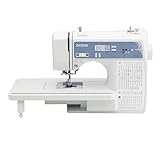
| Singer Quantum Stylist 9960 | 7.1 inches | 18.2 lbs | 600 stitches (13 buttonholes, 5 fonts) | Built-in automatic with lever | Yes | Walking foot, extension table, quilting foot, 1/4 inch foot |
| Janome 3160QDC | 6.5 inches | 12.0 lbs | 60 stitches (6 buttonholes) | One-hand push lever with advanced guide | Yes, with memorized position | Walking foot, free motion foot, 1/4 inch seam foot, darning foot |
| Juki HZL-F300 | 8.0 inches | 21.0 lbs | 106 stitches (16 buttonholes) | One-push automatic | Yes, with auto needle position | Walking foot, patchwork foot, quilting foot, open toe foot |
1. Brother CS7000X – Easiest Setup for First-Time Quilters
The CS7000X is the lightest computerized option and the least intimidating to set up out of the box. The jam-resistant drop-in bobbin, automatic bobbin winding, and large printed threading path mean most beginners can thread the machine correctly on the first try. The automatic needle threader is a side-lever system: loop thread around the guide, pull the lever down, and it pulls the thread through the eye. It works reliably with size 80/12 to 90/14 needles and 50wt cotton thread, but can miss with very fine 60wt or metallic threads.
Its 6.4-inch throat space is tight for larger quilts, so you will be rolling rather than laying fabric flat. The 70 stitches cover all quilting essentials, including straight stitch with 7 needle positions, zigzag, and blind hem, with stitch length adjustable to 5mm and width to 7mm via the LCD. The included hard case and 10 included feet make it easy to store in a closet. This is a general market range machine in the entry-level computerized category, typically priced lower than the Singer and Juki options.
2. Singer Quantum Stylist 9960 – Most Space and Stitches for the Price
The 9960 trades lightweight portability for capacity. At 18.2 lbs and with a 7.1-inch throat plus an 18-inch extension table included, it handles lap and throw quilts with less bunching. The 600-stitch library is more than a beginner needs, but the useful advantage is stitch editing: you can mirror stitches, elongate them, and adjust density before you sew, all on the backlit LCD.
Its automatic threader is also lever-operated, but paired with an automatic tension system that reduces puckering when switching between quilting cotton and batting layers. The heavy-duty metal frame adds stability at higher speeds (up to 850 stitches per minute) and reduces vibration when free-motion quilting. Setup is slightly more involved because of the auxiliary spool pin and extra stitch selection menus, expect 10 minutes of initial familiarization.
3. Janome 3160QDC – Best Build Quality and Stitch Consistency
The 3160QDC uses an aluminum internal frame and Janome’s Superior Feed System (7-point feed dogs), which feeds multiple quilt layers more evenly than standard 3-point systems and reduces the need to tug fabric. The automatic needle threader uses a one-hand operation with a built-in thread guide that aligns the thread more consistently than basic levers, which is helpful if your vision makes threading difficult.
With 60 stitches, it avoids menu overload. Key beginner quilting controls are on dedicated buttons: needle up/down, lock stitch, reverse, and a speed slider that caps maximum speed without touching the foot control. At 12 lbs it remains portable but feels more planted than ultra-light models. It ships with a hard cover and a wider range of quilting-specific feet than most entry bundles.
4. Juki HZL-F300 – Largest Harp for Growing Into Bigger Quilts
The HZL-F300 is the step-up if you know you will quilt regularly and want to avoid outgrowing your machine in a year. Its 8-inch throat and box-feed system provide the most controlled fabric movement of this group, important when quilting through three layers. The one-push automatic threader is electronic and requires almost no manual hook placement.
It has fewer decorative stitches than the Singer but stronger straight-stitch quality, with 106 stitches focused on utility, quilting, and applique. The machine is heavier and larger (21 lbs, 17.3 inches wide), so it needs a dedicated table. It sits in a higher general market range than the other three, reflecting its semi-professional components.
Decision Matrix: Which Machine Fits Your Situation
Use your constraints to eliminate options quickly:
| Your Situation | Best Match | Why |
|---|---|---|
| Tight space, must store after each use, sewing 1-2 times per month | Brother CS7000X | Lightest weight, smallest footprint, fastest threading learning curve, lowest cost to own |
| Want maximum stitch options and extension table included, budget-conscious but has desk space | Singer Quantum Stylist 9960 | Largest stitch library and included table without moving to professional pricing |
| Prioritize even feeding and low frustration with thick layers, plan to quilt weekly | Janome 3160QDC | 7-point feed and more consistent threader reduce skipped stitches on batting sandwiches |
| Planning twin-size or larger quilts within 6 months, have permanent sewing area | Juki HZL-F300 | 8-inch throat and box feed prevent fabric drag that limits smaller machines |
Ownership Realities and Maintenance Beginners Overlook
Computerized machines fail less from electronics than from lint, needle damage, and incorrect threading.
- What wears first: Needles (replace every 6-8 hours of quilting, sooner with denim or batiks), bobbin case tension spring, and feed dogs when not cleaned. Automatic threader hooks bend if forced with the needle in the wrong position – always raise the needle to its highest point before using the threader.
- Consumables to budget: Extra bobbins (use only the same class as supplied; Brother uses Class 15, Janome and Juki use Class 15 or A depending on model), 80/12 universal and 90/14 quilting needles, and low-lint 50wt cotton thread. Metallic or waxed threads will clog auto threaders faster.
- Cleaning routine: Remove the needle plate and brush lint from feed dogs after every 3-4 bobbins. Do not use compressed air; it pushes lint into sensors. Add one drop of sewing machine oil only where the manual indicates – many computerized models are designed to be oilless except for the hook race.
- Common beginner mistakes: Lowering the feed dogs for free-motion quilting and forgetting to raise them, winding bobbins too fast (causes uneven tension), and using the wrong presser foot with the dual-feed/walking foot engaged, which can break the foot.
How to Set Up Auto Threading Correctly the First Time
Even with automatic features, threading path matters. Follow this sequence every time:
- Turn the handwheel until the needle is at its highest position, or press the needle up/down button twice until it stops up.
- Place thread on the spool pin with the spool cap securing it, and follow the numbered guides on the machine head – most computerized models have them molded into the plastic.
- Pull thread into the take-up lever fully; if the lever is hidden, jog the handwheel slightly to expose it. A missed take-up lever is the top cause of thread nests under fabric.
- Clip the thread to about 4 inches past the needle, lay it under the threader guide, and operate the auto threader lever or button in one smooth motion without pulling the thread taut.
- Pull a 3-4 inch loop through the needle eye to the back, then hold both top and bobbin tails behind the presser foot before starting to sew.
If the threader misses repeatedly, change the needle – a slightly bent eye or burr prevents the hook from passing through, not the threader itself.
Final Picks by Use Case
For most beginners who want computerized quilting with auto threading and minimal learning curve, the Brother CS7000X solves setup complexity and storage with the fewest compromises. If you have a table to leave the machine on and want room to grow without buying a second machine, the Juki HZL-F300’s 8-inch throat and one-push threader justify its larger size and higher general market price. The Janome 3160QDC is the middle ground for consistent feeding and durability when quilting every week.
Frequently Asked Questions
Do automatic needle threaders work with every needle size?
No. Most built-in threaders work reliably with size 75/11 to 90/14 needles. Size 65/9 and very small eyes, or specialty needles like wing needles, usually require manual threading because the hook cannot pass through.
Is a computerized machine harder to maintain than a mechanical one?
Day-to-day maintenance is the same – cleaning lint and changing needles. Computerized models add stitch memory and speed control but should not be opened for internal repairs; keep them away from dust and cover them when not in use to protect the LCD and sensors.
Can I free-motion quilt on a beginner machine with a small throat?
Yes, for small projects like table runners and baby quilts. For larger quilts, a smaller throat requires tighter rolling, which strains your shoulders and increases puckering. If you plan to free-motion a full-size quilt, prioritize throat space over stitch count.