What's inside
As an Amazon Associate I earn from qualifying purchases. This post may contain affiliate links at no extra cost to you.
The best whetstone knife sharpeners for most people in 2026 are combination stones in the 1000/6000 grit range — coarse enough to repair an edge, fine enough to polish it — and which one you should buy depends mainly on your skill level, how often you sharpen, and whether you’re willing to soak and flatten stones as part of routine maintenance.
As an Amazon Associate we earn from qualifying purchases at no extra cost to you.


What we cover
Our Top Picks


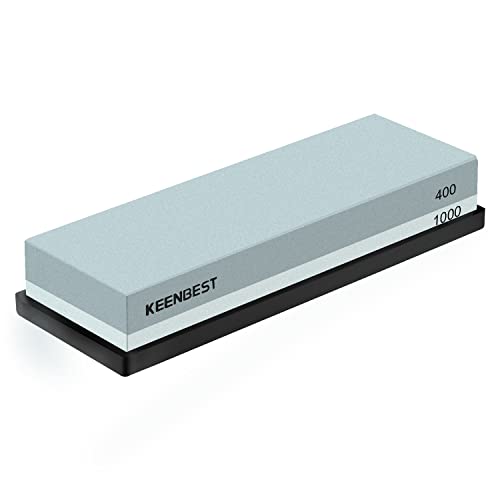
What Actually Matters When Choosing a Whetstone
Before picking a brand, understand the five variables that separate a frustrating purchase from a good one.
- Grit range: Stones under 1000 grit remove metal fast and fix chips or reprofile edges. 1000–3000 is your everyday sharpening range. 4000–8000 refines and polishes. A beginner needs #1000 and something around #4000–6000 — nothing else.
- Stone material: Aluminum oxide (King, most budget stones) is soft, cuts fast, and dishes quickly. Ceramic/resinoid stones (Shapton, Suehiro Cerax) stay flatter longer and work with just a splash of water. Natural Japanese stones are beautiful but inconsistent for beginners.
- Soaking needs: Traditional water stones need 10–20 minutes submerged. “Splash-and-go” stones need only surface water — a real convenience if you sharpen during cooking prep.
- Flattening: Every stone dishes with use. Softer stones dish faster. You’ll need a flattening plate or lapping stone regardless of what you buy.
- Angle guides: Clip-on guides hold roughly 15–20 degrees. Useful for the first few sessions, but most sharpeners outgrow them quickly.
Quick Comparison: The Stones Worth Buying
| Stone | Grit(s) | Material | Water Needs | Size (mm) | Flattening Frequency | Best For |
|---|---|---|---|---|---|---|
| King KDS / KW-65 | 1000/6000 combo | Aluminum oxide | Soak 10–15 min | ~185 × 62 × 25 | Every 2–3 sessions | Budget beginners |
| Sharp Pebble 1000/6000 | 1000/6000 combo | Aluminum oxide | Soak 10 min | ~180 × 60 × 28 | Every 2–3 sessions | Beginners wanting a kit (base + guide included) |
| Suehiro Cerax 1010 | 1000 | Ceramic resinoid | Splash-and-go | ~183 × 63 × 20 | Every 4–6 sessions | Intermediate users, low maintenance |
| Shapton Pro Kuromaku 1000 | 1000 | Ceramic bonded | Splash-and-go | 210 × 70 × 15 | Every 5–8 sessions | Frequent sharpeners; very hard-wearing |
| Naniwa Chosera/Pro 800 + 3000 | 800, 3000 (singles) | Magnesia-bound ceramic | Splash-and-go | 210 × 70 × 20 | Every 4–6 sessions | Serious enthusiasts |
| Shapton Glass 500/2000/8000 set | 500, 2000, 8000 | Ceramic on glass plate | Splash-and-go | 210 × 70 × 10 | Rarely; very hard | Advanced users wanting a full progression |
Decision Matrix: Match Your Situation to a Stone
| Your Situation | Recommended Pick | Why |
|---|---|---|
| First stone, under ~$30 budget, a few kitchen knives | King or Sharp Pebble 1000/6000 | Forgiving feel, combo covers repair + polish, cheap to replace if technique goes wrong |
| Beginner who wants convenience over tradition | Sharp Pebble kit | Includes bamboo base and angle guide — removes the two biggest setup frustrations |
| Sharpens monthly, hates soaking and mess | Suehiro Cerax 1010 + Cerax 404 (3000) | Splash-and-go, slow to dish, loads of feedback |
| Sharpens weekly or for others | Shapton Pro 1000 + 5000 | Hardest-wearing mainstream stones; lowest cost per sharpening over time |
| Hard steels (VG-10, SG2, powder steels) | Shapton or Naniwa Chosera | Soft soaking stones cut slowly and dish badly on steels above ~60 HRC |
| Chips, broken tips, reprofiling | Add a #220–400 stone (Shapton 320 or Naniwa 220) | A #1000 can take an hour on a chip; a coarse stone does it in minutes |
| Traditional/journal-and-leather finishing interest | Naniwa 8000+ or natural stone | Only worth it after fundamentals are solid — adds polish, not sharpness you can feel cutting food |
Best Picks by Skill Level
Beginners: King KW-65 or Sharp Pebble 1000/6000
Soft aluminum oxide stones are the classic starting point for a reason: they release fresh abrasive quickly, give audible and tactile feedback, and forgive wobbling angles better than hard ceramic stones, which can glaze over if your technique is sloppy. The Sharp Pebble version ships with a non-slip bamboo base and a clip-on angle guide — genuinely useful for your first three or four sessions while you learn what 15 degrees feels like. Expect to flatten these stones every couple of sessions; budget $15–25 extra for a flattening plate, because sharpening on a dished stone produces a convex, unstable edge.
Intermediate: Suehiro Cerax or Shapton Pro
Once you can hold an angle, splash-and-go ceramic stones are a quality-of-life upgrade. No soaking bucket, no waiting, less dish. The Shapton Pro (Kuromaku) line is the workhorse: hard, fast-cutting, and it stays flat far longer than anything in the budget tier. The 1000 alone handles most kitchen maintenance; add the 5000 for polish. The Cerax 1010 is slightly softer and gives more feedback, which some prefer for learning pressure control.
Advanced: Naniwa Chosera or Shapton Glass
At this level you’re buying singles, not combos, because you want a full progression (400/1000/3000/8000) without paying for paired grits you don’t use. Naniwa Chosera stones are thick (20mm), dense, and cut even hard powder metallurgy steels without glazing. Shapton Glass stones sit on glass backing plates, are thinner but nearly indestructible in flatness terms, and the 8000 gives a genuine mirror edge. These cost more upfront but wear so slowly the cost per sharpening is often lower than budget stones.
Ownership Realities: What a Product Listing Won’t Tell You
- Flattening is not optional. A dished stone puts a belly in your edge. Check flatness with a ruler every session; flatten on a diamond plate (Atoma 140 is the standard recommendation) or a cheap flattening stone.
- The stone wears, not your technique. Budget stones may lose 1–2mm of height per year of monthly use. A 15mm-thick combo stone is effectively half a stone — each grit side gets ~7mm of usable life.
- Soaking stones can crack. Dry them slowly at room temperature, never in sun or near a heater. Freeze-thaw is a killer in cold climates.
- Angle guides are training wheels. They help for a few sessions, then start causing sloppy pressure habits. Ditch them once you can feel the angle.
- The common beginner mistake is too-fine grit too soon. Jumping to 6000 on a dull knife just polishes a bad edge. Establish a burr on the #1000 first — that’s the actual sharpening.
- Cost per use math: A ~$25 King combo used monthly for ~4 years costs roughly $0.50 per sharpening. A ~$130 Shapton two-stone set lasting 10+ years at weekly use costs under $0.25 — hard stones are cheaper for frequent sharpeners despite the sticker price.
Setup and Maintenance in Practice
For a soaking stone: submerge until bubbles stop (10–15 minutes), mount on a damp towel or rubber base, and keep a spray bottle handy rather than re-soaking mid-session. Work the coarse side until you feel a burr along the full edge on both sides, then flip and repeat on the fine side with lighter pressure. Finish with a few alternating strokes per side. Rinse the stone, rub off slurry buildup, and stand it on edge to dry. Flatten when you can see a hollow or when the marker test (draw pencil grid lines — if they vanish unevenly, flatten) fails.
Frequently Asked Questions
Is a 1000/6000 combo enough for most kitchens?
Yes. Unless your knives have chips or you’re restoring neglected edges, the 1000 does the real work and the 6000 polishes. Add a coarse stone (#220–400) only when repairs become regular.
Do expensive stones make knives sharper?
Not directly — technique does. Expensive stones buy you speed, flatness retention, consistent feedback, and the ability to cut hard steels efficiently. A skilled user can get a fine edge on a cheap stone; it’ll just take longer and dish faster.
Can I ruin a knife learning on a whetstone?
It’s hard to truly ruin one. The worst common outcome is a scratched blade face from tilting too far — cosmetic, not functional. Practice on an inexpensive knife first, and keep the stone wet so removed metal doesn’t gouge the blade.
The short version: beginners should buy a 1000/6000 combo and learn burr formation; everyone else should skip straight to splash-and-go ceramic singles matched to how often they sharpen.