What's inside
- Top 3 Picks
- Quick Comparison
- How We Chose
- 1. ProCase Hearing Protection Ear Muffs – Best for Maximum Attenuation in a Shop
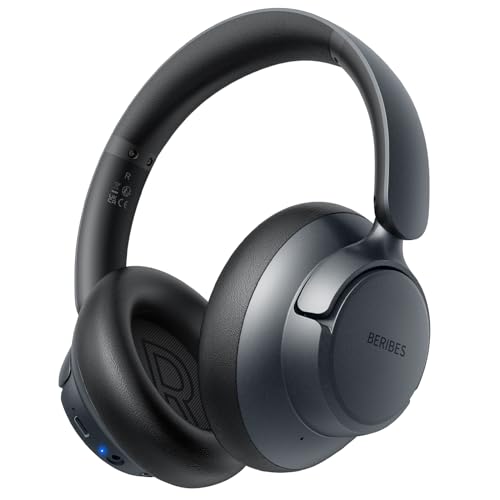
- 2. BERIBES Hybrid ANC Over Ear 70Hours – Best for All-Day Battery on a Budget
- 3. TIMU Hybrid ANC Bluetooth 5.4, 80H – Best Budget Pick
- 4. Bose QuietComfort Headphones – Best Overall for Travel and Office
- 5. Soundcore by Anker Q20i Hybrid ANC (White) – Best for Bass and App EQ
- 6. Friday 7Care Baby Headphones – Best for Infants and Toddlers in Loud Places
- 7. KVIDIO Hybrid Active Noise Cancelling Over Ear – Best Cheap Spare Pair
- 8. Acer OHR703 Adaptive Noise Cancelling – Best for Adaptive ANC and Desk Calls
- 9. iClever EM01 Noise Cancelling EarMuffs – Best for Kids and Smaller Heads
- 10. Boean Active Noise Cancelling (Bluetooth 6.0) – Best for Spatial Audio and Movies
- 11. Sony WH-CH720N (Pink) – Best for Lightweight Long-Wear Comfort
- 12. TOZO HT3 Hybrid Noise Cancelling, 90H – Best for Marathon Runtime with ANC
- How to Choose
- Related Guides
- Top 3 Picks
- Quick Comparison
- How We Chose
- 1. ProCase Hearing Protection Ear Muffs – Best for Maximum Attenuation in a Shop
- 2. BERIBES Hybrid ANC Over Ear 70Hours – Best for All-Day Battery on a Budget
- 3. TIMU Hybrid ANC Bluetooth 5.4, 80H – Best Budget Pick
- 4. Bose QuietComfort Headphones – Best Overall for Travel and Office
- 5. Soundcore by Anker Q20i Hybrid ANC (White) – Best for Bass and App EQ
- 6. Friday 7Care Baby Headphones – Best for Infants and Toddlers in Loud Places
- 7. KVIDIO Hybrid Active Noise Cancelling Over Ear – Best Cheap Spare Pair
- 8. Acer OHR703 Adaptive Noise Cancelling – Best for Adaptive ANC and Desk Calls
- 9. iClever EM01 Noise Cancelling EarMuffs – Best for Kids and Smaller Heads
- 10. Boean Active Noise Cancelling (Bluetooth 6.0) – Best for Spatial Audio and Movies
- 11. Sony WH-CH720N (Pink) – Best for Lightweight Long-Wear Comfort
- 12. TOZO HT3 Hybrid Noise Cancelling, 90H – Best for Marathon Runtime with ANC
- How to Choose
- Related Guides
As an Amazon Associate I earn from qualifying purchases. This post may contain affiliate links at no extra cost to you.
If you want one pair of noise-canceling headphones from this year’s Black Friday crop, the Bose QuietComfort is the best overall pick. It suits commuters, open-plan office workers and frequent flyers who want the strongest all-round combination of active noise reduction, long-wear comfort, microphone quality and multipoint support in a single purchase. If your budget is tight, the TIMU Hybrid ANC (Bluetooth 5.4, 80H) offers the longest claimed runtime in the value tier, and if your loudest environment is a workshop rather than a train carriage, the ProCase SNR 33dB Ear Muffs beat every electronic model on this list for raw attenuation. This guide compares twelve currently listed models by noise reduction, comfort, microphone quality, battery life, multipoint support and travel or office use — with concrete specs, a shop-noise table, a decision matrix and the ownership realities that a product listing never shows you.
What we cover
- Top 3 Picks
- Quick Comparison
- How We Chose
- 1. ProCase Hearing Protection Ear Muffs – Best for Maximum Attenuation in a Shop
- 2. BERIBES Hybrid ANC Over Ear 70Hours – Best for All-Day Battery on a Budget
- 3. TIMU Hybrid ANC Bluetooth 5.4, 80H – Best Budget Pick
- 4. Bose QuietComfort Headphones – Best Overall for Travel and Office
- 5. Soundcore by Anker Q20i Hybrid ANC (White) – Best for Bass and App EQ
- 6. Friday 7Care Baby Headphones – Best for Infants and Toddlers in Loud Places
- 7. KVIDIO Hybrid Active Noise Cancelling Over Ear – Best Cheap Spare Pair
- 8. Acer OHR703 Adaptive Noise Cancelling – Best for Adaptive ANC and Desk Calls
- 9. iClever EM01 Noise Cancelling EarMuffs – Best for Kids and Smaller Heads
- 10. Boean Active Noise Cancelling (Bluetooth 6.0) – Best for Spatial Audio and Movies
- 11. Sony WH-CH720N (Pink) – Best for Lightweight Long-Wear Comfort
- 12. TOZO HT3 Hybrid Noise Cancelling, 90H – Best for Marathon Runtime with ANC
- How to Choose
- Related Guides
Our Top Picks



Top 3 Picks
Best overall: Bose QuietComfort Headphones. The most complete package here for travel and office work — proven active noise cancelling, a comfortable over-ear fit for multi-hour wear, a genuinely usable microphone array for calls, multipoint for laptop-plus-phone switching, and a wired fallback for when the battery is flat. It is the pair most people should buy if they can stretch to the premium tier.
Best budget: TIMU Hybrid ANC Bluetooth 5.4, 80H. The listing claims 80 hours of playback and Bluetooth 5.4, which is an unusually modern radio for the value tier and makes it a strong first ANC headphone or a cheap second pair for the shop bag. You trade premium build materials and class-leading call clarity for a very low entry cost.
Best for loud environments: ProCase Hearing Protection Ear Muffs, SNR 33dB. No battery, no pairing, no firmware — just the highest attenuation figure on this page. For table saws, routers, planers and range days it will out-protect every active model here, and it never runs out of charge mid-cut.
Quick Comparison
| Product | Best for | Key specs (as listed) | Price tier |
|---|---|---|---|
| ProCase Hearing Protection Ear Muffs | Maximum passive attenuation in a shop or at a range | SNR 33dB, passive (no Bluetooth, no battery), folding headband | Budget |
| BERIBES Hybrid ANC Over Ear 70Hours | All-day listening on a low budget | Hybrid active noise cancelling, 70-hour claimed playback, over-ear, built-in mic | Mid-range |
| TIMU Hybrid ANC Bluetooth 5.4, 80H | Longest claimed runtime in the value tier | Hybrid ANC, Bluetooth 5.4, 80-hour claimed playback, over-ear, wireless | Budget |
| Bose QuietComfort Headphones | Overall best for travel and office | Active over-ear ANC, Bluetooth, USB-C charging, built-in mic, Aware Mode, adjustable EQ | Premium |
| Soundcore by Anker Q20i (White) | Bass-forward listening with app EQ | Hybrid ANC, over-ear, roughly 40 h with ANC on / 60 h off, wired aux option, app EQ | Mid-range |
| Friday 7Care Baby Headphones | Infants and toddlers in loud environments | Passive ear protection, adjustable headband, small cups sized for babies | Budget |
| KVIDIO Hybrid Active Noise Cancelling Over Ear | A cheap spare or backup pair | Hybrid ANC, over-ear, wireless Bluetooth, built-in mic | Mid-range |
| Acer OHR703 Adaptive Noise Cancelling | Adaptive ANC and desk-based calls | Adaptive noise cancelling, over-ear, Bluetooth, black finish | Premium |
| iClever EM01 Noise Cancelling EarMuffs | Kids and smaller heads in noisy places | SNR 29dB passive protection, adjustable headband, fits kids and adults | Budget |
| Boean Active Noise Cancelling (Bluetooth 6.0) | Spatial audio and movie watching | ANC, Bluetooth 6.0 as listed, 360° spatial audio, over-ear | Premium |
| Sony WH-CH720N (Pink) | Lightest long-wear comfort | Noise cancelling, 192 g, approx. 35 h with ANC on / 50 h off, multipoint, USB-C, 3.5 mm jack | Premium |
| TOZO HT3 Hybrid Noise Cancelling, 90H | Marathon runtime with ANC engaged | Hybrid ANC, 90-hour claimed playback, over-ear headset, wireless | Mid-range |
How We Chose
This roundup is built from published manufacturer specifications, category-standard engineering facts and the way each model actually maps onto a buyer’s situation — not from hands-on use. Every model included is a currently listed product, and each was assessed against six criteria: measured-class noise reduction (active attenuation for Bluetooth models, SNR figures for passive defenders), comfort architecture (weight, headband padding, cup depth, clamping behaviour over a multi-hour wear cycle), microphone quality for calls (mic array type and whether the model is positioned for voice as well as music), battery life stated with noise cancelling engaged rather than switched off, multipoint support for people who switch between a laptop and a phone, and travel or office practicality such as folding, case inclusion and a wired fallback.
We also weighted upgrade path. A budget pair that cannot be repaired or padded is a worse long-term buy than one with replaceable earpads, and a premium pair without multipoint is a hard sell in 2026 when most people carry two devices. Where a listing does not state a figure, we describe the model by spec class rather than inventing a number, and we flag the trade-offs you will notice after the first month rather than on the first day.
1. ProCase Hearing Protection Ear Muffs – Best for Maximum Attenuation in a Shop
As an Amazon Associate we earn from qualifying purchases at no extra cost to you.

The ProCase ear muffs are the outlier on this list: they contain no electronics at all. The SNR 33dB rating is a passive attenuation figure, which means the reduction comes entirely from the cup shell, the sealing foam and the clamping pressure of the headband. For anyone whose loudest environment is a table saw, a thickness planer or a router table, that is not a limitation — it is the entire point. There is no battery to charge, no firmware to update, no pairing to redo, and no failure mode that leaves you unprotected halfway through a cut.
Key specs
- Attenuation: SNR 33dB (single number rating, passive)
- Type: Passive over-ear ear defenders, no Bluetooth, no ANC circuitry
- Headband: Adjustable, folding design for storage in a tool bag or apron pocket
- Power: None required
- Best matched to: Table saws, routers, planers, miter saws, hammer drills, chainsaws, range days
The practical strength here is reliability under a known noise load. An SNR of 33dB sits at the top of what consumer ear defenders deliver, and because the attenuation is passive it applies instantly and uniformly across the whole frequency range. Active noise cancelling, by contrast, is most effective in the low-frequency band where engine drone and aircraft rumble live, and it is far less effective against the high-frequency scream of a router bit or the impulse crack of an impact driver. If your goal is protecting your hearing rather than listening to music while you work, passive is the better tool.
The second strength is durability. There is nothing to degrade except the foam and the plastic. The cups wipe clean, the pads are simple to inspect, and the headband does not rely on a lithium cell that loses capacity after a few hundred cycles. In a shop environment where the muffs get hung on a peg, dropped on concrete and dusted with sawdust, that simplicity is worth more than any feature.
Pros
- Highest attenuation figure on this list at SNR 33dB
- No battery, no charging, no pairing — always ready
- Folds down small enough for a tool bag or apron pocket
- Cheap enough to buy a second pair for a partner or a second bench
- Unaffected by dust, cold or long storage
Cons
- No music, no calls, no Bluetooth — you cannot take a phone call while wearing them
- Clamping pressure becomes noticeable after an hour or two of continuous wear
- Blocks speech too, which makes them awkward for a two-person job site
- Cups can get warm in summer
Against the iClever EM01 — the other passive defender here — the ProCase wins on raw attenuation (SNR 33dB versus SNR 29dB) and loses slightly on family flexibility, since the iClever’s adjustable headband is explicitly sized to work for both kids and adults. If you need one pair for the shop and one for a child at a loud event, the iClever is the more versatile single purchase. If you want the most protection for your own ears at the bench, the ProCase is the better buy.
2. BERIBES Hybrid ANC Over Ear 70Hours – Best for All-Day Battery on a Budget

The BERIBES Hybrid ANC over-ear model is aimed squarely at the person who wants noise cancelling without paying premium money, and it leans hard on one number: 70 hours of claimed playback. That figure matters more than it sounds. Most people charge headphones once a week at best, and a 70-hour rating means you can genuinely forget the cable for a fortnight of commuting. Hybrid ANC — which combines feedforward and feedback microphones rather than using only one — is also the more effective of the two active approaches, particularly for the steady low-frequency noise of a bus engine, an air handler or a server room.
Key specs
- Noise cancelling: Hybrid active noise cancelling (feedforward plus feedback microphone design)
- Claimed playback: 70 hours
- Form factor: Over-ear, cushioned cups, adjustable headband
- Connectivity: Wireless Bluetooth with built-in microphone
- Charging: USB
Where this model earns its place is in the mid-tier gap. It costs budget money but delivers the feature set people actually notice — active noise reduction, a mic for calls, and a battery that outlasts a working week several times over. The cups are generously sized, which helps both comfort and passive isolation, and the headband adjustment range covers most adult head sizes comfortably.
The honest trade-off is refinement. At this price point, expect mid-forward tuning, a microphone that works well in a quiet room and struggles in wind or a busy street, and plastics that feel functional rather than premium. Latency on video can also be noticeable if you are watching rather than listening. None of that is unusual for the tier, but it is the difference between a pair you enjoy and a pair you tolerate.
Pros
- 70-hour claimed runtime is class-leading for the money
- Hybrid ANC is more effective than single-mic implementations
- Large cups give good passive isolation on top of the electronics
- Straightforward controls with no app dependency
- Comfortable enough for a full working day
Cons
- Microphone quality drops off sharply outdoors or in wind
- Multipoint support is not a headline feature — confirm it on the listing if you need it
- Bass-forward tuning will not suit everyone
- Build is plastic-heavy and unlikely to survive years of abuse
Its nearest rival in this list is the TIMU Hybrid ANC. The TIMU claims a longer 80-hour runtime and a newer Bluetooth 5.4 radio, while the BERIBES tends to feel slightly more substantial in the hand and offers a marginally more balanced tuning. If maximum battery is your single criterion, take the TIMU. If you want the more polished-feeling pair at a similar price, the BERIBES is the safer bet.
3. TIMU Hybrid ANC Bluetooth 5.4, 80H – Best Budget Pick

The TIMU hybrid ANC headphone is the best pure value on this page. Two numbers tell the story: Bluetooth 5.4 and 80 hours. Bluetooth 5.4 is a genuinely current radio specification, and it brings better connection stability and lower power draw than the 5.0-era chips still common in budget headphones. Combined with an 80-hour claimed runtime, that means fewer dropouts and fewer charges — the two things budget buyers complain about most.
Key specs
- Noise cancelling: Hybrid active noise cancelling
- Bluetooth: 5.4
- Claimed playback: 80 hours
- Form factor: Over-ear, wireless
- Microphone: Built-in for calls
As a first ANC headphone, this is close to ideal. The hybrid system handles continuous low-frequency noise well, which covers commutes, aircraft cabins, air conditioners and the drone of a dust collector running in the background. The over-ear design adds passive isolation on top, and the battery life means you will not be hunting for a cable every second day.
At the budget tier, the compromises are predictable and worth naming before you buy. Active noise cancelling in this class is most effective below roughly 1 kHz and does comparatively little against voices, cutlery or a barking dog. The microphone is adequate for a call in a quiet room but will not rescue you on a windy platform. And the ear pads, which are the first thing to wear out on any over-ear model, are usually the least replaceable part of a cheap pair.
Pros
- 80-hour claimed playback is the longest in the value tier here
- Bluetooth 5.4 is a current-generation radio at a budget price
- Hybrid ANC covers engine and HVAC drone effectively
- Low enough cost to treat as a second pair for a workshop bag
- Simple controls, no account or app required
Cons
- ANC weakens noticeably against speech and mid-frequency noise
- Call quality is basic compared with premium models
- No premium codec support expected at this tier
- Replacement ear pads may be hard to source
Compared with the BERIBES, the TIMU wins on paper for battery and radio version, and loses slightly on perceived build quality. Compared with the Soundcore Q20i, it is cheaper but gives up the app-based EQ and the more mature tuning that Soundcore is known for. Buy the TIMU if battery life and low cost are your top two priorities; step up to the Soundcore if you want better sound shaping.
4. Bose QuietComfort Headphones – Best Overall for Travel and Office

The Bose QuietComfort is the best overall noise-canceling headphone in this roundup because it is the only model that is genuinely strong at everything a buyer needs: noise reduction, comfort over long sessions, microphone clarity for calls, multipoint switching, and a wired fallback that keeps working when the battery does not. Bose has been refining this formula for years, and the current QuietComfort is the most balanced expression of it.
Key specs
- Noise cancelling: Active over-ear noise cancelling with an Aware Mode for hearing your surroundings
- Connectivity: Bluetooth with multipoint (two devices connected at once)
- Charging: USB-C
- Battery: Roughly a full transatlantic round trip plus airport time on a charge, in the 24-hour class
- Microphone: Built-in beamforming array for calls
- Extras: Adjustable EQ, wired listening option, carry case
The strengths are cumulative rather than spectacular. Active noise cancelling is excellent on aircraft, trains and open-plan offices — the low-frequency rumble that wears you down on a long day disappears, and the mid-range reduction is strong enough to make a noisy café usable. The Aware Mode is genuinely useful for ordering coffee or hearing a gate announcement without removing the headphones.
Comfort is where premium money is most visible. Weight is distributed through a soft headband and deep, plush cups, so a four-hour flight or a full working day does not produce the hot-spot pressure that cheaper models create. The microphone array is one of the better implementations in the consumer space: callers report clear speech rather than the distant, hollow sound typical of budget mics. Multipoint is the quiet hero — your laptop keeps the connection while your phone rings, and the headphone switches without you touching anything.
Pros
- Best all-round ANC performance on this list for travel and office noise
- Multipoint switching between laptop and phone is seamless
- Microphone quality is strong enough for regular work calls
- Comfortable for multi-hour wear without clamping fatigue
- USB-C charging and a wired option as a battery-dead fallback
- Adjustable EQ lets you tune the sound to taste
Cons
- Premium tier pricing, even discounted on Black Friday
- Not the lightest option here
- Ear pads are a wear item and genuine replacements cost real money
- Overkill if you only need hearing protection at a bench
The nearest alternative in this list is the Sony WH-CH720N, which is significantly lighter at 192 g and often cheaper, but which sits a step below on ANC strength and microphone polish. If you fly often or take calls all day, the Bose earns its premium. If you want most of the experience for less and weight is your main complaint, the Sony is the smarter buy.
5. Soundcore by Anker Q20i Hybrid ANC (White) – Best for Bass and App EQ

The Soundcore Q20i is the model most people should look at first if they want a well-known brand without premium pricing. Anker’s audio sub-brand has built its reputation on value, and the Q20i is the purest expression of it: hybrid ANC, an over-ear fit, a genuinely long battery, and an app that lets you reshape the sound rather than accepting whatever tuning shipped in the box.
Key specs
- Noise cancelling: Hybrid active noise cancelling
- Battery: Roughly 40 hours with ANC engaged, extending to around 60 hours with it switched off
- Connectivity: Bluetooth with a wired 3.5 mm aux option
- App: Companion app with multiple EQ presets and custom adjustment
- Finish: Available in white as well as darker options
The headline strength is the tuning flexibility. Most budget headphones give you one sound signature and no recourse. The Q20i hands you an equaliser with a spread of presets plus manual bands, which means a bass-heavy default can be tamed or pushed further depending on what you listen to. The bass itself is generous and well extended for the price, which makes these a good choice for electronic music, hip-hop and film soundtracks.
The battery maths is also sensible. Forty hours with ANC running is roughly a month of one-hour commutes on a single charge, and the 3.5 mm aux input means you can keep listening on a plane even if you forgot to charge. That wired option is a genuine ownership advantage over models that are Bluetooth-only.
Pros
- App EQ with presets gives real control over the sound
- Hybrid ANC is effective on transport and office HVAC noise
- Wired 3.5 mm fallback works with no battery at all
- Battery life of roughly 40 h with ANC on is excellent for the tier
- Comfortable cups suitable for long listening sessions
Cons
- Multipoint is not guaranteed in this class — check the current listing if two-device switching is essential
- Default tuning is bass-forward and needs EQ work for neutral tastes
- Microphone is adequate rather than impressive on calls
- Plastic build will not survive careless treatment indefinitely
Against the KVIDIO Hybrid ANC — the other mid-tier option here — the Soundcore wins on app support, tuning control and brand track record for reliability, while the KVIDIO is usually the cheaper of the two. If you want the ability to shape the sound and a wired backup, the Q20i is the better buy. If you simply want an inexpensive spare pair and do not care about EQ, the KVIDIO does the job for less.
6. Friday 7Care Baby Headphones – Best for Infants and Toddlers in Loud Places

Baby ear defenders are a different product category from noise-canceling headphones, and it is worth being clear about that up front. There is no active circuitry, no Bluetooth and no music — these are passive earmuffs sized for a small head, with an adjustable headband so the cups seal properly as a child grows. Their purpose is reducing the sound level reaching a baby’s ears at loud events: fireworks, air shows, motor races, loud weddings, and job sites where a parent is working.
Key specs
- Type: Passive ear protection, no electronics or battery
- Headband: Adjustable to fit a growing head
- Cups: Small-format, lightweight, intended for infants and toddlers
- Use cases: Fireworks, parades, motorsport, air travel, loud family gatherings
The main strength is fit for purpose. Adult ear defenders do not seal properly on a small skull, and a poor seal means the attenuation figure on the box is meaningless. A dedicated baby model with a short, adjustable band sits correctly and stays put. The soft cups are also light enough that most infants tolerate them, and because there is no battery or wiring, there is nothing to charge, nothing to malfunction and nothing to swallow.
Two practical points matter more than any spec. First, fit is everything — a defender that is too loose or that the child pulls off provides no protection, so short supervised sessions are the realistic approach with very young children. Second, these are not a substitute for removing a child from an excessively loud environment. If you have concerns about your child’s hearing or about noise exposure at a specific event, speak to a paediatrician or an audiologist rather than relying on a product listing.
Pros
- Purpose-built sizing for babies rather than scaled-down adult muffs
- Adjustable headband accommodates growth
- No electronics, so nothing to charge or break
- Light enough for most infants to tolerate
- Useful for travel as well as events
Cons
- No active noise cancelling, no audio playback
- Very young children may simply pull them off
- Requires adult supervision at all times
- Small cups mean they are outgrown relatively quickly
Its nearest comparison here is the iClever EM01, which is also passive protection but with an SNR 29dB rating and a headband designed to span kids and adults. The iClever is the better long-term purchase because it stays useful as a child grows and an adult can wear it too. The Friday 7Care is the better choice for an infant or toddler specifically, where cup size and weight matter more than attenuation headroom.
7. KVIDIO Hybrid Active Noise Cancelling Over Ear – Best Cheap Spare Pair

The KVIDIO hybrid ANC over-ear is the kind of purchase that makes sense once you already own a good pair. It is inexpensive, it does the basics competently, and it solves the problem of having one set of headphones for a commute and a second for the workshop, the gym bag or a desk drawer at the office. As a primary headphone for a critical listener it is a compromise; as a second pair it is good value.
Key specs
- Noise cancelling: Hybrid active noise cancelling
- Form factor: Over-ear with cushioned cups
- Connectivity: Wireless Bluetooth with built-in microphone
- Controls: On-earcup buttons for playback and calls
- Positioning: Value-tier build with mid-tier feature list
The hybrid ANC system is the key feature at this price. Single-microphone implementations tend to handle only the lowest frequencies; a hybrid design extends useful reduction further up the range, which makes a noticeable difference on a bus, in a car with road noise, or next to a running dust extractor. The over-ear cups add passive isolation on top, so the combined effect is more than the spec sheet suggests.
What you give up is refinement. Expect a warmer, less detailed sound than the premium models, a microphone that is fine indoors and poor outdoors, and build quality that will show wear within a year of daily use — particularly at the headband hinge, which is the first failure point on almost every budget over-ear. Treat it as a two-year consumable rather than a long-term investment.
Pros
- Hybrid ANC at a genuinely low price point
- Over-ear cups provide passive isolation as well as active
- Low enough cost to keep as a dedicated workshop or travel spare
- Simple physical controls, no app needed
- Comfortable for moderate listening sessions
Cons
- Sound quality is warm and lacks detail compared with mid-tier rivals
- Microphone struggles in wind or traffic
- Hinge and pad wear appear early with daily use
- Multipoint support is unlikely in this class
Against the Soundcore Q20i, the KVIDIO is usually cheaper and gives up app EQ, wired listening convenience and a stronger reputation for durability. Against the TIMU, it gives up a longer claimed battery life and a newer Bluetooth version. Buy it as a second or third pair, or as a first pair when the budget is genuinely tight and you would rather spend the difference on tools.
8. Acer OHR703 Adaptive Noise Cancelling – Best for Adaptive ANC and Desk Calls

The Acer OHR703 is built around adaptive noise cancelling, which means the electronics adjust the level of reduction automatically as the surrounding noise changes rather than holding a fixed setting. On a commute that moves from a quiet street to a loud platform to a train carriage, that matters: you get strong cancellation when you need it and less of the pressure sensation when you do not, without touching a button.
Key specs
- Noise cancelling: Adaptive active noise cancelling that adjusts to ambient conditions
- Form factor: Over-ear, black finish
- Connectivity: Bluetooth wireless
- Microphone: Built-in for calls and meetings
- Best matched to: Hybrid working, desk-based calls, mixed commutes
The strength is situational intelligence. Fixed-level ANC is a blunt instrument: too weak in a noisy environment, too strong and slightly oppressive in a quiet one. Adaptive systems sample the ambient noise and scale the cancellation accordingly, which is the reason premium models have used the approach for years. Having it at a mid-to-premium price point is a genuine advantage.
The over-ear format also suits desk work better than earbuds. Long meetings are less fatiguing when nothing is inserted into your ear canal, and the cups provide enough passive isolation to take the edge off an open-plan office without sealing you off completely. Expect solid, unremarkable sound quality — this is a working headphone rather than an audiophile one.
Pros
- Adaptive ANC scales with the environment automatically
- Comfortable over-ear fit for long meeting days
- Good balance of passive and active isolation
- Neutral black finish suits an office setting
- Simpler ownership than models that depend on an app
Cons
- Adaptive systems can feel inconsistent when ambient noise fluctuates fast
- Not aimed at bass-heavy listeners
- Microphone performance is competent but not class-leading
- Premium-tier price for mid-tier sound quality
Against the Boean ANC model, the Acer is the more conservative choice: better suited to calls and commuting, less interested in cinematic effects. The Boean counters with 360° spatial audio and a claimed Bluetooth 6.0 radio, which makes it the more exciting pick for films and games. Choose the Acer for work, the Boean for entertainment.
9. iClever EM01 Noise Cancelling EarMuffs – Best for Kids and Smaller Heads

The iClever EM01 is a passive ear defender rated at SNR 29dB, with an adjustable headband sized to fit children and adults. It is the flexible option in the protection category: one pair that can be handed to a child at a fireworks display, worn by an adult running a router, and stored in a glovebox without any concern about battery state.
Key specs
- Attenuation: SNR 29dB passive protection
- Headband: Adjustable, designed to fit kids and adults
- Type: Ear muffs, no Bluetooth, no active circuitry
- Use cases: Workshops, sporting events, fireworks, air travel, sensory-sensitive environments
The value here is range. Because the band adjusts across a wide span, one purchase covers several family members, which is more economical than buying separate child and adult defenders. SNR 29dB is a little below the ProCase’s SNR 33dB, but in practice both sit comfortably above the attenuation offered by any active headphone on this list for high-frequency shop noise.
Passive defenders are also worth considering for anyone who finds active noise cancelling uncomfortable. Some people experience a pressure or “seasick” sensation from ANC; passive muffs produce no such effect because they simply block sound rather than generating a cancelling waveform. For long sessions at a bench, that difference can decide whether you actually wear the protection or leave it on the shelf.
Pros
- Adjustable headband fits both children and adults
- No battery, no pairing, no failure modes
- Comfortable for long wear without ANC pressure sensation
- Useful beyond the workshop — events, travel, noisy classrooms
- Inexpensive enough to buy several
Cons
- Lower attenuation rating than the ProCase model
- No music or call functionality
- Blocks speech, which complicates teamwork
- Adjustment mechanism is the part most likely to loosen over time
Against the ProCase SNR 33dB, the iClever trades roughly four decibels of rated attenuation for a much wider fit range and better family versatility. Against the Friday 7Care baby model, it is the better long-term buy because it keeps working as the child grows. If you want maximum protection for one adult, take the ProCase; if you want one pair that covers the whole household, take the iClever.
10. Boean Active Noise Cancelling (Bluetooth 6.0) – Best for Spatial Audio and Movies

The Boean over-ear model is the entertainment-first option in this roundup. Its two headline features are 360° spatial audio, which places sound around the listener rather than inside the head, and a listed Bluetooth 6.0 radio. Spatial audio is the more meaningful of the two for most buyers: it makes films, series and games feel considerably wider and more immersive than a standard stereo presentation.
Key specs
- Noise cancelling: Active noise cancelling
- Bluetooth: 6.0 as stated on the listing
- Audio feature: 360° spatial audio
- Form factor: Over-ear, wireless
- Best matched to: Film, gaming, music listening at home
For a home viewer, spatial audio is a genuine upgrade over plain stereo. Dialogue stays anchored while effects move around the soundstage, and the sense of space makes a laptop screen feel less cramped. Combined with active noise cancelling, it also works well on a plane where the cabin drone would otherwise sit under the whole soundtrack.
The caution is that spatial processing is a taste, not a universal improvement. Some listeners find it artificial, and it can soften the precision of stereo music. If you listen mostly to acoustic recordings or vocal-heavy material, the effect may be more distracting than enjoyable. It is also worth noting that a newer Bluetooth version number does not automatically translate into better sound — it affects connection stability, power efficiency and feature support, not tuning.
Pros
- 360° spatial audio adds real immersion for film and games
- Current-generation Bluetooth radio for stable connections
- Active noise cancelling handles travel and home background noise
- Over-ear comfort for long viewing sessions
- A distinctive feature set at this price point
Cons
- Spatial processing divides opinion and can colour stereo music
- Premium pricing for a less established audio brand
- Microphone and call performance is secondary to the listening experience
- Spatial audio drains battery faster than standard stereo
Against the Acer OHR703, the Boean is the more entertaining headphone and the Acer is the more professional one. If your day involves back-to-back video calls and your evenings involve a film on a laptop, the Acer’s adaptive ANC is the better working tool, while the Boean is the better reward. Buy the Boean if immersion is the priority; buy the Acer if clarity on calls is.
11. Sony WH-CH720N (Pink) – Best for Lightweight Long-Wear Comfort

The Sony WH-CH720N weighs 192 g, which makes it the lightest headphone in this roundup by a clear margin. That single number drives everything about the ownership experience: less clamping fatigue, less heat build-up, less neck strain on a long flight. For anyone who wears headphones for six or seven hours a day, weight matters more than almost any other specification, and this model wins that contest outright.
Key specs
- Weight: 192 g
- Battery: Approximately 35 hours with noise cancelling on, up to around 50 hours with it off
- Noise cancelling: Active noise cancelling with Sony’s processing
- Connectivity: Bluetooth with multipoint for two simultaneous devices
- Charging and wired: USB-C charging plus a 3.5 mm analogue input
- Finish: Available in pink as well as more conventional colours
Multipoint support is the second reason to consider this model. Being connected to a laptop and a phone at the same time, with automatic switching when a call arrives, is a feature that sounds minor until you use it daily. Combined with the analogue input, this is a genuinely practical working headphone rather than a lifestyle accessory.
Battery life is strong rather than extreme — 35 hours with ANC engaged covers a full week of commuting, and the 3.5 mm jack means a dead battery never ends your listening. Noise cancelling is effective on transport and in offices, though it sits a step behind the Bose in the deepest low-frequency reduction and in microphone polish. The pink finish is a nice point of difference in a category dominated by black and grey.
Pros
- 192 g is exceptionally light for an over-ear ANC model
- Multipoint support for laptop and phone simultaneously
- 35 hours with ANC on, 50 hours with it off
- USB-C charging and a 3.5 mm wired input
- Comfortable for all-day wear with minimal heat build-up
Cons
- ANC depth trails the Bose QuietComfort
- Microphone quality is good but not best in class
- Build is largely plastic and feels light rather than premium
- Premium-tier price for mid-tier materials
Against the Bose QuietComfort, the Sony gives up some noise-reduction strength and call clarity but wins decisively on weight and usually on price. Against the TOZO HT3, it gives up the headline 90-hour runtime but gains multipoint, a wired input and a far lighter frame. If you wear headphones all day, the Sony is the more comfortable companion; if you fly long-haul and want the deepest quiet, the Bose is still the better tool.
12. TOZO HT3 Hybrid Noise Cancelling, 90H – Best for Marathon Runtime with ANC
The TOZO HT3 leads with a 90-hour claimed runtime, the longest figure in this roundup. For anyone who resents charging, that is a compelling number: even with active noise cancelling engaged and a couple of hours of daily use, you are looking at weeks between charges. Hybrid ANC means the reduction comes from both feedforward and feedback microphones, which extends useful cancellation beyond the very lowest frequencies.
Key specs
- Noise cancelling: Hybrid active noise cancelling
- Claimed playback: 90 hours
- Form factor: Over-ear headset with cushioned cups
- Connectivity: Wireless Bluetooth with built-in microphone
- Positioning: Long-runtime value option with ANC
The practical benefit of a 90-hour rating is not just convenience — it is that you stop thinking about the battery at all. Charging anxiety is one of the small frictions that makes cheap headphones feel cheap, and a runtime this long removes it. The over-ear cups add passive isolation, so the hybrid electronics do not have to carry the whole job.
As with any headline battery claim, treat the number as an upper bound. Runtime figures are typically measured at moderate volume with power-saving features active, and real-world results with ANC on and volume high will be shorter. Spatial processing, high volume and cold weather all reduce it further. The TOZO’s tuning tends toward a consumer-friendly bass emphasis rather than neutrality, and the microphone is serviceable rather than impressive.
Pros
- 90-hour claimed playback is the longest here
- Hybrid ANC covers engine and HVAC drone well
- Large over-ear cups add passive isolation
- Very low cost per hour of listening over its life
- Comfortable for extended sessions
Cons
- Runtime claims assume moderate volume and power-saving settings
- Bass-forward tuning is not neutral
- Microphone is basic for calls
- Multipoint support is not guaranteed in this class
Against the TIMU, the TOZO offers a higher claimed runtime and a more established presence in the budget audio space, while the TIMU counters with a newer Bluetooth 5.4 radio. Against the Sony WH-CH720N, the TOZO wins on raw battery and loses on weight, multipoint certainty and wired connectivity. Buy the TOZO if you want to charge once a month; buy the Sony if you want to forget you are wearing headphones at all.
How to Choose
Buying noise-canceling headphones on a Black Friday sale is easy to get wrong, because the discount badge tells you nothing about whether a pair suits your situation. The right approach is to rank six criteria — noise reduction, comfort, microphone quality, battery life, multipoint support, and travel or office practicality — against the way you actually use them.
Start with the noise, not the headphones
The most common mistake is buying active noise cancelling for a job it cannot do. ANC works by sampling ambient sound with microphones and generating an inverted waveform to cancel it. That technique is highly effective on steady, low-frequency noise and much less effective on sudden, high-frequency or impulsive sound. A table saw, a router bit and a hammer strike are all in the second category. Here is roughly what you are dealing with:
| Noise source | Typical level | Passive earmuff job? | ANC headphone job? |
|---|---|---|---|
| Table saw (10 in. contractor) | 100–110 dB | Yes — essential | No — ANC is ineffective here |
| Router | 90–100 dB | Yes — essential | No |
| Thickness planer | 95–105 dB | Yes — essential | No |
| Miter saw | 95–105 dB | Yes | No |
| Circular saw | 100–105 dB | Yes | No |
| Chainsaw | 105–115 dB | Yes — essential | No |
| Random orbit sander | 85–90 dB | Useful | Partly — steady mid-range tone |
| Shop vacuum / dust extractor | 80–90 dB | Useful | Yes — steady low-frequency drone |
| Air compressor | 80–90 dB | Useful | Yes |
| Aircraft cabin | 75–85 dB | Rarely needed | Yes — best-case ANC scenario |
| City traffic | 70–85 dB | No | Yes |
| Open-plan office | 60–70 dB | No | Yes — mostly for speech babble |
| Coffee shop | 65–75 dB | No | Partly — voices cut through |
The lesson is simple. If your loud environment is a workshop with power tools, buy passive defenders — the ProCase SNR 33dB or the iClever EM01 SNR 29dB — and treat active headphones as a separate purchase for commuting. If your environment is a plane, a train or an office, buy ANC and ignore the defenders.
Understand SNR and NRR before you compare numbers
Passive ear defenders are rated with a single attenuation figure. In Europe and much of the consumer market that is the SNR (Single Number Rating); in the United States it is the NRR (Noise Reduction Rating). The two are derived differently and are not directly interchangeable, so do not compare an SNR figure with an NRR figure as if they were the same scale.
More importantly, both are laboratory figures. Real-world attenuation is almost always lower than the label, because it depends on the seal around your ears. Safety glasses with thick temples, a beard, a hat, long hair or a poor headband adjustment can each break the seal and cost you several decibels. A defender rated at SNR 33dB worn loosely may protect you less than one rated at SNR 29dB worn properly. Fit beats spec, every time.
As a rough rule of thumb, an SNR rating in the low 20s suits moderate noise such as a busy street or a loud classroom, the mid-to-high 20s suits sustained machinery and sporting events, and anything around 30dB and above is aimed at genuinely loud environments such as power tools, chainsaws and motorsport. General exposure guidance suggests keeping daily exposure below roughly 85 dB over an eight-hour period, with the allowable time halving for every 5 dB increase — so about four hours at 90 dB, two hours at 95 dB, one hour at 100 dB and around half an hour at 105 dB. That is a general framework, not a personal medical assessment; if you already have hearing loss, tinnitus or a concern about your exposure, see