What's inside
As an Amazon Associate I earn from qualifying purchases. This post may contain affiliate links at no extra cost to you.
An impact driver can make roofing and sheet-metal work faster, but the tool is only part of the fastening system. The right bit, screw, clutch-free technique and control over depth matter just as much. For most repair and installation work, a compact 18V or 20V cordless impact driver is a sensible starting point; a heavy-duty model is rarely needed for ordinary roofing screws.
As an Amazon Associate we earn from qualifying purchases at no extra cost to you.



What we cover
Choosing an impact driver
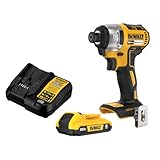
Look for a brushless driver with a variable-speed trigger and at least two speed or assist modes. A lower-speed setting helps keep the screw from skating across thin metal or driving too deep into a washer. Brushless models generally run longer per battery charge and avoid replacing motor brushes, but a brushed driver can be a good buy for occasional repairs.
For one-hand work on a ladder, weight and balance matter more than headline torque. A compact tool with a 2.0Ah battery is easier to handle overhead than a high-output driver with a large battery. If you already own batteries in a cordless tool system, buying a bare tool can save money. Compare brushless cordless impact drivers in the battery platform you own rather than paying to start over.
Driver types at a glance
| Type | Best fit | Trade-off |
|---|---|---|
| Compact 12V impact driver | Light repairs, short screws, tight access | Less reserve for long fasteners or repeated heavy work |
| Compact 18V/20V impact driver | Most roofing and sheet-metal fastening | Can still overtighten thin material; requires careful trigger control |
| Heavy-duty 18V/20V impact driver | Frequent structural fastening or larger screws | More weight and power than most roofing screws need |
| Drill/driver with clutch | Very thin sheet metal and jobs needing repeatable torque control | Slower on larger fasteners; may stall on tougher driving |
A drill/driver can be the better choice when consistent screw depth is more important than speed. Its clutch can limit driving force, although the correct setting still takes testing. Impact drivers typically have no clutch, so the operator must stop at the right point.
Roofing screws and washer control
For metal roofing, use screws specified by the panel maker, not a generic wood or drywall screw. Roofing fasteners commonly have a bonded sealing washer, often around 1/2 inch in diameter, that should compress enough to seal without bulging or splitting. Too little compression can let water in; too much can deform the washer, dimple the panel or strip the screw’s grip.
Start with a low-speed mode and a light trigger pull. Keep the driver square to the surface, let the screw engage, then ease off as the washer meets the panel. Practice on an offcut or a hidden section first. If the screw spins without tightening, the threads may have stripped the support. Stop rather than repeatedly driving it; move to a repair method approved for that roof system.
Use the screw length and placement specified for the panel and substrate. A screw that is too short may not engage the framing adequately; one that is too long can create a snag or penetrate where it should not. Follow the manufacturer’s fastening pattern and local requirements, especially on exposed-fastener roofing.
Sheet-metal fastening without damage
Thin sheet metal is easy to distort. For self-drilling screws, the tip must be suited to the material thickness and the screw should be driven straight. A fastener that is pushed hard or run at full speed can walk, enlarge the hole or tear the sheet before its threads bite. Use a lower gear or mode, steady pressure and a sharp, correctly sized bit. A magnetic bit holder is convenient, but a worn bit can cam out and damage the screw head; replace it when it no longer holds securely.
For small sheet-metal screws, a drill/driver with a clutch is often easier to control than a powerful impact driver. If you use an impact driver, test on scrap of the same gauge and stop as soon as the head is seated. Thin sheet does not need extreme torque. The material and screw design determine whether predrilling is appropriate; don’t assume drilling first is always safer, since an oversized pilot hole can reduce thread purchase.
Bits, batteries and accessories
Most impact drivers use a 1/4-inch hex collet. Buy impact-rated bits in the exact tip type and size for the screw: a close fit reduces cam-out and saves both the bit and the fastener head. Keep a few spares on hand, since a worn tip is a common reason screws slip. For roofing screws with hex heads, use a correctly sized magnetic nut setter; too large a socket can wobble and round the head. Browse impact-rated bits and magnetic nut setters that match your fasteners.
A 2.0Ah or 3.0Ah battery usually keeps a compact driver manageable for overhead work. Larger batteries can be useful for long days, but they add weight and may make the tool harder to balance. Bring a spare charged battery for a full installation; cold weather and repeated high-load driving can reduce runtime.
Safe work and final choice
Wear eye protection: metal chips and broken screw tips can fly. Keep hands clear of the bit, secure loose panels before fastening, and avoid working from an unstable ladder or roof edge. Metal roofing can be slippery, especially when wet or dusty. Follow the panel maker’s instructions, and do not use an impact driver near concealed wiring or services without checking what is behind the material.
For occasional repairs, a basic brushed driver you already own may be entirely adequate, provided it accepts the right bits and you can control its speed. For regular work, choose a compact brushless 18V/20V model with a low-speed mode and a comfortable grip. Spend the remaining budget on good fasteners and bits. Those choices prevent more stripped heads, leaks and damaged panels than extra peak torque does.