What's inside
As an Amazon Associate I earn from qualifying purchases. This post may contain affiliate links at no extra cost to you.
The best hole saw arbor is the one that matches your saw’s mounting system, drill, and material—not necessarily the one with the most features. For occasional holes in wood or drywall, a basic arbor is usually enough. For larger holes, repeated cuts, or metal, a securely locking arbor and a sharp, suitable hole saw matter more.
As an Amazon Associate we earn from qualifying purchases at no extra cost to you.


What we cover
Check the fit before buying
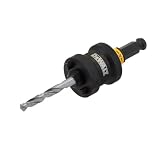
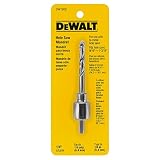
Hole saws attach to arbors in a few different ways. Many standard saws use a threaded mount; others use a quick-change or brand-specific system. Arbor pilot bits also vary in diameter and retention method. Check the hole saw’s packaging or manufacturer specifications for its mounting type, and match it to the arbor. “Universal” does not mean every arbor fits every saw.
For a threaded setup, confirm the arbor’s stated hole-saw size range and thread compatibility. Some arbors use a backing plate or drive pins to transfer torque. Those parts need to engage fully; a loose saw can wobble, chew up its mounting threads, or come off during a cut. If you already own hole saws, buying an arbor that fits them is often better than replacing a working set to suit a new mounting system.
Arbor options compared
| Arbor type | Best for | Trade-off |
|---|---|---|
| Basic threaded arbor | Occasional wood, drywall, or plastic cuts | Usually inexpensive; changing saws and removing a stuck plug can take longer |
| Quick-change arbor | Several hole sizes or repeated cuts | Faster changes, but only works with compatible saws and adapters |
| Arbor with a retractable or adjustable pilot bit | Work where pilot-bit length needs adjustment | More setup options; extra mechanisms can loosen or need maintenance |
| Heavy-duty arbor with drive pins | Larger saws and demanding cuts | More secure torque transfer, but costs more and may not fit basic saws |
For general home work, a standard threaded hole saw arbor is a sensible starting point if it matches your saws. If you frequently switch between sizes, consider a compatible quick-change arbor system. Check the product details for the saw sizes it accepts and whether the hole saws themselves are included; an arbor listing may include only the arbor and pilot bit.
Choose for the drill and hole size
A cordless drill can drive many hole saws, but larger diameters put substantial load on the tool. For a 1- to 2-inch saw in wood, a sound drill with a fully charged battery is generally manageable. Around 3 inches and above, torque demand rises sharply, especially in thick stock or hardwood. Follow the drill and hole-saw manufacturers’ limits. A drill with a side handle gives you more control; use it if provided, and keep both hands on the tool when the cut is demanding.
Use low gear for large saws and start at a controlled speed. High speed is not automatically faster: it can overheat teeth, burn wood, or grab when the saw catches. A clutch may slip under load, but it is not a substitute for holding the drill securely. If the saw binds, release the trigger rather than twisting your wrist to free it. A battery impact driver is usually a poor choice for hole saws: its hammering action can make the saw chatter and can reduce control. Use a drill, not an impact driver, unless the tool and arbor makers specifically approve that combination.
For metal, look for an arbor compatible with a bi-metal hole saw and use the cutting speed and lubricant recommended for the material. A generic wood-oriented arbor may physically fit but still be a poor choice for hard, repeated metal cuts. Keep the saw square, clear chips when needed, and avoid forcing the drill. For tile, masonry, or glass, use the appropriate purpose-made cutting system rather than assuming a standard hole saw and arbor are suitable.
Pilot bit, setup, and safety
The pilot bit keeps the hole saw centered as the cut begins. Check that it projects far enough beyond the teeth to engage the work, but not so far that it unnecessarily drills into hidden material. Tighten the pilot bit’s set screw or retaining mechanism securely, and replace a dull or bent bit. A wandering pilot can leave a damaged entry hole before the saw starts cutting.
Clamp the work when possible. For a large opening in a cabinet panel or loose board, clamping a scrap backing board behind the cut can reduce tear-out as the saw exits. Keep hands away from the teeth, wear eye protection, and account for wiring or plumbing behind walls. If cutting an installed surface, verify what is behind it before drilling. Hole saws can catch suddenly, and a workpiece that spins or shifts is a common cause of injury and ruined cuts.
Drill partway through from one side, then finish from the other when access and layout allow. This often gives a cleaner edge than driving the saw through the whole thickness in one pass. If a plug jams inside the saw, disconnect the battery before removing it. Use the arbor’s release mechanism or a suitable tool; do not reach between sharp teeth.
When to spend more
Pay extra for quick changes or a heavy-duty locking design when you change sizes often, make larger holes, or cut regularly. For a couple of small holes in plywood or drywall, a basic arbor that fits correctly is fine. Spend more on compatibility and reliable locking before paying for convenience features you will rarely use.
Before checkout, confirm the arbor fits your hole saw’s mounting system, covers the saw’s diameter, and accepts the pilot bit you need. Also check whether the arbor shank suits your drill chuck; many use a 3/8- or 1/2-inch shank, and a small drill may not accept the larger one. A secure fit, sensible speed, and a sharp saw are more important than buying the most elaborate arbor on the shelf.