What's inside
As an Amazon Associate I earn from qualifying purchases. This post may contain affiliate links at no extra cost to you.
What we cover
Choosing the Right Drywall Anchor
Small shelves and decorative ledges look light, but the anchor sees more than the shelf’s weight. A 6-inch-deep ledge carrying books, a planter, or a framed mirror creates leverage that pulls the top of the anchor away from the wall. That is why a shelf can fail even when its contents weigh only 10 or 15 pounds.
First check whether you can fasten into a wall stud. A stud-mounted screw is usually the strongest and simplest option. Use a stud finder, confirm the location with a small drill bit, and choose a screw long enough to enter the stud at least 1 inch after passing through the bracket and drywall. If the bracket holes do not line up with studs, use a stud for one screw and drywall anchors for the others.
As an Amazon Associate we earn from qualifying purchases at no extra cost to you.

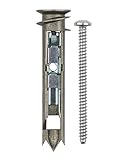

For anchors in drywall only, match the anchor to the actual load and the depth of the shelf. A decorative ledge holding a small print needs less support than a narrow shelf holding ceramic objects. The manufacturer’s load rating is a starting point, not a guarantee. Ratings often assume sound, undamaged drywall, correct installation, and a load that hangs close to the wall.
The Best Anchor Types for Small Shelves
| Anchor type | Practical use | Typical strengths | Main drawback |
|---|---|---|---|
| Plastic expansion plug | Very light ledges and wall decor | Cheap, simple, small hole | Easy to overload or spin |
| Self-drilling threaded anchor | Light shelves and brackets | Fast installation with a drill or screwdriver | Limited holding power in weak drywall |
| Threaded metal drywall anchor | Medium-duty shelves and ledges | Better thread engagement and pullout resistance | Can damage drywall if overtightened |
| Toggle bolt or strap toggle | Heavier shelves without stud access | Strong spread behind the wall | Requires a larger hole and adequate cavity space |
Plastic Expansion Anchors
Basic ribbed plastic anchors are suitable for lightweight decorative ledges, small picture frames, and shelves carrying roughly 5 to 10 pounds total when the load stays close to the wall. They are the cheapest option and often work perfectly for a small display item.
They are a poor choice for a shelf that will be handled, bumped, or loaded with books. The plastic expands inside the drywall, but it does not create a large bearing surface behind the panel. If the hole is oversized, the anchor can rotate while the screw is driven. If the screw is too large, the anchor can split; if it is too small, it may not expand firmly.
Use the drill-bit size printed on the package rather than guessing. Drill straight, remove loose dust, and tighten the screw only until the bracket is secure. Continued tightening does not increase strength.
Self-Drilling Threaded Anchors
Self-drilling anchors have a pointed tip and coarse external threads that cut into drywall. They are convenient because most install with a Phillips bit and do not require a separate pilot hole. A quality self-drilling drywall anchor set is a reasonable buy for small shelves, curtain hardware, and light-duty brackets.
These anchors are best for light to moderate loads, generally around 10 to 20 pounds per anchor under favorable conditions. The exact capacity varies widely. They can pull out when a deep shelf is loaded at the front edge, and the cutting tip can break through the back of thin drywall without forming a reliable connection. Do not use them for a shelf that children may pull on or for anything overhead.
Threaded Metal Anchors
Metal self-drilling anchors provide more durable threads than plastic versions and are useful when the bracket will be removed and reinstalled. They are a good middle ground for a small shelf carrying modest objects, particularly in 1/2-inch drywall that is in good condition.
They still rely on the drywall itself. A metal anchor is not automatically a heavy-duty fastener, and its sharp threads can chew up the panel if installed with an impact driver. Use a cordless drill on low speed or a screwdriver. Stop when the anchor flange is flush; driving it deeper crushes the drywall face and reduces holding power. Shop for metal drywall anchors with screws when you need a reusable, medium-duty option.
Toggle Bolts and Strap Toggles
For a shelf that may approach 20 to 50 pounds total, use toggles where studs are unavailable. A toggle spreads the load across the back of the drywall rather than concentrating it at the threads. Strap-style toggles are easier to position behind the wall than traditional spring-wing bolts, though both require a larger access hole.
Check for pipes, electrical cables, and blocking before drilling. A typical toggle may need a 1/2-inch to 3/4-inch hole, depending on the design. The toggle must open fully behind the drywall; it cannot do that if it lands against a stud, insulation obstruction, or another hidden object. A heavy-duty drywall toggle anchor is the safer choice for a deeper shelf, but use multiple mounting points and follow the package spacing and load limits.
Installation Details That Prevent Failure
Mounting hardware matters as much as the anchor. Use every hole in the shelf bracket when possible, with at least two fasteners for a short ledge. Keep anchors several inches apart and away from damaged drywall edges or old holes. A screw should fit the anchor without bottoming out before the bracket is tight.
Do not use an impact driver for small drywall anchors. Its sudden torque can strip plastic, spin threaded anchors, or crush the wall surface. A cordless drill set to a low clutch setting gives better control. For a toggle, drill the specified hole with a sharp drill bit set, keep the bit perpendicular, and avoid enlarging the opening by wiggling it.
After installation, test the shelf gradually. Put a few pounds on it, wait, and inspect for a lifting bracket, a growing gap, cracking paint, or an anchor that rotates. If the shelf moves at all, remove it and upgrade the attachment rather than simply tightening the screw. For valuable, heavy, or frequently handled items, redesign the bracket to reach studs or use a cleat that spreads the load across several studs.