What's inside
As an Amazon Associate I earn from qualifying purchases. This post may contain affiliate links at no extra cost to you.
Small holes in aluminum do not call for a hammer drill or a high-torque impact driver. A compact cordless drill with a variable-speed trigger, a clutch, and a properly chosen bit is usually the better tool. Aluminum cuts easily, but thin sheet can snag a bit, distort around the hole, or grab the workpiece if the drill is run too fast or the metal is left unsupported.
As an Amazon Associate we earn from qualifying purchases at no extra cost to you.
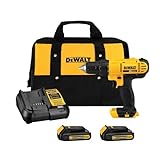


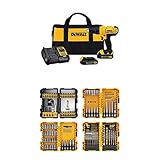
What we cover
What to look for in a cordless drill
Choose a drill with a low-speed range around 0–400 or 0–500 rpm and a high-speed range of roughly 1,300–2,000 rpm. The low range gives better control for larger holes; the high range suits small bits. A variable-speed trigger matters more than a high torque rating here. A 12-volt drill is generally enough for holes up to about 1/4 inch, while an 18- or 20-volt drill is useful if you also drill wood, drive screws, or need longer runtime.
A keyless chuck that accepts the bit size you need is essential. Most compact drills have a 3/8-inch chuck, which covers common small aluminum work. A 1/2-inch chuck is not necessary unless you expect to use larger bits. A clutch is useful for later fastening, but set it aside while drilling: use the drill setting, not a numbered clutch position. A side handle is unnecessary for small holes and can make a compact drill harder to control.
If this is a one-off repair, a basic compact drill is fine. For frequent work, look for a brushless model with a smooth trigger and a two-speed gearbox. Brushless drills tend to cost more, but can run longer per battery charge. Compare compact 12V cordless drill kits against 18V brushless compact drill kits by chuck size, speed range, battery price, and weight—not voltage alone.
Which drill type fits the job?
| Tool | Small aluminum holes | Main trade-off |
|---|---|---|
| Compact 12V drill/driver | Very good for light, occasional work | Less runtime and power for larger holes |
| Compact 18V/20V drill/driver | Very good for regular use and mixed jobs | Often heavier; higher-cost kits |
| Hammer drill | Works with hammer mode turned off | Extra weight and features are unnecessary |
| Impact driver | Poor choice for precise drilling | Impacts can catch small bits and enlarge or damage holes |
A hammer drill is useful for masonry, not aluminum. Its hammer action should be off for metal. An impact driver is made for driving fasteners and can be rough on small drill bits, especially if the bit catches. If you already own either tool, a hammer drill in ordinary drill mode can do the job; for buying specifically to drill small holes, choose a drill/driver.
Bit choice and speed matter more than extra torque
Use a sharp high-speed-steel bit for ordinary aluminum. A standard HSS twist bit is inexpensive and adequate for occasional holes in sheet and thin stock. Cobalt bits are a sensible upgrade for repeated work or harder alloys, but are usually unnecessary for a few holes in soft aluminum. Avoid a worn bit: it rubs instead of cutting, heats the work, and is more likely to wander. For a set of HSS metal drill bits, check that it includes the diameters you need and that the bits are intended for metal.
For a 1/8-inch hole, a practical starting range is about 1,000–2,000 rpm; for a 1/4-inch bit, start nearer 500–1,000 rpm. These are working ranges, not rules: bit geometry, alloy, and drill control all matter. If the bit squeals, smokes, or produces fine powder instead of chips, stop. Reduce speed, check that the bit is sharp, and use light, steady pressure. A drop of cutting fluid or light machine oil can help, though many small holes in aluminum can be drilled dry if you keep the bit from overheating.
A reliable way to drill the hole
Mark the center with a fine marker, then make a small center-punch mark so the bit does not skate. On thin sheet, use a light tap: a deep punch can dent or stretch the panel. Clamp the aluminum to a scrap board or support it close to the hole. This matters most as the bit breaks through. An unsupported sheet can flex, catch the bit, and twist in your hand.
Hold the drill square to the surface and start slowly until the bit takes hold. Increase speed smoothly, using enough pressure to form small chips without forcing the bit. Near breakthrough, ease off pressure. If the hole must be larger than about 1/4 inch, drill a pilot hole first or step up through sizes; jumping straight to a large bit increases the chance of grabbing thin stock. Deburr both sides with a countersink, deburring tool, or a larger bit turned by hand.
Common mistakes and when to spend more
Do not use hammer mode, and do not wear gloves near a rotating drill bit: a glove can catch and pull your hand in. Wear eye protection, secure the work, and keep the battery installed only when ready to drill. Stop if the aluminum gets hot enough to discolor or if chips wrap around the bit; clear them only after stopping the drill.
Pay extra for a better drill if you make holes regularly, need smooth speed control, or already use the same battery platform for other tools. For a handful of holes in thin aluminum, a budget drill with a sound chuck and a sharp bit is enough. Spending more on a high-torque model will not compensate for a dull bit, unsupported sheet, or excessive speed.