We research everything we recommend. When you buy through our links, we may earn a commission. As an Amazon Associate we earn from qualifying purchases.
Best Respirators for Dust, Paint and Workshop Safety
Compare the best respirators for dust, paint and workshop work, from 3M P100 half masks to a full facepiece, with clear fit, filter and safety guidance.
Compare the best respirators for dust, paint and workshop work, from 3M P100 half masks to a full facepiece, with clear fit, filter and safety guidance.
Sanding a tabletop, spraying finish, or cutting concrete all put fine particles into the air you breathe, and a flimsy paper dust mask does very little about it. A proper respirator seals to your face and forces every breath through filters or cartridges matched to the hazard. The five respirators in this guide cover what home workshops and job sites actually need, from compact half masks to a full facepiece.
Choosing between them comes down to three questions: what is in the air, how well the facepiece seals on your face, and whether the filters or cartridges are rated for that hazard. Get any of those wrong and even an excellent respirator underperforms.
As an Amazon Associate, we earn from qualifying purchases.
For most workshop users, the best respirators are reusable half masks with P100 filters: the 3M 6200 is the affordable starting point, the 3M 7502 adds a softer silicone seal for long sessions, and the GVS Elipse is the compact dust pick. The 3M 6900 full facepiece adds sealed eye protection; the RZ Mask M2 suits light nuisance dust only.
3M Half Facepiece Reusable Respirator 6200
Top Pick
3M Half Facepiece Reusable Respirator 6200
Best for: First-time buyers who want one affordable facepiece for dust and paint vapor jobs.
The 6200 anchors the 3M 6000 Series and is the default recommendation for a first serious respirator. The thermoplastic elastomer half mask has a four-point harness and bayonet connections. It ships without filters or cartridges, so the working setup for dust is a pair of 3M 2091 or 2097 P100 filters clicked onto the mounts. For spraying, the same facepiece accepts 6000 Series cartridges, including the 60923 combination cartridge.
The elastomer seal is firmer than silicone and can leave pressure marks on long sessions, and the exhalation valve can fog safety glasses in cold weather. Fitted correctly with P100 filters, though, this is a NIOSH-approved setup for sanding dust, insulation, and mold cleanup.
3M Reusable Respirator Half Facepiece 7502
Runner-Up
3M Reusable Respirator Half Facepiece 7502
Best for: Painters and tradespeople who wear a half mask most of the working day.
The 7502 is the medium size of the 3M 7500 Series, built for people who wear a respirator for hours at a stretch. Its silicone face seal stays softer against the skin than elastomer and holds up better to repeated cleaning. The Cool Flow exhalation valve directs exhaled air downward, which reduces fogging of safety glasses compared with the 6000 Series design.
Underneath, it uses the same bayonet platform, so it accepts the full range of 3M 2000 Series filters and 6000 Series cartridges, including 2097 P100 filters. It costs more than the 6200, so the decision is purely about comfort over long wear.
3M Full Facepiece Reusable Respirator 6900
3M Full Facepiece Reusable Respirator 6900
Best for: Spray finishing and demolition where eyes and lungs both need sealed protection.
The 6900 is the large size of the 3M 6000 Series full facepiece line, and it solves two problems at once. The wide polycarbonate lens meets the ANSI Z87.1 high impact standard, so eye protection is sealed into the same unit as breathing protection, with no gap at the nose where separate goggles leak dust and overspray. A properly fit tested full facepiece also carries a higher assigned protection factor than a half mask.
It uses the same bayonet connections as the 3M half masks, so it takes the same P100 filters and 6000 Series cartridges, including combination options for spraying. The trade-offs are weight, heat buildup, and cost.
GVS Elipse SPR456 P100 Half Mask Respirator
GVS Elipse SPR456 P100 Half Mask Respirator
Best for: Woodworkers and DIY users who want the smallest, lightest P100 mask for dust-only work.
The Elipse takes a different approach: instead of a general-purpose facepiece with swappable cartridges, it is a compact dust specialist. The SPR456 is the medium and large size with nuisance odor filters, and its low profile fits under a welding helmet and alongside safety glasses. The pleated P100 filters are built in and replaceable, and the assembly is NIOSH-approved as a P100 respirator.
That focus is also its limit. The filters on this version target particulates, with a carbon layer for nuisance-level odors; separate organic vapor versions exist, but this model is not the tool for heavy solvent spraying. The body wipes clean easily, and the mask is light enough to forget during long sanding sessions.
RZ Mask M2 Mesh Air Filtration Mask
RZ Mask M2 Mesh Air Filtration Mask
Best for: Mowing, sweeping, and light nuisance dust in hot weather.
The M2 is the comfort outlier here, and it needs an honest label: it is a reusable filtration dust mask, not a NIOSH-certified respirator. The mesh shell is far cooler and lighter than an elastomer half mask in hot weather, and the replaceable F1 active carbon filters are rated by the maker to capture particles down to 0.1 microns in laboratory filtration tests. Dual exhalation valves help keep glasses clear.
That makes it a reasonable step up from a plain cloth or paper mask for mowing, sweeping, and light hand sanding. It must not be treated as protection against silica dust, lead paint, asbestos, mold remediation, or paint vapors, and it cannot substitute for a certified respirator where workplace rules require one, because it has no NIOSH approval and no assigned protection factor.
How to choose
Match the filter to the hazard, not the mask. P100 filters physically trap dust, fumes, and mist, capturing at least 99.97 percent of airborne particles, including the fine fraction that does the most damage. Organic vapor cartridges use activated carbon to absorb solvent and paint vapors, but they do nothing for dust unless a particulate filter is stacked on them, which is why combination cartridges such as the 3M 60923 exist. A dust filter fitted for a spraying job, or a vapor cartridge fitted for a sanding job, leaves you unprotected while feeling protected.
Fit decides everything. A respirator only filters air that passes through its filters, and any leak at the seal bypasses them entirely. Facial hair is the most common cause: even short stubble along the sealing line breaks the seal, and no tight-fitting respirator here will protect a bearded wearer properly. Do a user seal check every time you put the mask on. Workplaces require formal fit testing, repeated at least annually.
Reusable elastomeric versus disposable N95. A disposable N95 suits a single short, dusty task, but its seal depends on two thin straps and a nose clip, and it is spent once dirty or hard to breathe through. A reusable half mask costs more up front, seals with a shaped facepiece, takes higher-grade P100 filters, and only the filters are consumables. For regular sanding, grinding, or spraying, the reusable route is safer and cheaper over a season.
Treat silica as its own category. Cutting, grinding, or drilling concrete, stone, mortar, and engineered stone creates respirable crystalline silica, which causes serious lung disease. Silica work calls for P100-level filtration at minimum, a well-fitted respirator, and compliance with the OSHA silica standard and local rules, which may also require wet cutting or ventilation. Never rely on a non-certified dust mask for silica.
Know the hard limits. Every product here is an air-purifying respirator: it cleans ambient air but adds no oxygen. None may be used in oxygen-deficient atmospheres, confined spaces with unknown air quality, or conditions immediately dangerous to life or health; those require supplied-air equipment or self-contained breathing apparatus and trained users. Filters and cartridges are also brand-specific, and mixing parts voids the approval.
Who should skip
Skip tight-fitting respirators entirely if you keep a beard or heavy stubble and will not shave the sealing area: the leak makes the protection largely theoretical, and a loose-fitting powered respirator with a hood is the appropriate alternative. Skip the RZ Mask M2 for anything beyond nuisance dust, since it has no NIOSH certification. Skip any respirator as a substitute for ventilation and dust collection, since controlling dust at the source reduces exposure far more. And skip every air-purifying model here for tank entry, silo work, or any space where oxygen could be low; that is supplied-air territory, full stop.
FAQ
What is the difference between P100 filters and organic vapor cartridges?
P100 filters trap particles such as wood dust, concrete dust, and metal fume, and they keep working until breathing becomes noticeably harder or they are damaged or soiled. Organic vapor cartridges absorb solvent vapors with activated carbon and wear out by capacity rather than by clogging, so change them on a schedule or as soon as you smell or taste the contaminant. Combination cartridges merge both layers for jobs like spray painting.
Can I wear a respirator with a beard?
Not a tight-fitting one, if you want it to work. Hair between skin and sealing surface creates leak paths, and fit testing standards do not allow facial hair crossing the seal. Your options are to shave the sealing area, switch to a loose-fitting powered respirator with a hood, or limit yourself to nuisance dust tasks with a non-certified mask while understanding the protection is informal.
How often should filters and cartridges be replaced?
Replace P100 filters when breathing resistance rises noticeably, when they are damaged, or when they become soiled. Organic vapor cartridges have no reliable end-of-service indicator for most users, so follow the maker change schedule based on hours of use and contaminant levels, and replace them immediately if you detect odor or irritation while wearing the mask. Never wash or blow out a filter to extend its life.
Is a disposable N95 enough, or do I need a reusable respirator?
For one short job with ordinary dust, a well-fitted disposable N95 is a legitimate choice. Move to a reusable half mask when you do dusty work often, when the dust is more hazardous, such as lead paint, mold, or concrete, or when you also need vapor protection, since disposables cannot take cartridges.
Final verdict
Start with the hazard and the fit, and the right pick follows. The 3M 6200 with P100 filters is the sensible default for a home workshop, the 7502 earns its premium on long days, the 6900 full facepiece is the answer when eyes need sealing too, and the GVS Elipse is the compact dust specialist. Keep the RZ Mask M2 in its lane as a comfort mask for light dust, and replace filters and cartridges on schedule.
M
Miller the Driller Editorial Team
We compare specs, warranty terms, long-term owner feedback and street pricing before anything earns a spot. Rankings are never paid.
Affiliate disclosure. As an Amazon Associate we earn from qualifying purchases at no extra cost to you. Prices accurate as of the date shown.
Three wireless routers for small offices compared on device capacity, network separation, wired speed, and coverage, with specs taken from their Amazon listings.
Compare 5 mechanic tool sets for car repairs: a 247-piece DEWALT kit, a 450-piece CRAFTSMAN set, a drawer-box GEARWRENCH set, a 170-piece Crescent set and a 450-piece WORKPRO set.
Four splitting axes and mauls that actually split firewood: a long 36-inch axe for tall users, a shorter 28-inch option, and two 8 lb mauls for knotty rounds.
Learn whether a 20V rechargeable drill battery can be repaired, which faults you can check safely at home, and when replacing the pack is the safer choice.
A specs-based review of the officially licensed Retro-Bit Sega Saturn 2.4 GHz wireless controller: dual receivers, Genesis Mini and Switch support, battery, layout, limits, and FAQs.
Find the best drill battery for Power Wheels ride-on toys for families, with DeWalt, Milwaukee and Ryobi adapters, voltage and safety guidance in this guide.
Find the best hole saw for noching dom pipe: bi-metal saws, deep cups, and the right sizes for clean, tight notches in DOM tube for fabrication shops today.
Find the best diy tile saws for home tiling projects. Compare wet tile saws by blade size, cutting capacity, and features for ceramic and porcelain tile.


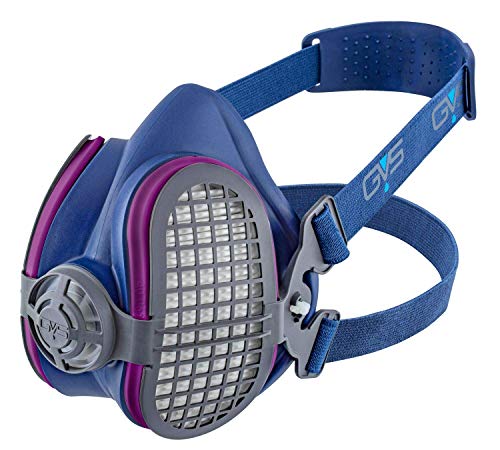 GVS Elipse SPR456 P100 Half Mask Respirator
 RZ Mask M2 Mesh Air Filtration Mask









