What's inside
As an Amazon Associate I earn from qualifying purchases. This post may contain affiliate links at no extra cost to you.
What we cover
What matters when driving wood screws
Stripped screw heads usually come from a poor bit fit, too much speed, or pushing the trigger after the screw has stopped turning. The drill matters, but technique and the right driver bit matter just as much. For ordinary wood screws, you generally want a cordless drill with a clutch and a low-speed setting—not necessarily the most powerful tool in the aisle.
Look for a 3/8- or 1/2-inch chuck, two speed ranges, and a clutch with clearly marked settings. A 3/8-inch chuck is fine for most household screws and bits; a 1/2-inch chuck is useful if you also drill larger holes or use thicker accessories. Battery voltage alone is not a reliable measure of control or quality.
As an Amazon Associate we earn from qualifying purchases at no extra cost to you.
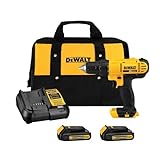

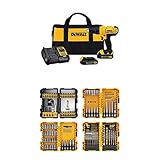

A clutch is especially useful near the end of a screw’s travel. It slips when resistance reaches the selected level, reducing the chance of burying the head, snapping the screw, or crushing the wood. It is not a precision torque meter: the clutch setting that works in soft pine may be too weak in dense hardwood.
Drill/driver or impact driver?
A standard drill/driver is the better first choice when avoiding stripped heads is the priority. Its smooth rotation and adjustable clutch make it easier to stop at the right point. A cordless drill/driver kit is a sensible buy for shelves, furniture, hinges, and general household work.
An impact driver delivers fast rotational blows when resistance rises. That helps with long screws and dense framing lumber, but it is easier to overdrive a small screw or damage a soft screw head if you hold the trigger too long. Most impact drivers have no conventional clutch. If you already own one, use a good-fitting impact-rated bit, start slowly, and finish the last turns by hand or with a drill/driver. For regular framing or repeated long screws, a cordless impact driver kit can be a useful companion, not a replacement for controlled driving.
Which tool fits the job?
| Tool | Best for | Stripping risk | Main trade-off |
|---|---|---|---|
| Drill/driver with clutch | Furniture, cabinets, general repairs | Low when set up correctly | Can stall on long screws in dense wood |
| Impact driver | Long screws, framing, repeated fastening | Moderate to high with small screws or heavy trigger use | Fast and powerful, but less forgiving |
| Compact drill/driver | Small jobs and tight spaces | Low | Less power and often less battery capacity |
| Manual screwdriver | Final snugging, delicate hardware | Very low with a correctly fitting bit | Slow for many screws |
What to buy for different workloads
For occasional repairs, a basic drill/driver from a reputable tool line is enough. You do not need a premium brushless model to assemble furniture or install a few brackets. A lower-cost kit is fine if it has two speeds, a working clutch, a comfortable grip, and batteries you can replace or share with other tools. If you already own compatible batteries, buying a bare tool can save money.
For frequent work, brushless models typically run more efficiently and may offer better sustained performance, though they cost more. Pay attention to balance and trigger control: a tool that feels awkward at low speed is harder to use accurately. A second battery helps during larger jobs, but it does not prevent stripped heads.
If you mostly drive short screws into softwood or assemble flat-pack furniture, a compact drill/driver is often the cheaper, easier-to-control choice. For a mixed home workshop, choose a drill/driver first; add an impact driver only if long or numerous fasteners make the drill stall or slow you down.
How to avoid stripping the screw
Use the bit that matches the screw head exactly. A Phillips bit that is too small can cam out and chew the recess; one that is too large may not seat fully. For square-drive or Torx screws, match the size rather than using a near fit. Replace rounded or worn bits, since they slip more readily even when the tool is good.
Set the drill to low gear for driving, especially with large screws. Start with the clutch at a low setting, then increase it only if the tool slips before the screw is seated. Hold the drill in line with the screw and press firmly enough to keep the bit engaged, without leaning so hard that you lose control. Use a steady, light trigger rather than immediately running at full speed.
In hardwood or near the end of a board, drill a pilot hole. A hole roughly the screw’s core diameter—measured across the shaft without the threads—reduces splitting and driving force. For a clearance hole through the top piece of a joint, choose a bit close to the screw’s outer diameter so the threads pull the pieces together instead of binding in both. Test on scrap when the wood or screw is unfamiliar.
Stop when the head is seated. If the screw stalls, backs out, or the bit begins to climb from the recess, release the trigger; more pressure and speed usually make the damage worse. Finish delicate hardware by hand, and avoid using a drill’s highest clutch setting as a substitute for judgment.
Bits, screws, and common failures
Use a bit holder or driver bit that is not excessively long or loose, and keep the drill chuck tight. A short bit can feel more stable in a standard drill. For construction screws, follow the screw maker’s recommendations for bit type and pilot holes; some are designed to drive without predrilling in common softwoods, but that does not guarantee a clean result near an edge or in hardwood.
If the screw keeps stripping despite a suitable bit, check whether the screw itself is damaged, whether the tool is angled, and whether the material is creating too much resistance. Back the screw out if possible, drill an appropriate pilot hole, and try a fresh screw. For a damaged head, stop before making it worse: pliers, a screw extractor, or a carefully chosen manual technique may be needed. The best setup is the one that lets you feel resistance and stop on time—not the one with the biggest torque number.